
Philadelphia's High Death Rate for Cyclists and Pedestrians: How to Better Protect Them
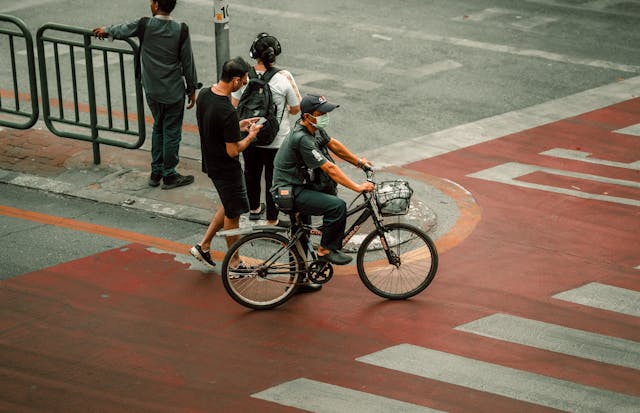
Philadelphia has a problem it can no longer afford to ignore. Year after year, cyclists and pedestrians, ordinary people running errands, commuting to work, walking their dogs, are dying on city streets at rates that no major American city should accept.
The data is damning, the patterns are consistent, and the fixes are largely understood. What keeps getting in the way is sustained political will and community urgency.
This piece walks through why Philadelphia pedestrian fatalities remain persistently high, what's feeding this crisis, and what meaningful, on-the-ground change actually requires.
Mapping the Problem: Philadelphia Cyclist & Pedestrian Fatalities Today
Philadelphia's traffic safety record doesn't hold up well under scrutiny. Compared to peer cities, the numbers reveal a troubling gap that's hard to explain away with geography or density alone.
These aren't abstract figures.
Each data point represents someone who didn't make it home. To understand the full scope of this crisis, you have to look closely at where these tragedies are happening, how frequently, and under what conditions.
How the Philadelphia Cyclist Death Rate Compares to Peer Cities
The Philadelphia cyclist death rate consistently comes out worse than cities like New York and Los Angeles when you adjust for population size.
NHTSA data places Philadelphia's pedestrian fatality rate at 3.61 per 100,000 residents, with an overall traffic fatality rate of 8.71 per 100,000, both of which outpace most comparable American cities.
That gap doesn't close on its own. Philadelphia's aging road network, ingrained speed culture, and underbuilt infrastructure all play a role.
Who Is Most at Risk
Pedestrians absorb the worst of it, though cyclists aren't far behind. In just the first quarter of 2024, ten pedestrians were killed by drivers, accounting for more than 60% of all traffic fatalities across that period. Hit-and-run crashes add a particularly brutal dimension to an already devastating picture.
For victims and their families, speaking with a Philadelphia Bicycle Accident Lawyer can be a critical step toward understanding their rights after such incidents. If you walk or ride in this city, the risk is not theoretical. It is real, and it falls disproportionately on certain people.
Unequal Impact: The Equity Crisis Embedded in Philadelphia's Fatality Data
The city-wide numbers are bad enough. But when you look beneath the surface, a separate and deeply troubling layer of disparity emerges, one tied directly to race and neighborhood income levels.
Racial and Neighborhood Disparities in Traffic Deaths
Black and Hispanic residents in Philadelphia face significantly higher rates of pedestrian and cyclist fatalities. These aren't random outcomes. They are the predictable result of decades of underinvestment in specific communities' road infrastructure, lighting, and transit access.
Any serious safety agenda has to center equity. Full stop.
Lower-Income Neighborhoods Carry a Heavier Burden
Neighborhoods with lower median incomes consistently record more traffic deaths. Poor lighting, fewer protected crossings, and higher-speed arterials converge in these areas, turning routine trips into genuinely hazardous undertakings.
Knowing who is being harmed is only the starting point. You also need to understand why, and that means looking squarely at the conditions driving this crisis.
Root Causes and Risk Factors Behind Philly's High Death Rate
Philadelphia's crash patterns are not mysterious. They follow identifiable, addressable causes. That's what makes the continued loss of life so frustrating, these deaths are not random accidents.
Darkness and Mid-Block Crashes
More than 70% of pedestrian deaths in Pennsylvania occur in non-daylight conditions and away from intersections. Mid-block crossings with inadequate lighting are, in practical terms, invisible to drivers after dark.
Speeding and Driver Behavior
Speeding contributes to roughly 40% of serious crashes, and red-light running persists along major corridors throughout the city. Road design matters but driver behavior is equally central to the problem.
Infrastructure Deficits: Bike Lanes, Lighting, and Crossings
Philadelphia still lacks protected bike infrastructure across vast sections of the city. Gaps in lane coverage push cyclists directly into vehicle traffic, and the absence of adequate crosswalk lighting makes pedestrians effectively invisible to drivers at night.
With the root causes clearly on the table, the logical question is: what is Philadelphia actually doing about it, and is vision zero Philadelphia making any real headway?
Vision Zero Philadelphia, Genuine Progress, Persistent Gaps
Vision zero Philadelphia is grounded in a straightforward premise: traffic deaths are preventable, not inevitable. The initiative has produced real results in certain areas, even as challenges at scale remain formidable.
Where It Has Worked
Targeted street interventions have produced a 34% decrease in fatal or serious crashes along specific high-injury corridors.
Speed cameras on Roosevelt Boulevard have delivered even sharper results, since their installation in 2020, speeding violations dropped more than 95%, and pedestrian-involved crashes fell by 50%.
Those numbers matter. They demonstrate that the approach works when it's applied and funded properly.
What Remains Difficult
Scaling these wins across the entire city is where things get complicated. Funding constraints, competing municipal priorities, and the sheer volume of high-injury corridors mean the 2030 zero-fatality goal is still genuinely ambitious, perhaps too ambitious without significantly accelerated investment.
Technology and Policy Innovations on the Horizon
Red-light cameras, adaptive traffic signals, and proposed "Jay Alert" pedestrian warning systems represent promising next steps. These tools can extend Vision Zero's reach without requiring full street reconstruction on every dangerous block in the city.
Community-Driven and Technology-Forward Solutions
Meaningful safety change doesn't always require expensive overhauls. Sometimes it starts with a camera, a barrier, or a community that refuses to accept the status quo.
Smart Infrastructure and Adaptive Traffic Control
AI-powered pedestrian signal systems and predictive crash risk modeling are being piloted in cities across the country. These tools can flag dangerous mid-block zones proactively, before crashes happen, and enable real-time safety interventions.
When Community Advocacy Produces Physical Change
After a cyclist was killed on a Philadelphia street, residents responded by physically forming a human-protected bike lane, standing in the road to demand proper barriers. Shortly after, physical infrastructure was installed. That's grief converted directly into action, and it worked.
Equity-Centered, Localized Strategies
The Bicycle Coalition of Greater Philadelphia has consistently advocated for concentrated safety investments in underserved neighborhoods. Designing interventions alongside community organizations, rather than for them, tends to produce solutions that actually fit local conditions and street patterns.
Legal Recourse and Personal Safety, What Individuals Need to Know Right Now
While systemic change takes time, people navigating Philadelphia's streets today need practical tools and legal awareness they can act on immediately.
Understanding Your Legal Rights After a Crash
Engaging a Philadelphia Bicycle Accident Lawyer from a firm like Full Court Justice means working with someone who understands Pennsylvania's insurance system and the specific dynamics of local road conditions.
They support you through evidence collection, case development, and the pursuit of accountability, the kind that drives real improvements in street safety across the city, not just individual settlements.
Practical Safety Strategies for Cyclists and Pedestrians
Wear high-visibility gear after dark. Mount a handlebar camera. Avoid mid-block crossings on high-speed corridors whenever possible. These steps won't eliminate risk, but they meaningfully reduce it while the city continues its infrastructure work.
Action Plan, What Each Stakeholder Can Do Now
No single actor solves this alone. Lasting progress requires coordinated effort from multiple directions simultaneously.
City Planners and Policymakers
Expand protected bike infrastructure along high-injury corridors. Install mid-block lighting at documented danger points. Deploy automated speed enforcement. Prioritize pedestrian safety philadelphia funding in equity-flagged neighborhoods.
Community Organizations and Residents
Document and report hazardous road conditions. Show up to city planning meetings. Push for adaptive signal pilots near schools and senior centers. Near-miss data collected by residents becomes powerful ammunition for safety advocates pressing for change.
Legal Advocates and Firms
Civil litigation tied to crash data can drive systemic reform in ways that policy alone sometimes cannot. When lawsuits expose infrastructure negligence, cities face real pressure to respond.
Frequently Asked Questions
What is the least bikeable city in the US?
Research points to Los Angeles. Despite recreational trails, its high cyclist fatality rate, minimal commuter bike infrastructure, and poor network connectivity make safe everyday cycling exceptionally difficult.
How does the Philadelphia cyclist death rate compare to other major cities?
Philadelphia's cyclist and pedestrian fatality rates consistently exceed those of New York and Chicago on a per-100,000-resident basis, reflecting serious shortfalls in infrastructure, enforcement, and road design.
What is vision zero Philadelphia, and is it producing results?
It's the city's initiative to eliminate traffic deaths by 2030. Specific corridors have seen a 34% reduction in serious crashes, but citywide results remain uneven, and reaching the 2030 target requires significantly faster progress.
How can communities support equity-focused traffic safety efforts?
Attend public meetings, collaborate with organizations like the Bicycle Coalition of Greater Philadelphia, document dangerous infrastructure conditions, and advocate persistently for investment in historically underserved neighborhoods where fatality rates are highest.
Safer Streets Are Not a Luxury, They're Overdue
Philadelphia's pedestrian fatalities and philadelphia cyclist death rate are not inevitable features of a big city. They are failures, policy failures, investment failures, and enforcement failures that can be corrected with sufficient urgency and accountability.
How to protect cyclists in Philadelphia begins with an honest reckoning of where the city is falling short, followed by consistent, organized pressure for improvement. Support vision zero philadelphia. Demand protected infrastructure in every neighborhood, not just the ones with political leverage.
Hold negligent parties legally accountable when crashes happen. Every person walking or riding in this city deserves streets that don't treat their safety as optional, and that standard is worth fighting for, starting today.