
Major Opportunities and Technologies in Business HVAC Operation
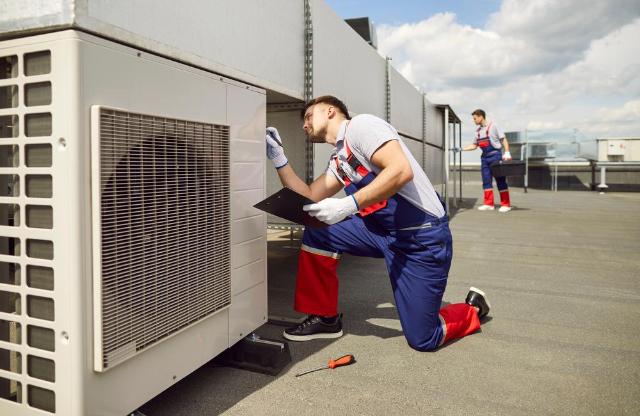
Image Source: depositphotos.com
The backbone of comfort, energy efficiency, and indoor air quality of buildings depends on commercial HVAC systems. Efficient environmental conditions in office buildings, manufacturing plants, and much more are crucial to the functionality of such systems. Yet, commercial HVAC operations have their challenges as well, and a new wave of technologies is enabling operators to meet them.
In this article, we discussed the headaches involved in commercial HVAC management. You will also learn some of the most pertinent technological advancements impacting and shaping the future of the HVAC/R industry.
Some of the Key Issues in the Citation of Commercial HVAC Operations
1. Increasing Energy Projected Costs
One of the largest costs of commercial buildings to operate is energy consumption. HVAC systems make up an average of 40 to 60 percent of total energy consumed in a building. Maldeveloped systems, obsolete equipment, or inadequate maintenance may increase the costs many times.
2. System Sucks and System Solidness
Sudden failure of the HVAC system may stop the operations, impair output, and create insufferable or unsafe conditions for the occupants of the buildings. Ageing infrastructure and the lack of real-time diagnostics a common challenges facing many facility managers, with work that can be significantly impaired through extended downtimes.
3. Maintenance, Enforcement
Remaining incident-free means monitoring safety, health, and environmental statutes with proactive upkeep and documentation. Manual systems of monitoring and tracking are cumbersome and more likely to fail compared to digital systems.
4. Talent Crunch
The HVAC industry is already facing the problem of a lack of qualified technicians, the existence of which complicates the maintenance, installation, and upgrading of these systems by companies promptly.
The Advances that Propel the Future of HVAC/R
1. Real-Time Monitoring and Smart Sensors
Among the products that will have the most significant effect on HVAC/R technology, one may note smart sensors and IoT-driven monitoring devices. They are also able to provide instantaneous temperature, humidity, pressure, and system operation data that enable the operators to develop solutions to present problems before they can arise.
On-site visits are also minimised with remote monitoring, which helps fill in the gap of skilled labour, and it facilitates faster response.
2. Data Analytics Predictive Maintenance
There are no more reactionary repairs. Modern technologies of advanced analytics today rely on past data alongside AI algorithms and can be used to forecast component failure long before it occurs. It enables maintenance teams to work in advance to schedule service, avoiding costly breakdowns and the loss of equipment.
3. Energy-efficient HVAC Technology
Variable refrigerant flow (VRF) systems, energy recovery ventilators, high-efficiency heat pumps, and the use of other technological innovations in the HVAC field are aimed at reducing the use of energy and ensuring a certain level of comfort.
4. Control Using the Cloud Cloud-Based Control Systems
Cloud integration can be used to centralize an HVAC system on a site basis. Facility managers can change settings, see system diagnostics and reports, all on one dashboard. This results in the enhancement of performance and decision-making.
Taking the Change
Commercial HVAC is evolving at a superfast rate. With issues such as energy costs, aging systems, and shortages of skilled labor continuing to assert their presence, new tools and technologies are transforming the way systems are supported and optimized.
Companies are committing to up-to-date HVAC/R systems, including smart diagnostics and data-driven maintenance technology. They are also enhancing the efficiency of their systems and securing their building, in terms of rising cost and compliance, well into the future.
Final Thoughts
Commercial HVAC operations are no longer simply about heating and cooling, but efficiency, sustainability, and smart control. Adopting new technology and solving the current problems will support the competitive preservation of the built environment.