
How MJF 3D Printing Delivers Speed, Strength, and Accuracy
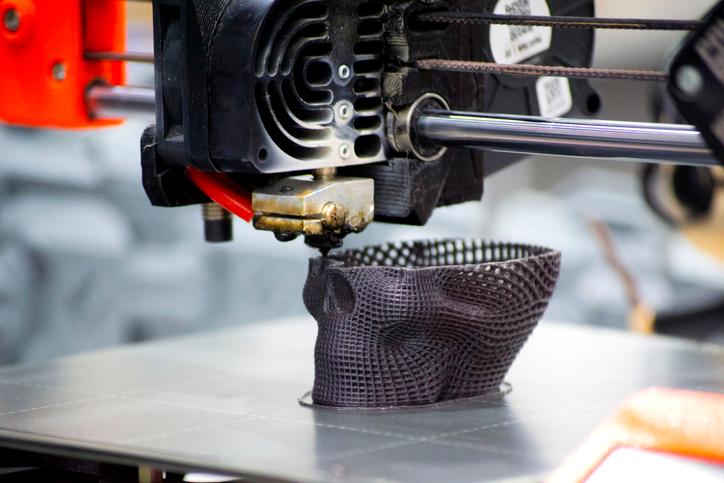
Manufacturing has hit a turning point where traditional methods just can't keep up with modern demands. Companies need parts faster, stronger, and more precisely than ever before. That's where advanced 3D printing steps in to bridge the gap. Modern printing technologies can reduce production time by up to 70% compared to traditional manufacturing methods.
This isn't just about making things quicker; it's about revolutionizing how we think about production itself. The combination of speed, strength, and accuracy in today's printing solutions has opened doors that seemed impossible just a few years ago.
The Technology Behind Modern 3D Printing Excellence
HP Multi Jet Fusion printing represents a significant leap forward in additive manufacturing capabilities. This technology doesn't just print parts, it creates them with unprecedented precision and reliability.
The process starts with specialized inkjet printheads that deposit fusing and detailing agents across an entire powder bed simultaneously. When companies like RapidMade in Tualatin, Oregon, implement mjf 3d printing, they're accessing technology that can transform how businesses approach manufacturing. This isn't your typical desktop printer scenario – we're talking about industrial-grade systems designed for serious production work.
What sets MJF apart is its ability to produce high-quality, functional parts with exceptional detail, strength, and speed. Unlike traditional 3D printing methods, MJF builds multiple parts simultaneously with uniform quality, making it ideal for both prototyping and low-volume production. This efficiency allows companies to reduce lead times, cut costs, and respond faster to customer demands, all without compromising on performance or durability.
How the Fusing Process Works
The magic happens when heat is applied to the powder bed. The fusing agent creates strong bonds between particles, while the detailing agent ensures clean, sharp edges. This dual-agent approach means parts come out with an excellent surface finish right off the printer bed.
Advanced Powder Management
Multi Jet Fusion 3D printing technology excels at powder management. Unlike other methods that waste unused material, this system recycles up to 80% of unused powder for future builds. That's a game-changer for cost-conscious operations.
Layer Formation and Precision
Each layer forms with remarkable consistency. The technology deposits agents with pinpoint accuracy, creating parts that meet tight tolerances without extensive post-processing. This level of precision makes complex geometries achievable at scale.
Speed That Changes Everything
Speed isn't just about faster printing – it's about completely different production timelines. This technology can complete builds that would take days using traditional methods in just hours.
Simultaneous Multi-Part Production
Here's where things get interesting. The printer doesn't just make one part at a time. It can produce dozens or even hundreds of parts simultaneously without sacrificing quality. Whether you need five prototypes or five hundred production parts, the timeline remains remarkably similar.
Reduced Setup and Changeover Times
Traditional manufacturing often requires extensive setup between different parts. Industrial 3D printing solutions eliminate most of this downtime. Switch from one part design to another with minimal preparation – just load the new file and go.
Real-Time Production Scheduling
Companies can now respond to orders within days rather than weeks. This flexibility transforms how businesses handle everything from prototyping to emergency replacements. The speed advantage cascades through entire supply chains.
Strength That Meets Industrial Standards
Nylon PA12 3D printing produces parts that rival traditional manufacturing in strength and durability. These aren't just prototypes – they're production-ready components that can handle real-world stress.
Material Properties and Performance
Nylon PA12 offers exceptional chemical resistance, making it suitable for automotive, aerospace, and medical applications. The material maintains its properties across a wide temperature range, from -40°C to 80°C in many cases.
Mechanical Testing Results
Parts printed with this technology consistently pass rigorous mechanical testing. Tensile strength, impact resistance, and fatigue performance often exceed expectations. Some applications see parts lasting longer than traditionally manufactured alternatives.
Applications in Demanding Environments
From automotive under-hood components to medical device housings, these printed parts prove themselves in challenging conditions. The strength isn't just theoretical – it's proven through real-world performance.
Accuracy That Eliminates Guesswork
Precision manufacturing demands accurate parts, and modern 3D printing delivers exactly that. We're talking about tolerances that meet or exceed traditional manufacturing methods.
Dimensional Accuracy Standards
High-volume 3D printed parts maintain consistent dimensions across entire production runs. This consistency eliminates the variation that often plagues traditional manufacturing, especially for complex geometries.
Surface Finish Quality
Parts come off the printer with surface finishes that often require minimal post-processing. The detailing agent creates smooth surfaces where needed while maintaining functional textures elsewhere.
Complex Geometry Capabilities
Internal channels, undercuts, and intricate details that would be impossible or extremely expensive with traditional methods become routine. This opens up design possibilities that simply weren't feasible before.
Cost-Effectiveness at Scale
The economics of this technology become increasingly attractive as volumes grow. Industrial 3D printing solutions can become more cost-effective than traditional manufacturing for certain applications.
Tooling and Setup Elimination
No expensive molds, dies, or specialized tooling required. Design changes happen in software rather than through costly physical modifications. This flexibility saves both time and money.
Inventory and Storage Reduction
Print parts on demand rather than maintaining large inventories. This approach reduces storage costs and eliminates the risk of obsolete inventory.
Customization Without Penalties
Traditional manufacturing often penalizes customization with higher costs and longer lead times. 3D printing handles customization as easily as standard parts, opening new market opportunities.
Frequently Asked Questions
What determines printing speed in 3D manufacturing?
Layer height, nozzle diameter, infill patterns, resolution settings, infill density, print temperature, travel speed, and initial layer speed all influence overall production time.
How strong are 3D-printed nylon parts compared to traditional manufacturing?
Nylon PA12 printed parts often match or exceed traditional manufacturing strength, with excellent chemical resistance and mechanical properties suitable for demanding applications.
Can high-volume production maintain consistent quality?
Yes, advanced printing systems maintain dimensional accuracy and surface finish consistency across hundreds of parts in single builds, making volume production reliable.
Wrapping Up the Manufacturing Revolution
The combination of speed, strength, and accuracy in modern 3D printing isn't just changing how we make things – it's changing what's possible to make. From rapid prototyping to full-scale production, this technology offers solutions that seemed impossible just a few years ago.
Companies that embrace these capabilities aren't just improving their manufacturing processes – they're positioning themselves for a future where customization, speed, and quality don't have to be trade-offs. The question isn't whether this technology will transform manufacturing; it's how quickly businesses will adapt to take advantage of what it offers.