
How Laser Welding Connects the Physical Shop Floor to Digital Workflows
Manufacturing is undergoing a major shift. Automation, data analytics, and connected systems have transformed traditional production workflows into highly synchronized digital ecosystems. Yet for many companies, one challenge remains: integrating physical processes with digital operations. This gap often leads to delays, quality inconsistencies, and missed optimization opportunities.
As more manufacturers embrace smart systems, understanding where physical processes like welding, fabrication, and assembly fit into digital workflows has become essential. That’s why technologies such as a laser welder are now central to bridging the physical–digital divide. They not only enhance precision but also generate valuable data that strengthens operational visibility. In this article, you’ll explore how modern welding tools support smart manufacturing and how integration can help you build more efficient, future-ready workflows.
The Growing Need for Smart, Connected Workflows
Many manufacturers still struggle with inefficiencies caused by disconnected processes. Here are the most common pain points:
- Limited visibility across production stages: Without unified systems, teams struggle to track progress or detect issues early.
- Inconsistent quality output: Manual processes or outdated equipment make it difficult to meet tight tolerances.
- Slow scalability and response time: When production changes are needed, rigid systems often delay execution.
Smart manufacturing, often referred to as Industry 4.0, helps address these issues by blending automation, data analytics, robotics, and predictive monitoring. But physical processes must be digitally compatible to complete the ecosystem.
How Laser Welding Supports Smart Manufacturing Systems
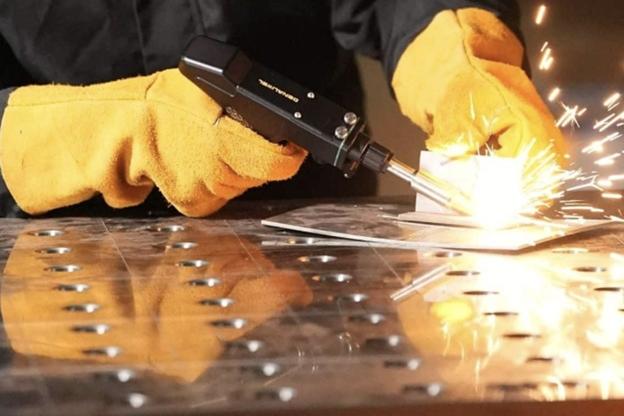
A modern laser welder does much more than join metal. It plays a functional role in smart factories by enabling precision, consistency, and digital traceability. Here’s how it fits into digital operations:
1. Precision That Reduces Errors Downstream
Laser welding creates narrow, highly controlled welds that reduce thermal distortion. This precision ensures:
- Fewer rejected components
- Less rework
- More reliable final assemblies
In smart workflows, fewer errors mean cleaner data, streamlined automation, and faster cycle times.
2. Real-Time Data Collection
Many advanced welding systems can integrate sensors that capture:
- Heat input
- Weld seam measurements
- Energy consumption
- Joint integrity data
This data syncs with digital platforms like MES (Manufacturing Execution Systems) or ERP systems, allowing teams to monitor quality and performance in real time.
3. High Repeatability in Automated Production Lines
Because lasers can be programmed with precise parameters, a laser welder offers unmatched repeatability. In automated workflows, this results in:
- Consistent weld quality
- Stable production output
- Better coordination with robotic systems
As a result, welding becomes a predictable and reliable step within connected operations.
4. Seamless Integration With Robotics and AI
Robotic arms combined with laser welders enable more flexible operations, such as:
- Complex multi-axis welding
- Automated adjustments to material variations
- Predictive maintenance using AI insights
The result is a fully connected, high-performing workflow that reduces human error and increases efficiency.
Physical–Digital Integration: Why It Matters
To understand how welding contributes to a smart factory, it helps to compare traditional workflows with digitally integrated systems.
Comparison Table: Traditional vs. Smart Manufacturing
|
Factor |
Traditional Workflow |
Smart Manufacturing Workflow |
|
Data Tracking |
Manual logs, slow updates |
Automated data flow in real time |
|
Quality Control |
Sample-based checks |
Continuous monitoring with sensors |
|
Equipment Performance |
Reactive maintenance |
Predictive alerts and AI-driven insights |
|
Scalability |
Limited, slow adjustments |
Rapid scaling with programmable tools |
|
Process Repeatability |
Dependent on operator skill |
Uniform results via automation |
In modern supply chains, these advantages translate into shorter lead times, higher output, and greater reliability.
How to Integrate Laser Welding Into a Smart Manufacturing Workflow
If you’re aiming to strengthen your digital ecosystem, here are strategic approaches to integrating welding tools effectively:
1. Digitize Your Welding Parameters
Document and standardize weld settings such as power, speed, and focal positioning. Upload these parameters into your MES to ensure consistent results across shifts and production lines.
2. Use Sensor-Enabled Equipment
Choose welding tools capable of:
- Monitoring weld penetration
- Recording real-time temperatures
- Capturing vibration or movement data
This improves accountability and reduces variability.
3. Connect Welding Stations to Central Dashboards
Integrate welders into your digital dashboards so you can:
- Track equipment usage
- Review performance trends
- Predict maintenance needs
This reduces downtime and increases output.
4. Train Teams on Hybrid Workflows
Help your workforce adapt by teaching them how digital systems interact with welding equipment. Skills bridging physical and digital workflows will be essential in the future of manufacturing.
Real-World Applications: Where Laser Welding Excels
Laser welding is already supporting digital transformation across industries:
Automotive Manufacturing
High-strength, precise welds support EV battery modules, sensor housings, and lightweight frame components.
Aerospace Engineering
Weld tracking data helps ensure compliance with strict quality requirements.
Medical Device Production
Clean, minimal-heat welds maintain component integrity, essential for surgical and implantable devices.
Consumer Electronics
Laser welders enable micro-welding for compact, high-density designs.
In each of these industries, integrating welding data into digital systems improves traceability and quality assurance.
Before implementing smart workflows, many companies look for equipment that complements both physical precision and digital compatibility. This is where solutions from brands like Denaliweld become valuable. Their lineup of advanced welding tools is designed to support accuracy, efficiency, and digital-ready operations.
Conclusion
The future of manufacturing lies in seamless integration between physical processes and digital operations. Tools such as laser welders now serve as bridges between the two, enabling accurate, repeatable, and data-rich welding outcomes that feed directly into smart systems. When welding integrates smoothly with automation, sensors, analytics, and robotics, your workflows become more efficient, more traceable, and more resilient.
By adopting smart manufacturing principles and choosing equipment capable of supporting digital transformation, you can reduce errors, optimize production, and prepare your operations for long-term success. Whether you’re upgrading a single workflow or redesigning your entire ecosystem, combining physical precision with digital intelligence is the next step toward a more efficient future.