
How to Build Real-Time Supply Chain Observability
“One missing pallet.”
That’s how a warehouse supervisor in New Jersey described the start of a week-long supply chain mess back in 2024. One pallet. Then came delayed trucks, angry retailers, overtime pay, and a customer threatening to walk.
In logistics, small gaps don’t stay small for long.
And the uncomfortable part is that most teams are already working hard.
The issue isn’t effort. It’s alignment. The data exists in most organizations—it just doesn’t show the same reality at the same time. Which leaves a basic question surprisingly hard to answer: what’s actually happening right now?
Most Companies Think They Have Visibility. They Don’t
Tracking freight isn’t the same thing as understanding freight movement.
That difference trips up a lot of organizations.
A shipment might appear “on schedule” inside a transportation platform while warehouse teams quietly deal with unloading delays, inventory congestion, or staffing shortages nobody upstream can see. The systems technically work. The operation still struggles.
McKinsey research shows that end-to-end supply chain visibility remains rare, with most companies still operating without integrated visibility across all tiers.
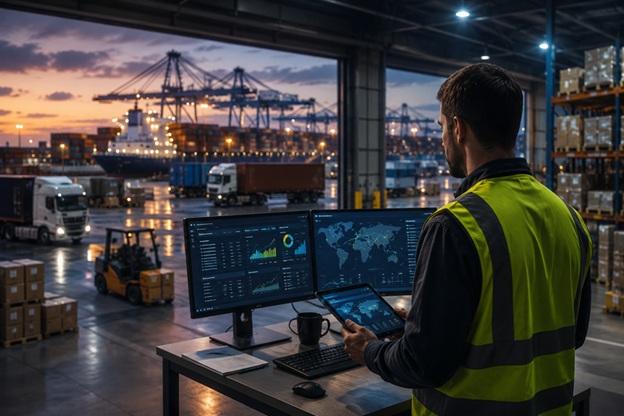
People rely on side conversations instead of official systems. You can almost hear it happening sometimes — radios crackling near loading docks, forklifts humming across concrete floors, dispatchers juggling calls while refreshing shipment statuses every few minutes.
Visibility sounds clean on paper. Reality rarely is.
How to Build a Supply Chain Operation That Thinks in Real Time
Real-time observability sounds futuristic at first, though the strongest systems usually come down to practical habits and cleaner communication. Fancy software helps, sure, but only if the people using it trust the information.
That said, building that kind of awareness takes intention.
1. Connect Systems Before Chasing Fancy Technology
Most organizations don’t lack software. They lack conversation between systems.
Warehouse platforms update inventory on one cycle. Transportation tools refresh shipment data on another. Procurement runs on reports that are already slightly outdated the moment they’re opened. Then someone exports everything into a spreadsheet “just to be safe.”
That workaround becomes normal. Quietly.
The 2024 MHI Annual Industry Report identifies fragmented data systems as a major barrier to improving supply chain visibility and operational efficiency.
Not cybersecurity. Not labor. Data fragmentation.
Kind of telling, really.
2. Bring Logistics Partners Into the Same Flow
Supply chains rarely fail inside a single company. They fail during handoffs.
Between ports and trucking providers. Between warehouses and carriers. Between “picked up” and “actually moving.” Every transfer introduces additional friction, delays, and opportunities for missing information.
Many logistics providers now reduce that friction by coordinating multiple stages of freight movement — including drayage, warehousing, trucking, and distribution — within a more unified operational workflow.
When transportation and warehouse data remain connected across the supply chain, visibility improves almost automatically. Businesses gain fewer blind spots, faster status updates, and better coordination across freight corridors and regional distribution networks.
That’s one reason many companies rely on integrated providers like STG freight and logistics solutions to improve shipment visibility, align transportation workflows, and maintain more responsive supply chain operations during disruptions or demand fluctuations.
A reliable logistics partner can reduce communication gaps, improve shipment accuracy, and help businesses respond faster when disruptions begin unfolding in real time. Still, technology alone cannot fix a chaotic process — it simply exposes inefficiencies more quickly.
3. Use Predictive Alerts Instead of Passive Tracking
Traditional reporting explains what has already happened.
Observability tries to warn you before the damage spreads.
Modern platforms increasingly combine GPS tracking, IoT sensors, weather forecasts, and predictive analytics to flag risks earlier. Accenture research indicates that AI-enabled supply chain management reduced forecasting errors by up to 50% for some organizations.
Still, technology doesn’t eliminate human instinct.
Experienced dispatchers often notice issues before any system does. A driver checking in late but sounding unusually rushed. Traffic building earlier than expected on a familiar route. Weather shifting just a bit faster than the forecast suggests.
Small signals. Easy to miss. Hard to replace.
4. Keep the Information Useful
Too much data becomes noise surprisingly fast.
Warehouse managers don’t need thirty alerts every hour. Drivers won’t engage with apps that slow them down during deliveries. Employees eventually ignore systems that feel exhausting or overly complicated.
And once teams stop trusting the information, observability quietly collapses.
The best systems simplify decisions instead of flooding people with endless updates. Clear warnings. Shared visibility. Faster responses.
Simple ideas carry surprising weight under pressure.
The Calm That Comes From Seeing Earlier
Supply chains won’t suddenly become predictable.
Ports still clog. Tires still burst on highways outside Atlanta. The weather still rearranges carefully planned schedules overnight. That chaos never fully disappears.
Still, there’s something powerful about seeing disruptions early enough to respond before panic spreads. Fewer surprises. Faster adjustments. Less scrambling under fluorescent warehouse lights while phones keep ringing in the background.