
The Evolution of Welding: From Traditional Methods to Laser Technology
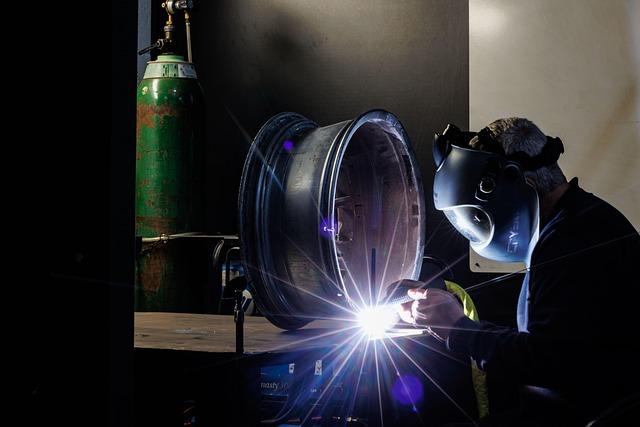
The field of welding has undergone dramatic changes over the years, transitioning from rudimentary techniques created in ancient times to cutting-edge technologies dominating today’s manufacturing processes. The world of welding has been shaped by the demand for greater precision and efficiency, leading to innovative solutions that cater to various industries. Understanding this evolution is key to appreciating modern welding techniques and their applications.
Early Welding Techniques
The origins of welding can be traced back to ancient civilizations, where blacksmiths used forge welding techniques. This involved heating two pieces of metal until they reached a malleable state and then hammering them together. This method laid the groundwork for many welding processes used later, focusing on simplicity and physical labor. Blacksmiths were essential to their communities, crafting weapons, tools, and household items.
Throughout history, the development of art welding introduced unique decorative items, showcasing the beauty of metal in architectural designs. These processes were labor-intensive, requiring skilled artisans who understood the properties of metals and their interactions under heat.
The Rise of Arc Welding
As the industrial revolution took hold in the late 19th century, traditional welding techniques began to evolve, paving the way for electric arc welding. This technique enabled welders to create robust joints with greater speed and efficiency. With the introduction of direct current welding in 1802 and alternating current in 1887, arc welding techniques became more accessible and manageable.
Skillful use of arc welding dramatically changed manufacturing, particularly in fabrication and construction. Its ability to join thicker materials efficiently made it a cornerstone method across industries. Workforce training became essential to ensure the safety and quality of the welds produced as the technology spread.
Advancements in Gas Welding
Gas welding, employing the combustion of gases like acetylene and oxygen, also gained popularity during the early 20th century. This process offered additional options for cutting and joining metals, becoming widely adopted for its versatility. Gas welding was often used in automotive and shipbuilding industries, showcasing its effectiveness in creating quality welds in various positions.
The use of gas welding techniques necessitated the development of safety protocols and equipment to handle the flammable gases safely. Over time, the need for training programs increased, ensuring that welders could operate these techniques without compromising safety.
The Modern Solution
Among the latest advancements in welding technology, laser welding is gaining popularity due to its accuracy and efficiency. This process employs a focused beam of light to melt and join materials, making it particularly well-suited for thin materials and intricate designs. Industries that require exacting standards, like medical device manufacturing and electronics, have adopted laser welding technology eagerly.
The advantages of laser technology include minimal thermal distortion and high energy efficiency, accommodating the demand for high-quality welds with lower overall costs. Companies are leveraging laser welding service to stay competitive in an evolving market, allowing for rapid turnaround times and the ability to process complex geometries without compromising quality. As the technology continues to evolve, ongoing research and development promise even greater precision, efficiency, and expanded applications across various industries.
The Introduction of Resistance Welding
Resistance welding, which emerged in the early 20th century, utilized heat generated from electrical resistance to form welds. This efficient method was particularly beneficial for mass production processes, promoting high-speed welding capabilities. Popularity soared in the automotive industry, where it allowed for quick assembly of parts without requiring extensive finishing work.
Despite its efficiency, resistance welding comes with its own set of challenges, including the requirement of continuous power supply systems and potential quality issues in production. Nevertheless, advances in technology have allowed manufacturers to refine these processes and integrate them into sophisticated automation systems.
Technological Innovations Shape Welding Methods
The introduction of computer numerical control (CNC) technology and robotics in the 1980s had a profound impact on welding methods. Automated systems improved precision and speed while minimizing human error, which is crucial in high-stakes environments such as aerospace and nuclear sectors. The emergence of these technologies has also led to more seamless integration between welding operations and manufacturing processes.
With companies increasingly employing automation, there has been an ongoing need for retraining and upskilling workers. The demand for skilled technicians who can operate and maintain these automated welding systems is ever-increasing, reflecting the industry's shift toward advanced technologies.
The trajectory of welding from its traditional roots to modern laser technology showcases the relentless pursuit of improvement within the industry. Each new method builds upon the knowledge and skills of previous generations, paving the way for the future.
As industries continue to advance, welding technologies will likely evolve even further, incorporating artificial intelligence, machine learning, and enhanced automation. These innovations are expected to drive efficiency, consistency, and safety across various applications, ensuring that welding remains a fundamental aspect of global manufacturing. With sustainability becoming a key focus, researchers are also exploring eco-friendly welding techniques that minimize waste and reduce energy consumption.
The demand for highly skilled welders who can adapt to new technologies will continue to grow, making education and training essential for the next generation of professionals. Welding will not only remain a vital component of traditional industries such as automotive, aerospace, and construction but will also expand into emerging fields like renewable energy and space exploration.
As welding techniques continue to evolve, the industry will maintain its position at the forefront of technological progress. The journey from forge welding to laser precision is a testament to human ingenuity, and the innovations of tomorrow will further shape the world of welding, solidifying its role in building the future.