
The Digital Evolution of Residential Architecture and Interior Planning
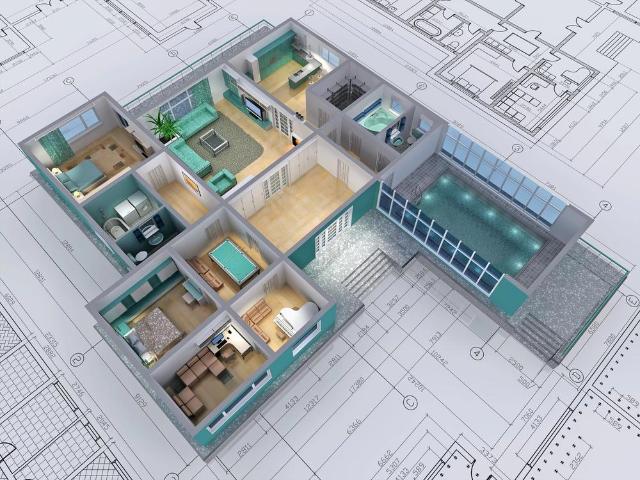
Image Source: depositphotos.com
The landscape of home design has undergone a profound transformation over the last two decades. What was once a field reserved strictly for professionals with years of training in technical drafting and architectural rendering has become accessible to the general public. This democratization of design is primarily driven by the rapid advancement of computing power and the shift toward intuitive, browser-based interfaces. As homeowners increasingly take an active role in their renovation and construction projects, the tools they use have evolved from simple sketching programs into sophisticated platforms capable of producing high-fidelity simulations.
The Transition from Manual Drafting to Digital Simulation
In the traditional design workflow, the transition from an idea to a physical structure involved multiple layers of abstraction. Hand-drawn floor plans and blue-prints required a high level of spatial visualization from the client. Misinterpretations were common, often leading to structural changes midway through construction, which inevitably resulted in budget overruns and timeline delays.
Digital tools have effectively eliminated this friction. By creating a "Digital Twin" of a residence, users can test every variable—from the placement of load-bearing walls to the specific hue of a kitchen backsplash—long before a single brick is laid. This shift toward simulation-based design ensures that the final physical product is a precise reflection of the initial digital intent.
The Role of Accessibility in Modern Planning
One of the most significant shifts in the industry is the move away from heavy, expensive desktop applications toward lightweight, high-performance web solutions. Today, having access to a professional-grade design home software means that a user can start a project on a laptop in an office and continue refining it on a tablet at a construction site. This level of portability has streamlined the communication between homeowners, contractors, and interior designers.
Key Benefits of Modern Design Platforms:
-
Error Reduction: Precise measurement tools ensure that furniture and structural elements are perfectly scaled to the room’s dimensions, preventing the common mistake of purchasing oversized items.
-
Cost Management: By visualizing the entire project beforehand, homeowners can generate accurate material lists, which helps in obtaining more precise quotes from contractors.
-
Creative Freedom: Users can experiment with unconventional layouts or bold aesthetic choices in a risk-free environment, fostering innovation that might have been stifled by the fear of making a permanent mistake.
-
Time Efficiency: Traditional design cycles that used to take weeks can now be condensed into hours, as changes are rendered in real-time.
Technical Features Defining the Current Standard
As the market for home planning tools expands, certain technical features have become the benchmark for quality. A high-functioning platform is no longer judged solely on its library of 3D models, but on its ability to handle complex spatial data and lighting physics.
Essential Functionalities to Consider:
-
Intuitive 2D-to-3D Conversion: The ability to draw a floor plan in a traditional top-down view and instantly toggle to a navigable three-dimensional environment.
-
Dynamic Lighting Engines: Software that can simulate natural sunlight based on the time of day and geographic orientation, allowing users to see how shadows will fall across their living spaces.
-
Extensive Object Libraries: Access to thousands of high-quality textures, finishes, and furniture models that represent real-world products.
-
First-Person Navigation: The capability to "walk through" a virtual home at eye level to check sightlines, ceiling heights, and the general "feel" of the proportions.
The Psychological Impact of Spatial Harmony
Beyond the technical and financial advantages, there is a significant psychological component to well-planned design. Our environment deeply influences our stress levels, productivity, and overall well-being. A room that is poorly laid out, with obstructed pathways or inadequate lighting, can create a subconscious sense of friction in daily life.
By utilizing advanced planning tools, individuals can design for "flow." This involves analyzing the traffic patterns within a home—how one moves from the kitchen to the dining area, or the transition from a workspace to a relaxation zone. When these transitions are seamless, the home functions as a support system for the inhabitant’s lifestyle rather than an obstacle.
The Future of Residential Design
Looking forward, the integration of Artificial Intelligence and Augmented Reality is set to push the boundaries of home planning even further. We are moving toward a future where software will not only allow us to draw walls but will actively suggest the most energy-efficient orientations or the most ergonomic furniture arrangements based on a family’s specific habits.
In conclusion, the era of "guessing" in home design is over. The combination of high-fidelity 3D rendering and accessible user interfaces has empowered a new generation of creators to take control of their surroundings. Whether you are planning a minor renovation or a complete architectural overhaul, the ability to visualize the future in a digital space is the most valuable asset in any project.