Operations | Monitoring | ITSM | DevOps | Cloud

Best Help Desk Software in 2026: Tested, Ranked & Compared

We evaluated the 10 best help desk software platforms of 2026 on features, pricing, deployment, and real-world fit, from unified IT asset-and-service tools to free and customer-facing options. Alloy Navigator leads for teams that need assets and the service desk in one place. The right pick depends on your users, compliance needs, and true budget, not the longest feature list. All prices below were verified in July 2026 and are list prices; add-ons and renewals often raise the real total.

What Is sFlow? A Guide to Sampled Flow Monitoring

What do you do when the switch carrying most of your traffic is the one device that cannot tell you what is on it? On high-speed core and data centre links, full flow export pushes device CPU past a comfortable line, so the export gets switched off and the busiest segment quietly becomes the least visible one. sFlow was built for that exact situation.

10 Best MySQL Monitoring Tools Compared for 2026

Your monitoring console probably covers the switches, the hosts, the VMs and the application traces. The database tier is the gap. It tends to live in a separate tab. Somebody opens that tab once the incident bridge has already started. That gap got more expensive this year. On 21 April 2026, Oracle moved MySQL 8.0 to Sustaining Support. The version most production estates still run no longer gets new fixes. Good MySQL monitoring tools close the gap.

8 Best Vulnerability Management Tools for Scanning, Prioritizing and Patching

A vulnerability scanner will hand you more work in one afternoon than the service desk can clear in a quarter. Thousands of findings arrive ranked by severity, every one of them technically actionable. Fixing them takes weeks, and in most organizations the backlog grows faster than it clears. That gap is what this guide is about. Every tool here scans reliably, scores findings sensibly and reports clearly.

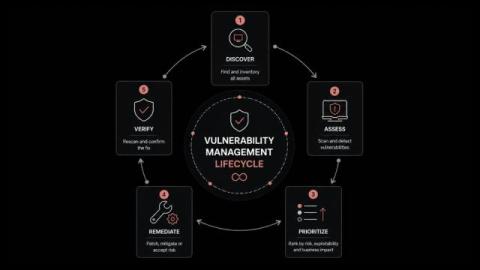
How the Vulnerability Management Lifecycle Runs from Discovery to Verified Fix

Who in your organization can say, without opening three separate systems, whether last month's critical findings are actually closed? A deployment record answers half of that. The other half needs a rescan, and the rescan often never happens. The vulnerability management lifecycle is that question written down as a repeatable process. It runs from knowing what you own through to proving a fix landed, and it restarts the moment it closes.

How to Build and Scale Unified Asset Intelligence for AI Success

Every IT leader has felt this tension: your organization has invested in AI, automation and digital operations, and yet outcomes still fall short of expectations. Even with the right tools and intent, you won’t be able to fully realize the value of your AI investments if they’re built on an unsteady foundation.

How to Measure Digital Employee Experience and Prove IT's Real Impact

Talking about Digital Employee Experience (DEX) has moved beyond being a trend and become a strategic necessity. In a scenario where almost all work depends on technology, employees’ digital experience directly influences productivity, engagement, the ability to innovate, and even the company’s financial results. The challenge is that many organizations still try to assess DEX using only traditional indicators, such as ticket volume or system availability.

The Industrial Mobile Browser Built for Supply Chain Work

Warehouse workers don’t think about whether their mobile interface runs on a browser. They’re focused on getting the job done. But for operations and IT teams evaluating or upgrading mobile technology in supply chain environments, platform choice matters more than most people realize. Consumer mobile browsers such as Safari, Edge and Chrome are useful tools designed for everyday web use. They help people search, shop, read, collaborate and access web applications from almost anywhere.

What are the Key Features and Evaluation Criteria for Vulnerability Assessment Tools?

How many findings from your last vulnerability scan have been verified as fixed? For most IT functions, the scan report is easy to produce, and the proof of closure takes far longer to assemble. That difference tends to surface at the worst possible moment, usually an audit or a post-incident review. Vulnerability assessment tools are meant to end that uncertainty. They inspect systems, match what they find against public vulnerability databases, and rank each weakness by how dangerous it is.

What Is SOC 2 Compliance? Requirements, Controls, and Evidence

Your largest prospect has asked for your SOC 2 report. The deal sits still until you produce one. Most teams handle the first half of SOC 2 compliance fine. They control access. They run backups. They put changes through approval before anything ships. The second half is what stops them, and that half is proof. Your policy says access gets reviewed every quarter. The auditor wants the dated review, the signature on it, and the same record from eight months ago.

Vulnerability Assessment and Penetration Testing: Differences, Cadence, and Cost

What do you say when an auditor asks for evidence that your security controls hold, and all you can produce is a scan report from last month? A scan lists weaknesses. It says nothing about whether an attacker could chain three of them together and reach the customer database. Vulnerability assessment and penetration testing answer two different questions about the same environment. The first asks what is exposed right now. The second asks what someone with intent and skill could do with that exposure.

What Is the MITRE ATT&CK Framework? A Guide for IT Ops Teams

Most IT operations teams cannot say how much of the MITRE ATT&CK framework they already cover. The framework gets explained in the language of threat hunting and red teams. The parts that belong to infrastructure work are easy to miss. And then, coverage questions get answered with a guess. The mismatch costs time on both sides. Security asks for a coverage answer that ops has no clean way to produce. Yet the controls that stop a large share of those techniques already sit with your team.

The Margin Leak Business Services Firms Can't Bill Away

Business services firms are built on people’s time, judgment, and credibility. When a consultant loses half an hour before a client workshop, a legal team is stuck waiting for a document system, or a service delivery group has to move conversations elsewhere because collaboration tools are unreliable, it may not register as a major IT event. It still changes the economics of the work, because skilled time is being spent compensating for the environment instead of serving the client.

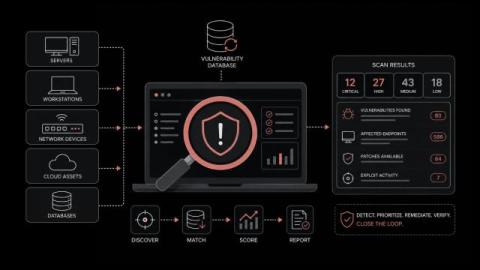
What Is a Vulnerability Scan? How It Works and What the Results Mean

How many machines in your environment are running software with a publicly documented security flaw right now? That figure comes from an asset inventory, and asset records age quickly once they are written. The gap is rarely about tooling budgets. Software inventory across a few hundred endpoints shifts every week, while the published catalogue of flaws in that software grows every single day. Manual inspection loses that race inside the first month.

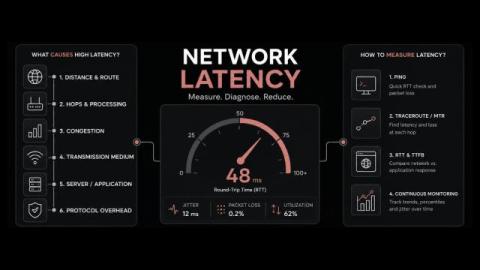
What Is Network Latency? Causes, How to Measure It, and Ways to Reduce It

Slow application complaints are among the hardest tickets in IT to close. The network gets blamed first; the dashboard shows nothing wrong, and the ticket bounces between teams for a week. Network latency sits at the centre of that argument more often than any other metric. Most dashboards report latency as a single average, and that average hides the slow requests people actually notice. A path can average 30 ms and still drop a call every ten minutes.

DEX Data Is Too Valuable to Limit to IT

For many organizations, digital employee experience (DEX) is still viewed as an IT project. It measures endpoint health, identifies performance issues, and helps service desks resolve incidents faster. While that’s useful, it’s also far too small a vision. In order to get the greatest return from DEX, organizations have to stop treating it as exclusively an engineering capability and started treating it as an equally powerful intelligence capability.