Operations | Monitoring | ITSM | DevOps | Cloud

SendGrid Status Monitoring: How to Track Email Delivery Outages

When SendGrid goes down, your transactional emails stop reaching customers. Password resets fail. Order confirmations vanish. Support tickets never arrive. By the time you notice, customers are already complaining. For DevOps and SRE teams, checking SendGrid status shouldn't be a manual process. It shouldn't wait until customers report it either. For a team sending 10,000 transactional emails per day, a 15-minute outage means roughly 100 emails that never arrived.
YouTube Outage (Feb 17, 2026). What Happened?

On February 17, 2026, YouTube went down for users worldwide. Starting around 8:00 PM ET, the platform's homepage, Shorts feed, sign-in system, smart TV apps, YouTube Music, and YouTube Kids all stopped working. Over 21,000 reports were logged on IsDown alone. The error message was the same everywhere: "Something went wrong." For consumer users, it was an inconvenience. For businesses that depend on YouTube — content teams, advertisers, media companies, live streamers — it was a blind spot.

AWS CloudFront Outage (Feb 2026): Timeline, Cascade, and Lessons

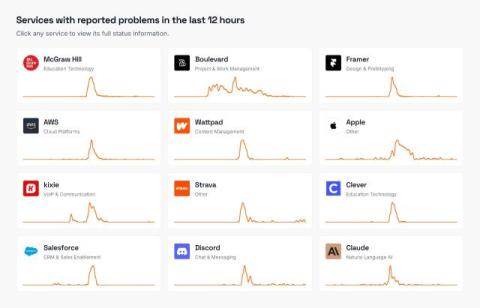
At approximately 9:15 PM UTC on February 10, 2026, Amazon CloudFront began returning NXDOMAIN responses for DNS queries against specific distributions. In practical terms: DNS was telling users that services behind those distributions simply didn't exist. The root cause was a DNS resolution failure within CloudFront's infrastructure that quickly spread to eight interconnected AWS services.

January 2026: IsDown Users Saved 9.2 Hours with Early Outage Detection

In January 2026, IsDown's early detection system gave users a cumulative advantage of 9.2 hours across 34 incidents — that's over half a business day of advance warning before vendors officially acknowledged their outages. The largest single detection advantage? A massive 2.2 hours for a SendGrid email delivery issue that left customers in the dark while their emails failed to reach Microsoft inboxes.

Cloud Provider Status Report - January 2026

This report analyzes cloud provider status data for January 2026, covering 12 major cloud platforms: AWS, Azure DevOps, DigitalOcean, Fly.io, Heroku, Linode, Microsoft Azure, Netlify, Railway, Render, and Vercel. The data includes official incident reports from each provider's status page and early detection capabilities from IsDown's monitoring system.
Sponsored Post

Why Every MSP Needs Centralized SaaS Monitoring

Your monitoring stack catches server failures, network issues, and application crashes. But what happens when Microsoft Teams goes down across half your client base at 3 AM? Your on-call tech gets bombarded with alerts that all trace back to one root cause they can't see. This is the MSP blind spot: third-party SaaS dependencies that sit outside your monitoring perimeter but directly impact your SLAs.