Operations | Monitoring | ITSM | DevOps | Cloud

Spans - a key concept of distributed tracing

Spans are fundamental building blocks of distributed tracing. A single trace in distributed tracing consists of a series of tagged time intervals known as spans. Spans represent a logical unit of work in completing a user request or transaction. Distributed tracing is critical to application performance monitoring in microservice-based architecture. Before we deep dive into spans, let's have a brief overview of distributed tracing.

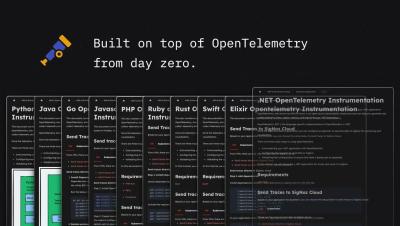
Choosing an OpenTelemetry backend - Things To Keep In Mind

OpenTelemetry is a Cloud Native Computing Foundation(CNCF) incubating project aimed at standardizing the way we instrument applications for generating telemetry data(logs, metrics, and traces). However, OpenTelemetry does not provide storage and visualization for the collected telemetry data. And that’s where an OpenTelemetry backend is needed. Cloud computing and containerization made deploying and scaling applications easier.

Docker Logging - Types, Configuring Drivers, Logging Strategies [Complete Guide]

Log analysis is a very powerful feature for an application when it comes to debugging and finding out which flow is working properly in the application and which is not. In a world of containerization and cloud computing, it is essential to understand logs generated by a Docker environment to maintain healthy performing applications. In this article, we will discuss log analysis in Docker and how logging in Docker containers is different than in other applications.

Elasticsearch vs Splunk - Top Pick for Log Analysis

Elasticsearch and Splunk can both be used as log analysis tools for software applications. Elasticsearch, as part of the Elastic Stack, offers a highly scalable, open-source solution for real-time search and analytics across diverse data types, excelling in customization but with a steeper learning curve.

Configure your Docker Syslog Logging Driver

Logs are useful for troubleshooting and identifying issues in applications, as they provide a record of events and activities. However, managing log data can be challenging due to the large volume of log events generated by modern applications, as well as the need to balance the level of detail in the logs and the impact on the application's performance.

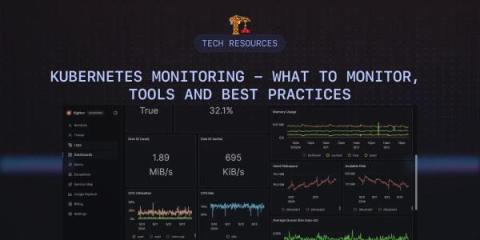
Kubernetes Monitoring - What to Monitor, Tools and Best Practices

Kubernetes has since emerged as “THE” container orchestration platform for deploying and managing containerized workloads as a result of its robust capabilities. However, the complexity of its architecture and its dynamic nature present significant challenges in monitoring deployed workloads and the platform itself. Kubernetes monitoring is crucial for maintaining the health, performance, and reliability of containerized applications.

Centralized Logging with Open Source Tools - OpenTelemetry and SigNoz

Modern-day software systems emit millions of log lines per minute. Cloud computing and containerization have made it easy to have distributed systems. Distributed systems emit logs from multiple sources. While developers have always used logs to debug stand-alone applications, centralized logging solves the challenges of modern-day distributed software systems.

Kubernetes Logging | Set Up K8s Log Monitoring with OpenTelemetry

Kubernetes is a powerful orchestration tool for managing containers, but it comes with its own set of challenges. One of the biggest hurdles is effectively logging what's happening in your system. As your applications grow and spread across clusters, keeping track of their behavior becomes crucial. In this article, we will discuss logging in Kubernetes, common Kubernetes log types, and how logs can be effectively tracked and managed.

Latest Top 11 Observability Tools in Spotlight - 2024's Guide

In microservices architecture, observability tools enable you to create central dashboards to gauge the health of your distributed systems. New age observability tools have shifted to providing quick workflows to debug application issues. In this post we will explore top 11 observability tools that you can consider to use for your software systems. In today's digital economy, distributed architectures have become the norm.

Kubectl Top Pod/Node | How to get & read resource utilization metrics of K8s?

Kubectl Top command can be used to retrieve snapshots of resource utilization of pods or nodes in your Kubernetes cluster. Resource utilization is an important thing to monitor for Kubernetes cluster owners. In order to monitor resource utilization, you can keep track of things like CPU, memory, and storage. In this article, we will see how to use kubectl Top command to get and read metrics about pods and nodes. We will also breakdown the output to understand what it means.

Kubectl Logs Tail | How to Tail Kubernetes Logs

The kubectl logs tail command is a tool that allows users to stream the logs of a pod in real-time while using Kubernetes. This command is particularly useful for debugging and monitoring applications, as it enables users to view log output as it is generated and quickly identify any issues or problems with their application. In this article, we will see how to use the kubectl logs tail command to stream logs, the benefits of using the command, and an advanced tool for streaming logs.

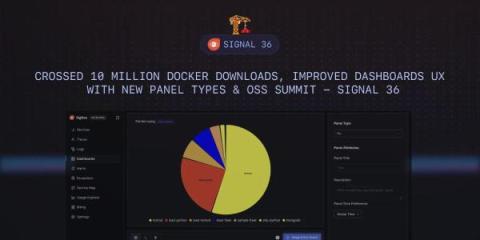
Crossed 10 Million Docker Downloads, Improved Dashboards UX with New Panel Types & OSS Summit - SigNal 36

Welcome to SigNal 36, the 36th edition of our monthly product newsletter! We crossed 10 Million Docker downloads for our open source project. We’ve enhanced our Dashboards UX and incorporated feedback from users in different areas of our product. Let’s see what humans of SigNoz were up to in the month of April 2024.