

Operations | Monitoring | ITSM | DevOps | Cloud

The Cost of Waiting: Why Operationalizing AI in IT Can't Be Delayed Any Longer

Most IT leaders already understand that AI is the future of operations, but too many are still treating it like it’s so far off. The irony? Waiting is exactly what’s costing them the most. While businesses obsess over budget cuts, resource constraints, and service quality, one truth remains: delays in adopting AI for IT operations are compounding operational inefficiencies, inflating labor costs, and stalling digital progress. AI isn’t just about innovation; it’s about scale.

How AI + Automation Are Paving the Way for Autonomous Networks

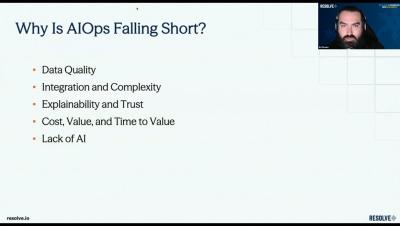
Network management teams are drowning in alerts, tickets, and manual escalations—slowing MTTR, driving up costs, and jeopardizing service quality. But the rise of AI-driven automation is changing the game. In this webinar replay, experts from Grokstream and Resolve will discuss how AIOps and automation are shaping the future of autonomous networks. Join Josh Kindiger and Ari Stowe to see firsthand how AI can reduce noise, detect root causes, and trigger end-to-end remediation without manual effort.
5 Use Cases Requiring Transformative AIOps Tools

As infrastructure grows in complexity, the demand for intelligent, autonomous operations is no longer optional. AIOps tools help IT organizations sift through data noise and detect what matters. But insights alone don’t close the loop. Without automation, even the most accurate prediction still relies on humans to triage, decide, and resolve. This is the gap intelligent automation fills.

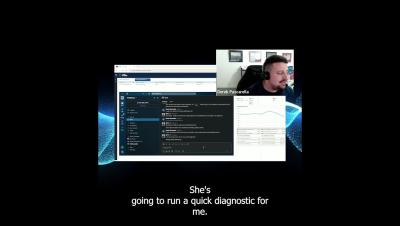
Watch RITA (Resolve IT Agent) fix VPN issues in seconds! #itautomation #ai #agenticai

Say goodbye to ticket chaos. Meet RITA. RITA (Resolve IT Agent) is your intelligent frontline assistant—built to deflect L1 tickets, resolve routine requests instantly, and slash MTTR across the board. In this live demo clip, watch Derek Pascarella, our Global Director of Sales Engineering, show how RITA fixes VPN issues in seconds—no human handoff, no ticket backlog. Ready to fast-track your journey to Zero Ticket IT? This is where it starts.

How to Build a Zero Ticket Service Catalog with IT Service Desk Automation

In a traditional IT environment, the service catalog has long functioned as a directory—an online menu of things users can ask IT for. Need a new laptop? Submit a ticket. Need Salesforce access? File a request. Every need, every problem, every question gets funneled into a form, queued up for manual processing, and eventually (and hopefully) resolved. But this static, ticket-heavy model can’t keep up with the pace of business today. Employees expect seamless, self-service experiences.

The Future of IT Is Human + Agentic: How Zero Ticket IT Is Reshaping Tech Careers

Automation has always stirred up fears of job loss. For IT professionals, the conversation has only grown louder with the rise of AI. But the truth is that the future of IT is not about replacement—it’s about reinvention. For decades, IT has been defined by its firefighting: manually resolving tickets, managing endless alerts, and fielding repetitive service requests. These tasks are ripe for automation, but automation doesn’t eliminate the need for IT talent.

Watch Automation in Action - Live! (June 2025)

Tired of endless alerts, escalating ticket volumes, and constant firefighting? It’s time to take back control. Join our next live demo to see how the Resolve platform orchestrates workflows that actually work! Reduce noise, slash resolution times, and free up your IT and network teams to focus on what really matters. We’ll show you how Resolve can: Get an exclusive, behind-the-scenes look at how automation and orchestration can help you scale your operations efficiently.

AI Service Desk Showdown: RITA vs. Legacy Chatbots

Over the last decade, IT teams have leaned on chatbots to manage rising support volumes, aiming to deflect tickets and lighten the burden on overworked service desk agents. These legacy chatbots served a purpose—but today they’ve hit a wall. Static responses and script-based flows can’t keep pace with the expectations of modern digital workers or the dynamic needs of enterprise IT. That’s where a new kind of intelligence emerges.