Operations | Monitoring | ITSM | DevOps | Cloud

NVIDIA Vera Rubin: What is it, what's new, and when you can get it

NVIDIA's infrastructure roadmap moves fast, and the next major milestone is already here. The NVIDIA Vera Rubin platform is the company's next-generation AI compute architecture, the successor to Blackwell, and it's shaping up to be one of the most significant leaps forward in AI infrastructure NVIDIA has ever shipped. Whether you're planning your next training cluster, scaling inference pipelines, or building the infrastructure to power autonomous agents, Vera Rubin is worth understanding now.

What Vera Rubin means for AI infrastructure in 2027

Every so often, NVIDIA releases something that quietly changes the direction of the industry. CUDA did it. DGX did it. NVLink did it. Vera Rubin feels like one of those moments again. At first glance, Rubin looks like the natural successor to Blackwell. Faster GPUs, larger memory pools, and eye watering performance numbers. But the more you dig into the architecture, the clearer it becomes that NVIDIA is not simply shipping another accelerator generation.

Multi-cloud vs. hybrid cloud: Which approach is right for your organization?

Cloud adoption has evolved from simple infrastructure outsourcing into a spectrum of deployment models designed to balance performance, resilience, compliance, and cost. Two of the most widely adopted approaches today are multi-cloud and hybrid cloud. While they are often discussed together, they solve different architectural problems.

What are the benefits of decentralized AI infrastructure?

Have you ever considered how you can utilize artificial intelligence (AI) without sacrificing control over your data and autonomy? As we continue to navigate the changes of AI in the 21st century, it is important to understand how decentralized AI infrastructure can empower individuals and organizations to harness the potential of AI while maintaining sovereignty over their data and decision-making processes.

How are hyperscalers misleading the cloud industry?

In 2024, Mark Boost, CEO at Civo, introduced the concept of ‘cloud parity’, a cloud computing approach that ensures a consistent, identical experience, feature set, and operational model across public, private, hybrid, and edge environments. “Cloud parity gives teams the freedom the cloud was supposed to deliver in the first place. It gives enterprises the sovereignty they need. It gives public sector bodies the clarity they require.

AI startup on a budget? How to master GPU computing without overspending

This blog is based on the webinar, “Panel Discussion: Understanding the importance of GPUs for AI success”. You can watch the full recording by clicking here! Cheap GPUs don't kill AI startups. Cheap thinking about GPUs does. In 2026, the teams burning through runway fastest aren't the ones who can't afford compute; they're the ones measuring the wrong thing and scaling the wrong way.

What is sovereign AI, and why does it matter for your business?

With AI reshaping every corner of the modern business, the highest-value workloads are often locked behind complex regulatory frameworks. Yet many organizations are still running them on infrastructure they don't fully control, trusting external platforms to decide where their data lives, where workloads run, and how their AI operates. Civo was built to change that.

The state of cloud and AI in 2026

Over the past decade, cloud computing has evolved from an emerging technology into the foundation of modern digital infrastructure. However, the latest industry research shows that the industry has now crossed a critical threshold. The conversation is no longer about whether to adopt cloud, cloud-native technologies, or AI. Instead, it has shifted toward operational efficiency, economic predictability, and infrastructure at scale.

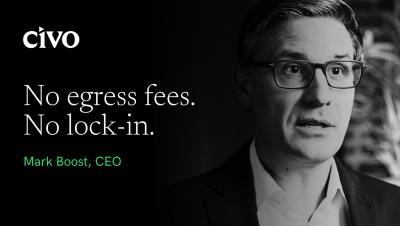
No egress fees. No lock-in. That's cloud freedom

With hyperscalers, growth comes with a hidden cost. The more your data moves, the more you pay, by design. Egress fees are that cost. A model built to discourage migration, limit flexibility, and keep you trapped in their ecosystem. At Civo, we've eliminated that barrier completely. No egress fees, no hidden charges. Every cost is transparent and predictable, so you always know exactly what you're paying for. You stay because you choose to. That's cloud freedom.

Hyperscaler vs. independent cloud: How startups should choose in 2026

A two-person startup signs up for the obvious hyperscaler because their last company used it, because Stripe runs on it, because the documentation is exhaustive, and because the free tier looks generous. Eighteen months later, with a small team and a healthy seed round, they discover they're spending $18,000 a month, and they don't quite know where most of it is going. Three engineers can describe the architecture in detail. Nobody can describe the bill.

ISO 27001, G-Cloud and SOC 2: How to vet a sovereign cloud provider

A procurement officer at a mid-sized financial services firm spent six months last year negotiating with a cloud provider that turned out not to hold the certification it had implied in its sales deck. The contract collapsed during legal review. The firm lost the time, the provider lost the deal, and somewhere in the middle, a senior engineer learned the difference between "compliant with the principles of" and "audited to the standard of.".