RCA Series: What is Root Cause Analysis? (1/4)
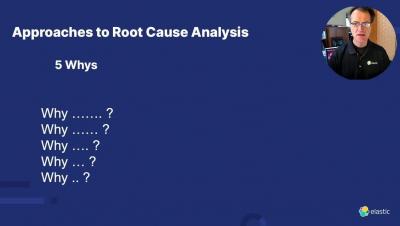
Part 1 of the series explains why root cause analysis is important in IT/OT, the 4 phases how root cause analysis is performed, and describes popular approaches.


Elastic customers have seen a 5% revenue improvement within three years, among other benefits. How? Using Elasticsearch, developers can ingest and connect various data sources to provide their companies, employees, customers, and/or public access to information and tune results for faster, more precise answers. Elasticsearch AI/ML powered search is designed to maximize performance and compute resources to deliver applications that can scale as businesses grow.
Generative artificial intelligence (GAI) is undoubtedly one of the biggest trends across industries in 2023. In a recent survey, almost two-thirds of executives believe generative AI will have a high or extremely high impact on their organization in the next three to five years. Executives anticipate spending the next 6–12 months focused on increasing their understanding of how generative AI works, evaluating internal capabilities, and investing in generative AI tools.
Are you prepared for the unexpected? In today's rapidly evolving world, operational resilience has never been more critical for businesses to survive and thrive. Resiliency is the ability of a system to maintain its operations under adverse conditions, including system failures, unexpected surges in user demand, or even security breaches. The heart of many applications, particularly in this era of data-driven decision-making, is the data store or database.
In a previous blog post, we built a small Python application that queries Elasticsearch using a mix of vector search and BM25 to help find the most relevant results in a proprietary data set. The top hit is then passed to OpenAI, which answers the question for us. In this blog, we will instrument a Python application that uses OpenAI and analyze its performance, as well as the cost to run the application.
In a recent blog post, we discussed how ChatGPT and Elasticsearch® can work together to help manage proprietary data more effectively. By utilizing Elasticsearch's search capabilities and ChatGPT's contextual understanding, we demonstrated how the resulting outcomes can be improved. In this post, we discuss how users’ experience can be further enhanced with the addition of facets, filtering, and additional context.
Across industries and geographies, businesses rely heavily on Systems Applications and Products (SAP) systems. These powerful and versatile systems streamline operations and manage critical data spanning areas like finance, human resources, and supply chain. However, the real-time monitoring of these systems, with an in-depth understanding of performance metrics and quick anomaly detection, is paramount for smooth operations and business continuity. It's here that our unique offering steps in.
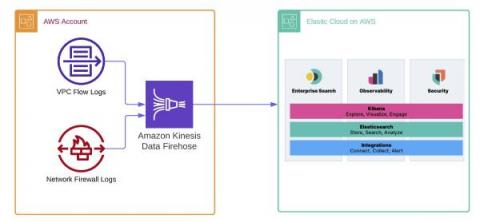
As more organizations leverage the Amazon Web Services (AWS) cloud platform and services to drive operational efficiency and bring products to market, managing logs becomes a critical component of maintaining visibility and safeguarding multi-account AWS environments. Traditionally, logs are stored in Amazon Simple Storage Service (Amazon S3) and then shipped to an external monitoring and analysis solution for further processing.
Elastic Enterprise Search 8.8 seamlessly bundles new Elastic developed semantic search capabilities with an expanding catalog of open code database and storage connectors. Additionally this release adds rich capabilities to measure and simplify adding features to your search application. These new capabilities allow customers to: Elastic Enterprise Search 8.8 is available now on Elastic Cloud — the only hosted Elasticsearch offering to include all of the new features in this latest release.