Operations | Monitoring | ITSM | DevOps | Cloud

Why you should use Language Server Protocol (LSP) with Claude Code

Agentic coding tools like Claude Code can write, refactor, and debug across an entire codebase, but by default they read code as plain text, the way grep does. The Language Server Protocol (LSP) changes that: it’s the same code-intelligence layer an IDE uses, and wiring it into an agent lets it read code by meaning instead of by string match. The bigger the codebase, the more a wrong guess about a symbol costs, and the more that structural view pays off.


Cut your environment setup time in half with Chunk sidecar snapshots

When you’re building with AI, you can get a lot done in 30 seconds. Waiting minutes for CI feedback on your latest change can feel like an eternity. Chunk sidecars are designed to give you feedback fast, running your full test suite against the same Linux environment as CI, directly inside the agentic loop. Traditional CI pipelines can take five or ten minutes to catch a basic lint error or failing unit test.

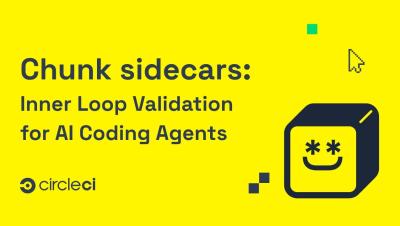
Chunk sidecars: Inner Loop Validation for AI Coding Agents

Your agent writes code fast, but you shouldn't have to see it until it's right. Chunk sidecars are lightweight microVMs that work inside the agent loop, requiring agents to pass pre-push validation in a CI-like environment before they declare they're "done." That means no massive CI pile-ups, no long round-trips that risk resetting your agent's context. You're sending code you already know is good.

Agent Hooks + Chunk sidecars: Stop Broken AI Code Before It Hits CI

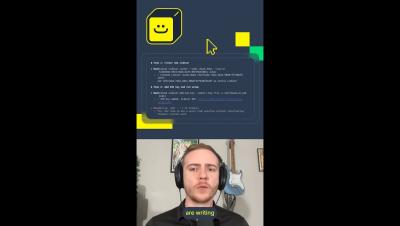
AI agents write code fast, but the feedback loop usually can't keep up. In this tutorial, you'll see how to wire Chunk sidecars into your agent's hooks so basic failures get caught before they ever reach your CI pipeline. We'll walk through the two hooks that chunk init writes automatically: Both hooks return exit 2 on failure, blocking the commit or keeping the turn open so the agent can fix its own mistakes with no manual prompting required.

Agentic validation needs different infrastructure

Previously, I described some core approaches to validating agent written code: feedforward and feedback techniques. Feedforward techniques are about avoiding errors up front, for example by coming up with better prompts and planning strategies. Feedback gives agents a signal that they have actually achieved a task. Feedback is a key part of common agentic patterns like Ralph loops or the /goal commands in Codex and Claude Code: keep working until some known condition passes.

Run CI Tests Without Pushing: Microbuilds with Chunk sidecars

AI coding agents write code faster than your pipeline can catch mistakes. What if the agent could validate against CI before you ever push? In this 5-minute demo, we set up CircleCI's Chunk CLI and run a microbuild using Chunk sidecars, secure Linux microVMs that spin up in ~1 second in your CircleCI account, mirror your working directory (no git push required), and give your agent CI-grade feedback while it's still in context.