Operations | Monitoring | ITSM | DevOps | Cloud

Claude Livecaster Is Now Open Source, Plus a Two-Voice Broadcast Mode | CircleCI Loop Lab

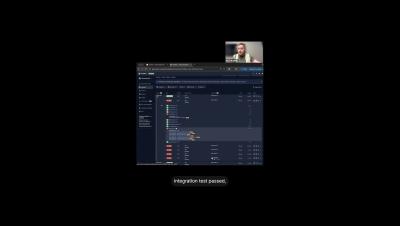
Claude Livecaster is now public on CircleCI Research. In this update, Ryan Hamilton walks through the newly open-sourced repo, seven built-in simulation scenarios, and a new two-voice broadcast format featuring an anchor and a field correspondent narrating the action together. The demo scenario: Pipeline Wars, six CI pipelines racing across three providers, with Claude providing live color commentary on every Docker build failure, OOM kill, and production rollout.

We Made Claude Narrate an AI Model Race Like a Sports Commentator | Loop Lab

What if you didn't have to stare at logs while your AI agent worked? In this Loop Lab experiment, Ryan Hamilton built Claude Livecaster, a tool that gives Claude a live voice to narrate long-running agentic processes like a sports commentator. The demo: six AI models (GPT, Gemini, and Claude variants) race through a CI/CD benchmark, and Claude calls the whole thing play-by-play. Rate limit hits, comeback stories, photo finishes, all of it, out loud.

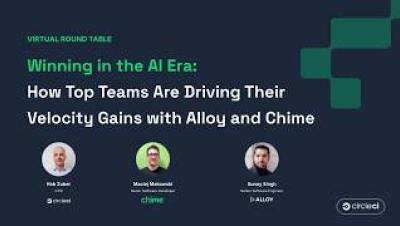
Winning in the AI Era: How Top Teams are Driving Their Velocity Gains with Alloy & Chime

While most teams struggle with the complexity of AI-generated code, Alloy and Chime have built internal cultures and processes that enable them to scale their development while maintaining quality. Join CircleCI’s CTO, Rob Zuber, in conversation with Maciej Makowski, Senior Software Developer at Chime, and Sunny Singh, Senior Software Engineer at Alloy, as they explore the dynamics that set their teams apart. They'll talk through the culture and delivery practices that actually moved the needle.

Deployment strategies: Types, trade-offs, and how to choose

A deployment strategy is the method a team uses to move new code into a production environment. It determines how traffic shifts between versions, how much risk each release represents, and how quickly the team can roll back when something breaks. The choice isn’t academic: a mismatch between strategy and system can mean downtime, failed rollouts, or hours of manual recovery.

What are test hooks in AI-native development?

Summary: A test hook connects a test or lint command to an event in your AI coding agent’s workflow. When the event fires, the agent runs the command automatically. If it fails, the agent’s action is blocked. You can wire your existing test commands into your agent’s lifecycle hooks to get deterministic local validation before code ever reaches CI. AI coding agents write code at a pace where stopping to manually run tests breaks your flow.

How to Optimize Your CI/CD Pipeline with AI (CircleCI Chunk Tutorial)

As AI-assisted coding tools increase the amount of code, commits, and builds, optimizing your CI pipeline becomes more important than ever. In this tutorial, we walk through how to use Chunk, CircleCI’s autonomous agent that validates your code at AI speed, to analyze your pipeline history, identify performance bottlenecks, and suggest optimizations to your CI/CD configuration. Chunk leverages critical CI/CD context like build history, test results, and execution data to keep pipelines healthy and moving at AI speed.

MCP vs. CLI for AI-native development

Summary: The CLI vs. MCP question is really a question about where you are in the development loop. CLIs fit the inner loop: fast, local, zero overhead. MCP servers fit the outer loop: external systems, shared infrastructure, structured access. Most teams need both. AI has put a new kind of scrutiny on developer tooling. When a developer works alongside an AI coding assistant, the tools that assistant can reach, and how it reaches them, directly affect the quality and speed of the work.

AI at Superhuman (before it was cool) feat. Loïc Houssier

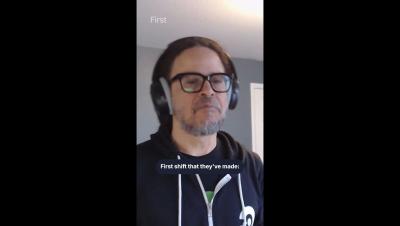
What does it actually look like to build an AI-native product and lead an engineering team through the AI era when you've been doing it longer than most? Rob Zuber sits down with Loïc Houssier, CTO at Superhuman, to talk about what it meant to be an AI company before AI was everywhere, and how that early foundation shapes the way they build, ship, and think today.

Regression Testing: What it is, why it matters, and how to automate it with CI/CD

Regression testing is the practice of re-running existing tests after a code change to confirm that previously working functionality hasn’t broken. It answers a single question: did this change break something that used to work? In CI/CD pipelines, regression tests run automatically on every commit, giving teams immediate feedback before code reaches production.