Operations | Monitoring | ITSM | DevOps | Cloud

Misconfigured Alert Detection: Find the Alerts That Need Tuning

Netdata ships with hundreds of stock alerts. They cover a wide range of infrastructure conditions and they’re designed with sensible defaults. But “sensible defaults” and “correct for your environment” are not the same thing. A CPU threshold that’s perfectly reasonable for a build server might generate constant noise on a machine running batch jobs.

What "AI-Ready Data" actually means for observability teams

Many organizations deploying AI are learning similar lessons right now: the challenge isn’t this or that AI model, it’s the data. According to Gartner, 60% of AI projects will be abandoned by organizations because of failures to support these projects with AI-ready data. Also, 63% of organizations either lack or aren’t sure they have the right data management practices to get there.

Now in Harness DB DevOps: Percona Toolkit for safer MySQL schema changes | Harness Blog

If you've ever run an ALTER TABLE on a busy MySQL table in production, you know the feeling. The change is small. The risk isn't. Long-running table locks, queued writes, application timeouts, replication lag, a five-minute migration that turns into a half-hour incident review. We're shipping an integration that takes that anxiety out of the loop. Harness Database DevOps now supports Percona Toolkit for MySQL as part of Liquibase-based schema management.

Why GitOps for MongoDB Matters: A Case for Harness DB DevOps | Harness Blog

Most development teams today build everything around Git, and deploy with GitOps principles. Code sits in version controlled environments, changes go through PRs, and deployments are handled through modern CI/CD. That part is pretty standard at this point, especially when using a modern DevOps platform like Harness.

Accelerating AI Agent Development on Google Cloud with JFrog MCP Registry

Developers building agentic AI on Google Cloud have powerful infrastructure at their fingertips: Gemini 3 for reasoning, Google’s Agent Development Kit (ADK) for orchestration, and a rapidly expanding ecosystem of Model Context Protocol (MCP) servers that connect agents to data and tools. So why are so many teams still waiting weeks to ship their first agent to production?

The New Kubernetes Monitoring Experience in Splunk Observability Cloud

In this video, I walk through the three main pieces of the new Kubernetes monitoring experience in Splunk Observability Cloud: the Kubernetes overview page for monitoring the status and top issues across your environment, the Kubernetes Entities page for troubleshooting individual instances with correlated metrics, logs, events, and configuration, and the Workload Optimization view for getting actionable recommendations on your CPU and memory resource allocation.

The 2026 software supply chain security gap

AI-generated code is now nearly universal. Enforcement is not. That gap is where your software supply chain is most exposed. Cloudsmith's CEO Glenn Weinstein, Co-Founder & CTO Lee Skillen, and VP of Product Alison Sickelka join Product Marketing Manager Meghan McGowan to unpack the 2026 State of Artifact Management report – a survey-based look at how AI development is reshaping the threat landscape, what organizations are getting wrong, and what the highest-leverage fix actually looks like.

Introducing the Cortex AI Assistant (now in Slack)!

Mention @Cortex in any Slack channel the Assistant has been invited to, public or private, and get grounded answers pulled from your Cortex data. Questions can be as simple as "who owns payments-api?" or as analytical as "what's driving our incident trends this quarter?" The Assistant pulls context from all across Cortex, including ownership, Scorecards, Initiatives, on-call, dependencies, and Eng Intelligence metrics, and holds context across a threaded conversation.

Demo - Selector Platform NOC Operator Workflow

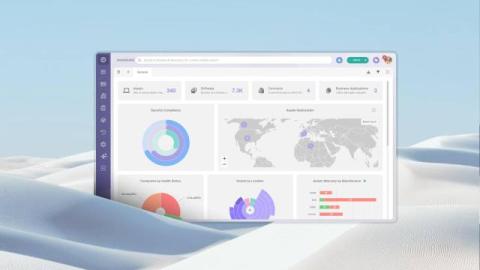
See how Selector transforms NOC operations in real time. This demo walks through a typical workflow - from ingesting massive volumes of network and system data to automatically detecting anomalies, correlating events, and pinpointing true root cause. Instead of chasing alerts across siloed tools, Selector delivers a single, intelligent view - reducing noise, highlighting impact, and accelerating resolution.