Operations | Monitoring | ITSM | DevOps | Cloud

AI-Assisted Documentation Search Goes Conversational

Conversational AI has arrived in Alloy Software documentation, making it easier to find the exact answers you need. Ask a question, follow up naturally, and refine the response until you reach the right instructions or product details, without starting over or digging through pages. The redesigned experience keeps the conversation in context and lets you go as deep as you need.

From AIOps to agentic ITOps: Why AI for IT operations has entered a new era

Enterprise IT has reached an inflection point. Your teams are responsible for hybrid cloud infrastructure, microservices, third-party dependencies, and shipping AI-generated code at unprecedented velocity. IT environments are becoming more complex faster than traditional tools and processes can keep pace. Alert volumes keep climbing. Institutional knowledge keeps walking out the door. And the pressure to do more with flat or shrinking budgets isn’t letting up.

Actionable Intelligence, Not Artificial Intelligence: What AI in Data Center Management Actually Requires

“AI-powered” has become a marketing label applied to almost any data center software feature. A more useful and precise term is actionable intelligence — a four-level maturity model (descriptive, diagnostic, predictive/prescriptive, and cognitive) that shows whether a platform’s AI claims are backed by real data infrastructure or just a chatbot layered on top of an incomplete system.

I'll have my AI agent call your AI agent: Battle for your digital hub

On this episode of Masters of Data, we unpack what it actually means to expect AI to be the primary interface for everything we do. We dig into the pull toward centralizing work in a single hub like Claude versus staying spread across specialized tools like Slack, Asana and Zoom, and where the line sits between helpful automation and letting an agent speak on your behalf. We also get into the "chief of staff" agent workflow for daily roundups and why specialized, best-of-breed tools aren't going anywhere, even as hubs get smarter.

How to Monitor WooCommerce Checkout With Playwright

A WooCommerce checkout monitor should verify that a shopper can open a product, add it to the cart, reach checkout, enter valid details, and see a usable payment option. Playwright is a good fit because these failures often happen after the server has already returned a successful HTTP response. WooCommerce itself uses Playwright for its end-to-end tests. A scheduled production check uses the same browser behavior for a different purpose: finding a broken customer journey between deployments.

Monitor Magento Checkout With Playwright: Full Guide

A Magento checkout monitor should prove that a customer can select a product, create a cart, reach checkout, enter a shipping address, and load the expected delivery and payment methods. Playwright can test the rendered storefront while also checking the GraphQL or REST requests behind it. Adobe Commerce and Magento Open Source provide several testing tools, including a Functional Testing Framework and web API tests.

Instant Kubernetes Observability with Proxymock #speedscale #kubernetes #ebpf #devops #cloudnative

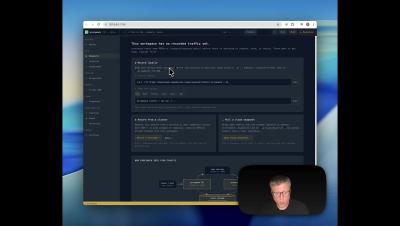
Learn how to get instant observability into your Kubernetes cluster by installing the Speedscale operator and proxymock tool. In this step-by-step tutorial, we walk you through setting up the operator to capture live network traffic (including encrypted traffic, API calls, and database calls) without complex instrumentation or manual configuration.