Operations | Monitoring | ITSM | DevOps | Cloud

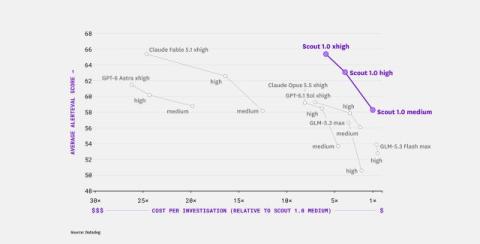
Introducing Scout 1.0: A new SRE model powering Bits AI with frontier performance at a fraction of the cost

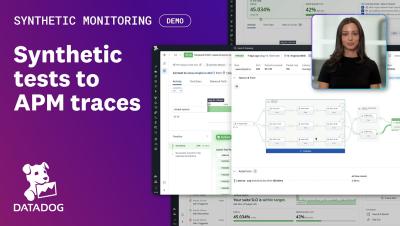
Today, we’re introducing Scout 1.0, Datadog’s first AI model specialized for investigating production issues. Scout powers Bits Investigation, our AI SRE. We trained Scout to reduce inference cost so that investigations are cheap enough to run an order of magnitude more often and earlier in an incident’s lifecycle. Key highlights include: Close dialog.


What is The Spark? Why Civo is building Britain's sovereign AI infrastructure

Every age has had its spark, the moment an idea stops being an idea and becomes something a whole country can build on. Steam, electricity and the web all began with people who could see what was possible, but each one only changed the world once someone built the infrastructure to make it real. Britain has never been short of those people. Our universities produce world-leading AI research, our engineers are among the best anywhere, and our founders build companies the rest of the world wants to buy.

JFrog Business Value Center: Celebrate the ROI of Your Software Supply Chain

You already know the effectiveness of the JFrog Platform – blocking risky packages, speeding up builds, securing the supply chain, providing end-to-end governance and so much more. But when it comes time to renew the license, a new VP may ask: “What are we actually getting in return?” or finance wants to understand the ROI: can it really be proven by the numbers?

Canonical releases Ubuntu 26.10 Stonking Stingray

Today Canonical announced the release of Ubuntu 26.10, codenamed “Stonking Stingray,” available to download and install from ubuntu.com/download. Building on previous releases, Ubuntu 26.10 advances enterprise security features, completes the rollout of the Rust-based uutils coreutils, and strengthens integrations for user authentication using Microsoft Entra ID.

Introducing Aiven AI Gateway

At home I run fully automated coding loops on a few side projects. They use more than 100-million tokens a day. At Claude Opus 5.5 prices, that costs more than $5,300 a month. For hobby projects. The same usage on DeepSeek V4.1 Flash cost about $330 a month, one sixteenth of the price. If we want to keep scaling how much we use AI, most of those tokens have to run on open models, period.

Coverage-first or cost-first: two ways to automatically apply Adaptive Metrics' recommendations

Adaptive Metrics , which is part of the Adaptive Telemetry suite, looks at how your metrics are actually used and recommends how much detail you should keep for each metric. This helps you cut costs while still retaining the data you actually need. Last year we added auto-apply capabilities that let you implement those recommendations automatically, but only with coverage-first behavior, maximizing coverage of whatever you're querying.

Get observability in your pocket with the Grafana mobile app

When you’re on the go, your phone is often the only observability tool you have. And what you can do with it in the first few minutes matters. With the incredible innovation that has gone into mobile CPUs, GPUs and displays, a phone is a powerful device where you can immediately see what’s happening and start acting on it. And the Grafana mobile app now allows you to both see and act.

Prepare Your Apple Fleet for iOS 27 and macOS 27

iOS 27 and macOS 27 introduce significant changes to how organizations manage, secure, and update Apple devices. New requirements around Declarative Device Management, evolving security capabilities, and software update enforcement mean IT teams can't afford to wait until launch day. Yosune Baltra, Product Manager at Ivanti, breaks down the updates IT admins need to understand now — from Software Update Enforcement and Settings configurations to how Ivanti's Autonomous Endpoint Management solutions help you manage, secure, govern, and remediate endpoints across macOS, iOS, and iPadOS.

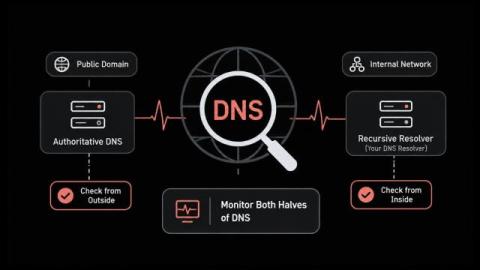
DNS Monitoring: What to Track and Where to Watch It From

DNS monitoring asks your name servers the same question on a timer and checks the answer that comes back. Most teams aim it at their public domain and stop there. That covers half the problem. Your public domain and your internal resolver fail in different ways. A check from outside the building never sees the second one. In this blog, you'll see: By the end you'll know which half of your DNS nobody is watching. A DNS check sends a query and reads the reply. The reply can fail three ways.