Operations | Monitoring | ITSM | DevOps | Cloud

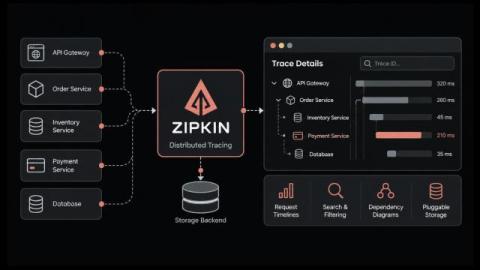
What is Zipkin and How does Distributed Tracing Speed Up Incident Resolution

If a checkout slows down or an API call fails, why can the cause stay hidden for so long while every service dashboard looks fine? One customer click in a microservices setup may hit a gateway and a few backend services first, then a queue or a database. Every hop logs its own events, yet none of those logs points back to the original request. Distributed tracing was created to solve exactly this. Zipkin arrived early, as one of the first open-source tracers.

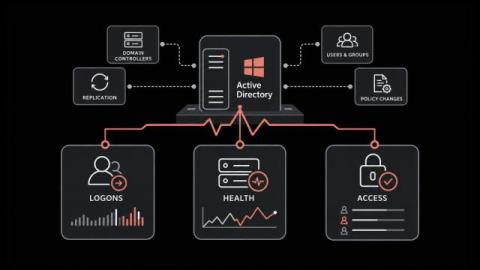
What to Monitor in Active Directory to Keep Logons Fast and Access Under Control

Why do logons crawl at one branch while headquarters is fine, or an admin group gain a member nobody approved, and no alert says a word? Trace any of those back far enough and you usually reach Active Directory. Since email, VPN, file shares and line-of-business software all lean on it for credentials, a directory fault rarely looks like itself and tends to show up as a network outage or a bug in some other application. Most of these faults creep in.

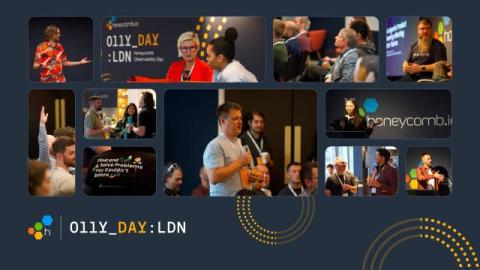
Everything We Talked About at O11yDay London 2026

We just wrapped O11yDay London, and one theme ran through every session: writing code is no longer the hard part. Review queues, attention, operating agents in production, runaway token bills, and proving any of it is worth the money are where teams are getting stuck. The teams making progress are the ones who can see what's happening in production. Here are some highlights. We'll have videos available in the near future.

CriblCon 26 Keynote highlights: Cribl StreamAI, App Framework, Marketplace, and Detect

This CriblCon 26 keynote highlight reel introduces Cribl’s AI platform for telemetry and highlights Cribl StreamAI, the Cribl App Framework, Cribl Marketplace, and Cribl Detect. It is relevant to IT, security, and observability teams exploring intelligent model routing, agentic app development, marketplace deployment, and security investigations using telemetry and context. The keynote also covers the SEC IT benchmark, the cost of investigating incidents with different AI models, and included inference for Cribl-native workloads.

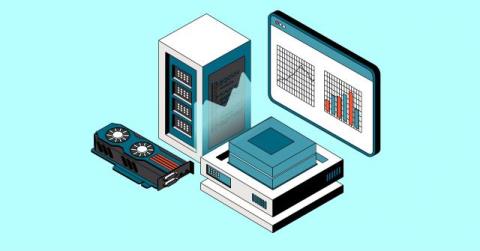
AI infrastructure costs in 2026: what the stack is, what each layer costs, and how much to commit

AI infrastructure costs span four buying tiers in 2026: API-only teams spend hundreds to tens of thousands per month on tokens, GPU renters typically pay $2 to $10 per GPU-hour by chip class, committed-capacity buyers sign six-to-eight-figure reservation contracts, and owners spend millions per rack. The stack has six layers, and most budgets underestimate everything below the GPU line.

How CFOs can control AI spend and prove AI's value

Neil Sawyer, Senior Vice President and Managing Director for HP Europe, Middle East and Africa, recently published “Scaling AI Without Losing Control” in Forbes Business Council. His starting point will be familiar to any finance leader. AI pilots looked affordable on pay-per-token and pay-per-query pricing, and that same pricing can get far more expensive at enterprise scale. Gartner forecasts worldwide AI spending will reach $2.7 trillion in 2026, up 49.5%.

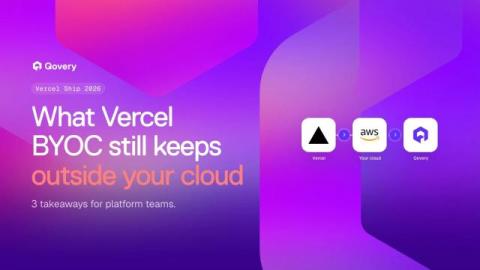
Vercel Ship 2026: 3 Takeaways, and What Vercel's BYOC Still Keeps Outside Your Cloud

Vercel Ship 2026 made three things clear: Vercel wants your backend, agents now trigger most deployments, and Bring Your Own Cloud on AWS is GA. Here is what each announcement means for platform teams, what Vercel BYOC actually runs in your AWS account, and what it leaves on Vercel. Romaric founded Qovery to make Kubernetes accessible to every engineering team. He writes about platform strategy, developer experience, and the future of cloud infrastructure.

Lessons Learned on the Journey Zero Disruption: How to Build Buy-In Across the Organization

Operationalizing digital employee experience is not about implementing another technology platform or launching another transformation project. It is about embedding new capabilities into the way IT and eventually the wider organization identifies problems, manages change and improves the employee experience. That cannot happen through implementation alone.

Free YouTube Comment Picker and Giveaway Tool: How to Choose a Fair Winner

A YouTube comment picker is a tool that collects the comments on a YouTube video and randomly selects winners for a giveaway or contest. You paste the video link, set your filters and the tool draws one or more names. Creators use comment pickers because scrolling through hundreds or thousands of comments by hand is slow, error-prone and hard to prove fair. A random draw removes personal bias and gives you a result you can show your audience.