Operations | Monitoring | ITSM | DevOps | Cloud

Is VPA "Good Enough"? How Kubex Delivers Enterprise-Ready Workload Optimization

Kubernetes workload rightsizing is one of those tasks everyone agrees is important and almost nobody enjoys doing by hand. Set requests too high and you pay for capacity that sits idle; set them too low and you invite CPU throttling, out-of-memory kills, and late-night pages. It’s no surprise, then, that many teams reach for the Vertical Pod Autoscaler (VPA) as their first step toward automated rightsizing.

Data Center Rack Density Just Crossed 11kW. Do You Have the Tools and Data to Keep Up?

Uptime Institute's Global Data Center Survey 2026 found that the average modal rack density exceeded 11 kW in 2026, up from 9 kW in 2025. “Modal rack density” means the rack density that is most common within a data center. Arguably, the more important trend is that rack densities are becoming more varied, with more facilities supporting a mix of conventional and high-density racks.

CVE-2026-74580: Possible VM Escape via the Vghost Vulnerability

CVE-2026-74580 is a high-severity Linux kernel bug in vhost, the subsystem that accelerates I/O for virtual machines. It gives a local user a reliable path to root on the host, and in some VM setups it lets a guest write into host memory. The CVE record has existed since August 21, 2026, but the full technical write-up, nicknamed "Vghost", only went public on October 12. It came with working exploit demos for both a local root escalation and a VM escape.

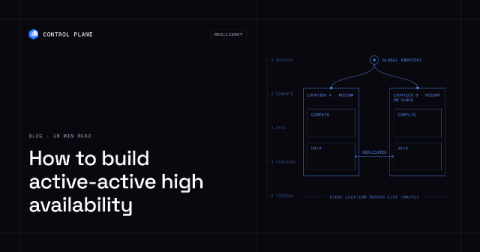
How to Build Active-Active High Availability Across Regions and Clouds

Active-active means two or more locations serve live traffic at the same time, with the application running in each and its data replicated across them, so no location sits idle waiting for a failover. You build it in five layers, and data is the hardest.

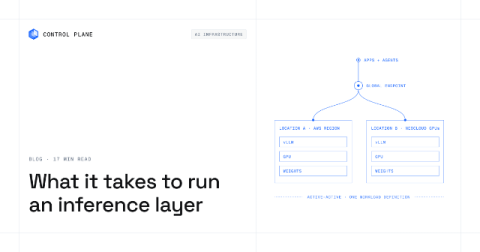
What Infrastructure Do You Need to Run an Inference Layer? A Production Guide

A production inference layer needs GPU compute sized to the model, a serving runtime such as vLLM or SGLang, orchestration that autoscales on queue depth, one endpoint with health-aware routing and failover, model weights cached near the GPUs, and observability, security, and cost controls.

Connect Bitbucket Cloud to your AI tools with Atlassian MCP

Developers use Bitbucket Cloud every day to turn plans into working software. Code lives in repositories, feedback happens in pull requests, and Bitbucket Pipelines helps teams validate changes before they move forward. For an AI assistant to help with this work, it needs access to the same information. Without a direct connection, developers have to gather pull request details, pipeline results, logs, and links before the assistant can help.

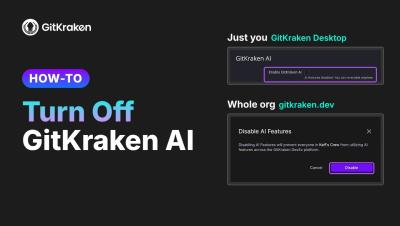
How to Turn Off GitKraken AI (GitKraken Desktop and Organization-Wide)

Let's talk about 2 ways to turn off GitKraken AI: for your own account in GitKraken Desktop, and for everyone in your organization from gitkraken.dev. Turn off GitKraken AI for your account (GitKraken Desktop) Turn off GitKraken AI for your organization (admins and owners) Optional: limit AI providers On the same Security controls page, under Enforce AI providers, turn off any provider you don't want your organization to use.

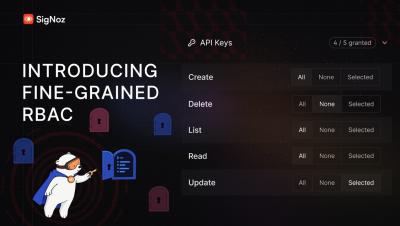
Introducing Fine-Grained RBAC: Resource-Level Permissions in SigNoz

A quick demo of fine-grained access control in SigNoz, using dashboards as the example. We’ve built one of the most advanced access control models in the observability space. See how to define exactly who can access each individual dashboard.