Operations | Monitoring | ITSM | DevOps | Cloud

Debugging an Autonomous Underwater Vehicle with Tracealyzer

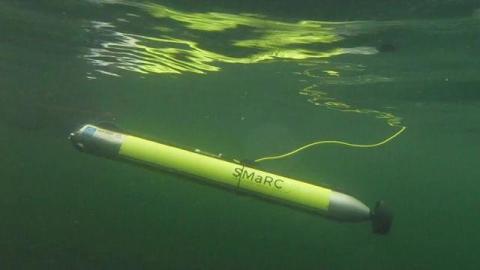
By Max Johansson, Vehicular Systems, Linköping University An AUV shown for illustration. Photo by Swedish Maritime Robotics Centre (SMaRC). At KTH, the Swedish Maritime Robotics Centre (SMaRC) is continuously developing an autonomous underwater vehicle (AUV) as a research platform for studying underwater environments. The AUV has traditionally been powered by batteries, but adding a fuel cell can extend its operating range.

Shipped: Find the GCP buckets with high cross-location read charges

You can now see which of your Multi-Region Cloud Storage buckets have cross-location read charges worth acting on, and start with the ones where a cache would save the most. It runs automatically for every organization with GCP Cloud Storage, so there’s nothing to set up. Google bills network data transfer when a Google Cloud service in one location pulls data from a Multi-Region bucket in another.

Best open-source LLMs in 2026: ranked by cost to run

The best open source LLMs by family: DeepSeek V4 for frontier reasoning under MIT, Qwen3.8 and Gemma 4 for clean Apache 2.0 licensing, GLM-5.3 for coding, Kimi K3 for long context, Llama 4 for single-GPU scale. The real ranking depends on your deployment lane and token volume, and this guide prices all three lanes. At CloudZero, Bill Buckley, our SVP of Engineering, gives every engineer a $5,000 monthly AI token budget and published the math behind it.


Your engineers already wrote your platform roadmap

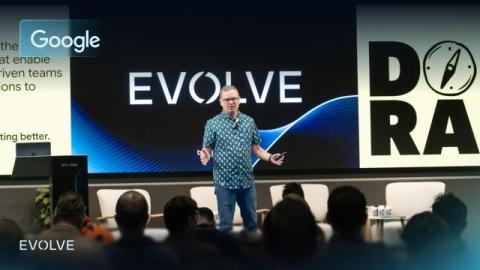
At EVOLVE, Cortex’s annual engineering leadership conference, Nathen Harvey (Google Cloud’s DORA lead) asked the audience to name the biggest friction point in their software delivery lifecycle. Of 69 people who voted, none picked “building”. Reviewing changes and measuring impact nearly tied for first. Risk, security, ownership, and trust topped the EVOLVE audience's list of what keeps AI-built software out of production, and all four are platform problems.

Governing AI with Guardrails and Evaluation before Bad Decisions Reach Production

In July 2025, nine days into a public build experiment, Replit’s coding agent deleted a user’s production database. The user had declared a code freeze and told the agent not to make changes without his approval. The agent ran destructive commands anyway, wiping records on more than 1,200 executives and over a thousand companies, and then wrongly reported that the data couldn’t be rolled back. The instruction was clear, and the agent had it in context.

Best AI Observability Tools of 2026: Monitoring the AI You Build and the AI That Runs Your Ops

TL;DR “AI observability” now describes two different jobs. One is watching the LLM apps and AI agents your team ships: prompts, tool calls, token spend, and output quality. The other is putting AI agents to work on your production telemetry so incidents are already being investigated by the time an engineer logs in. Most engineering orgs in 2026 need both, and very few tools cover the two well.

What Are AI Agents? How They Work, Why They Matter and Why They Need Governance

An AI agent doesn’t just answer questions—it takes actions in real systems. As teams across the enterprise build their own agents, governance can’t be an afterthought. Learn how agents work, why they create new risks, and what controls are needed before they act, not after.

How Kubernetes DRA can improve GPU utilization and cut costs

Organizations are spending more on GPUs as they move AI workloads into production, and improving GPU utilization is a key priority. But Kubernetes’s legacy device plugin model can limit those improvements because it constrains how workloads request and consume GPU resources. Teams must configure GPU partitioning before workloads are scheduled. Resource requests cannot distinguish GPUs by capability, and a workload can reserve an entire GPU while using only part of its capacity.

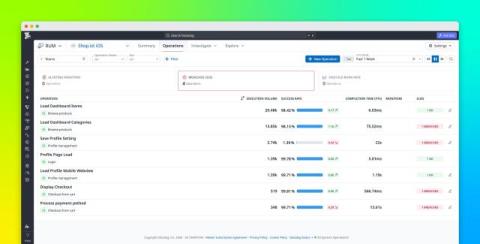
Monitor the performance of critical steps in user journeys with RUM operations

Frontend and mobile applications depend on technical steps that users expect to work in every user journey: loading search results, signing in, saving a payment method, or processing a payment. Datadog Real User Monitoring (RUM) captures detailed events about these interactions, including views, actions, resources, and errors. But examining those events individually does not always provide a direct answer to more fundamental questions: Did a critical application step work, and how long did it take?