Operations | Monitoring | ITSM | DevOps | Cloud

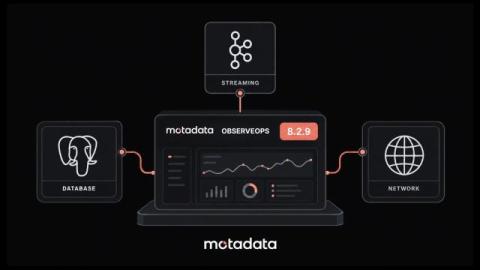
What's New in Motadata 8.2.9 as ObserveOps Expands Database, Streaming and Network Coverage

How often does a lagging replica or a bad network link reach users before your monitoring flags it? The problem grows when every layer has its own tool. Warning signs then show up in different places, often too late to act on. Motadata 8.2.9 came out on October 5, 2026, with eight updates to Motadata ObserveOps. Four of them focus on the network. The other four deal with databases, data streaming, alerting and SEBI compliance reporting. A few add support for technologies Motadata did not cover before.


The Cheapest Personal Cloud Storage Offers 2026

Finding the cheapest personal cloud storage doesn’t mean compromising on privacy or security. In this guide, we compare the best and most affordable cloud storage options for personal use in 2026, covering free plans, monthly subscriptions, storage capacity, security features, and lifetime deals to help you find the best value for your needs.

How Connected Equipment Data Helps Teams Catch Problems Earlier

An undetected equipment fault can escalate into costly downtime or an emergency repair. Connected equipment data can help IT operations teams catch problems earlier, while they're still minor. Your results depend on how telemetry moves from device to platform, how baselines define normal behavior and how alerts reach the right maintenance personnel.

10 Best Shopify Agencies for 2027: Who to Hire and What They Do Best

Finding a Shopify agency is easy. Finding one that understands your business, delivers the right technical solutions, and stays involved after launch is a different challenge. Some agencies specialize in visually distinctive storefronts. Others focus on platform migrations, custom development, or improving conversion rates. The right partner depends on what your business needs today and how you expect it to grow.

Top Platforms for Online Courses in 2027: 9 LMS Solutions Compared for ROI

AI-powered learning tools flooded the market in 2026. Yet Gartner reports that 85 percent of learning leaders expect a surge in skills-development needs during the next three years. Drawing on pricing pages, investor decks, and hundreds of user reviews collected through 13 October 2026, we asked a single 2027 question: Which online-course platform pays for itself once subscription fees, implementation, admin labour, and switching risk are tallied?

How to Build an Office Network That Can Handle Business Growth

A video call freezes mid-sentence. Just for a second. Everyone waits, then carries on as if nothing happened. A week later, a new hire cannot get her laptop online in the small meeting room. She tries the next room. It works there. Nobody calls it a network problem. Not yet. It is just one of those things. Then it adds up. Two more people join. Someone plugs a printer into whatever port was free. The guest WiFi quietly starts carrying half the office because the main network keeps dropping. None of this was planned. It drifted.

Observability Never Really Shifted Left

We made software development faster. Now we need to make validation faster, too. For the last decade we have shifted development left. Testing, security, performance, and CI/CD all moved closer to the developer. Observability mostly did not. It still starts after deployment (we covered the incident side of this in Your Observability Stack Found the Fire), which means the people writing the code rarely have meaningful production behavior to observe while they build.
Sponsored Post

Chaos Monkey Won't Find Your Bug

We shipped a chaos feature that never caused any chaos. Our mock server has had a fault-injection effect for years with a straightforward job: withhold the response entirely and see whether the caller copes. Last week I audited it against the actual code path. It had never withheld anything. The handler returned early without writing a response. Go's net/http then did what it is designed to do, which is synthesize a 200 OK and flush the recorded body. Every experiment anybody ever ran with that effect handed the application a perfectly good answer, and every one of them passed.

The SAP Automation Advantage: What High-Performing SAP Teams Have in Common

Every Basis team has a list. The tasks nobody schedules because they get done by hand, by a Basis miracle worker who knows the sequence. System refresh. Parameter settings across multiple production systems. The cloud invoice with a number nobody can explain. The teams with a short list of manual tasks got there with automation. What separates them isn’t enthusiasm for automation as a concept.