Operations | Monitoring | ITSM | DevOps | Cloud

The latest News and Information on Incident Management, On-Call, Incident Response and related technologies.

Four Years as a Public Company

Four years ago tomorrow, our team rang the bell to open the NYSE for PagerDuty’s IPO. We spent two weeks traveling to meet hundreds of prospective investors in person, sustained by a diet of Cheetos and green M&Ms, sneaker-clad walks to meetings, and unwinding with bad karaoke. We’ve grown in many ways in our first four years as a public company. We have more than doubled the number of customers on the PagerDuty platform, and nearly tripled the number of users.

How to enrich IT alerts and add context with Data Engineering

I see it daily in my role, IT organizations are paying for best-of-breed monitoring tools but struggle to tie the pieces together between these siloed systems. The wound of these silos is further punctured when incidents arise. Incidents are costly for so many reasons, like wasted company resources, potential revenue loss, customer satisfaction, employee burnout, etc. This is exactly why BigPanda exists, to apply AI to the complex problems IT operations, NOC, SRE, and DevOps teams face daily.

Incident Response Playbook

In today's digital age, IT departments play a crucial role in maintaining the overall functionality and security of an organization. One essential tool for managing service outages and downtime is the incident response playbook. This comprehensive guide provides IT departments with the necessary processes and strategies to resolve incidents in a timely and efficient manner.

Time to Upgrade? Why Traditional Pagers Are No Longer Enough

When it comes to time-sensitive events, instant, reliable communication is key. In the past, pagers were relied on for quick communications as they allowed people to communicate on the go and without access to a landline. But today, the availability of cellphones has made the portability of communication devices a standard feature, and communication technology has advanced significantly, begging the question – What is the use for pagers today?

Create a service catalog that grows with you

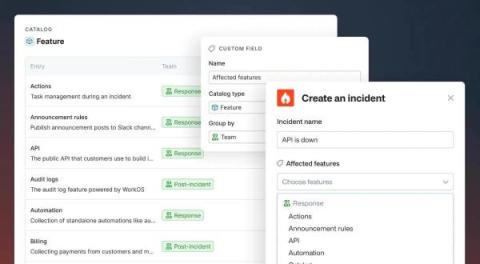
When your incident response process is centered around a service catalog, responders are able to more quickly pinpoint the service or functionality that’s down, bring in the team or experts, and then get to solving the problem faster. Saving even a few minutes can have a big impact on decreasing the costs around incidents and outages, so having up-to-date service details at your fingertips can make all the difference.

Squadcast + HaloPSA Integration: Enabling Streamlined Incident Response & Alerting

HaloPSA is a modern and intuitive all-in-one professional services automation (PSA) solution, designed for service providers. HaloPSA’s cloud platform helps you manage your entire business, modernize customer experience and automate your service. If you use HaloPSA for PSA requirements, you can integrate it with Squadcast, an end-to-end Incident Response and Reliability Workflow platform, to route detailed alerts from HaloPSA to the right users in Squadcast.

Developer environments should be cattle, not pets

Cattle, not pets is a DevOps phrase referring to servers that are disposable and automatically replaced (cattle) as opposed to indispensable and manually managed (pets). Local development environments should be treated the same way, and your tooling should make that as easy as possible. Here, I’ll walk through an example from one of my first projects at incident.io, where I reset my local environment a few times to keep us moving quickly.

Admin Panel - General Settings - xMatters Support

You can define the details for a company using the General Settings page accessed via the Admin menu. Depending on your permission level, you may not be able to view the General Settings screen. In addition, the settings you see on this page depend on both your role permissions and the features available in your product plan.