observIQ Expands Partnership with Google Cloud to Support OpenTelemetry
observIQ provides unified view into workloads on Google Compute Engine and on premise.


The latest News and Information on Cloud monitoring, security and related technologies.
Technology advancements have now made it possible for organizations to adopt virtual desktop technologies in a hassle-free manner, from the cloud. Microsoft’s multi-session Windows desktop technologies supported on Azure cloud allow admins to provision virtual desktops on-demand. Integration with Azure Active Directory and FSLogix ensures secure access with efficient profile management.
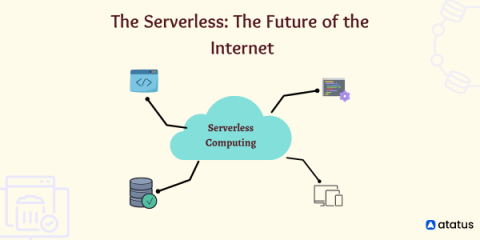
Serverless is a technique for executing operations and running cloud compute services on an as-needed basis. Serverless computing is the latest trend in the cloud computing world. It has made it much easier to develop, deploy, and scale applications. Serverless computing means that developers don't need to worry about anything other than their code. They don't need to provision a server or install software to run their code.
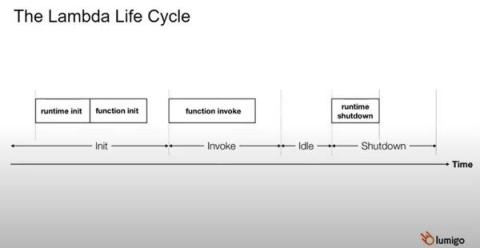
AWS Lambda execution lifecycle has main phases: initialization, invocation, and shutdown. In the initialization phase, Lambda creates the runtime environment, downloads the code, imports everything needed, and runs the functions initialization code. In the invocation phase, the Lambda will get an input, process it, and produce an output. After the invocation phase, Lambda will go to an ideal state and wait for the next input.
In this article, we will explain what Microsoft Azure is and how you can monitor its data. We will also learn how to integrate Microsoft Azure with MetricFire. Last, we will look at the benefits of using MetricFire’s monitoring solution with Azure metrics. Try the free trial version of MetricFire and enjoy all the benefits of using our system. Book a demo with our team and discuss in detail the process of integrating Microsoft Azure and MetricFire.
With the Cloud Bridge introduction, I started reaching out to our customer base to make sure people are aware of what this feature can do, Usually, I try to keep our customers up to date through blogs or the occasional webinar but with the Cloud Bridge, I went for a more personal approach. Reaching out to our customers individually, presented a unique opportunity to educate them on our Cloud Bridge and by extension what SIGNL4 can bring to the table.