Operations | Monitoring | ITSM | DevOps | Cloud

Gartner Symposium: IT Leadership During Uncertain Times

At its recent conference in Barcelona, the third in its 2019 Symposium series, Gartner analysts spoke of how companies need to win in the turns to survive and thrive in the digital era. That means looking beyond apps and cloud, to disruptive forces in the digital economy as guideposts for IT strategy.
Auvik Turns 8: A Look Back on Our First 8 Years

2011 was a big year for pop culture: Prince William and Kate Middleton tied the knot, Ashton Kutcher replaced Charlie Sheen in Two and a Half Men, and the theatrical release of Harry Potter and the Deathly Hallows: Part 2 marked the end of an era. While our eyes were turned to the screen, something else was happening—two former co-workers were deciding it was time to start a new adventure together. Know what that means?

Meet application SLAs with AppDynamics using VirtualWisdom

Imagine that you are a taxi driver deftly navigating busy city streets to get your passenger to the airport on time and to prove that taxis remain relevant in a changing world of Uber and Lyft. If you had a choice of routes would you opt for a well-lit route with excellent visibility versus a route where some of the street lights were out and visibility is a challenge?

I&O Leaders Should Pay Attention to Gartner's 2019 Market Guide For Digital Experience Monitoring

Many Industry and Operations (I&O) Leaders working in end-user computing today can attest to that famous Dylan lyric. In Gartner’s latest Market Guide on Digital Experience Monitoring (DEM) they report that “by 2023, 60% of digital business intiatives will require I&O to report on user’s digital experience, up 15% from today”. Compare that to just a decade ago when I&O Leaders rarely had to think about their employees’ digital experiences when making decisions.

Two Stackery Superstars Named AWS Serverless Heroes

It’s been a great couple of months at Stackery. Since coming on as CEO earlier this year, I’ve been impressed with how much our team gets done and their contributions to making the serverless development experience easier and more reliable. I want to take a moment to recognize two of our amazing Stackerinos who were recognized by AWS recently with the AWS Serverless Hero distinction.

Building a Successful Uptime Management Strategy

Managing a cloud system properly entails numerous tasks (performance monitoring, response times, latency, uptime management, security, compliance, and disaster recovery). Together, these tasks form a comprehensive holistic strategy that embraces and accounts for all potential scenarios. Especially in today’s intensive business landscape, running cloud operations (NOC) 24/7 has become mandatory together with maintaining a high availability of network services.

Datadog's AWS re:Invent 2019 guide

AWS re:Invent is an annual gathering of tens of thousands of AWS staff, partners, and users for a full week of keynote sessions, feature announcements, customer case studies, hands-on workshops, and more. As in years past, we will be there with dozens of engineers, ready to answer your monitoring questions and show you the newest additions to Datadog.

Introducing Logz.io on the Azure Marketplace

The Azure Marketplace makes it easy for customers to identify, subscribe to, then use SaaS and API solutions by removing barriers in the procurement process for purchasing those products. By using the existing payment terms they have with Microsoft, Azure customers can click through a simple workflow to purchase an ISV solution without needing to negotiate new terms or speak directly with an Azure or ISV representative.

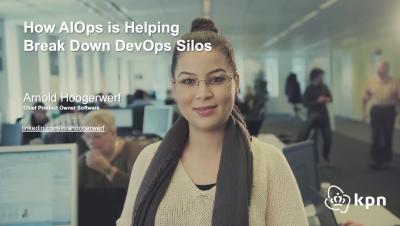
How AIOps is transforming customer experience by breaking down DevOps silos at KPN

DevOps means dev fails fast and ops fails never. The challenge is that the volume of data exceeds human ability to analyze it and take action before user experience degrades. In this session, Dutch telecom KPN shares how AIOps from Broadcom is helping connect operational systems and increase automation across their toolchain to breakdown DevOps silos and provide faster feedback loops by preventing problems from getting into production.