The latest News and Information on Monitoring for Websites, Applications, APIs, Infrastructure, and other technologies.
At Catchpoint, I work as a Solutions Engineer. Being on the sales side, one of the applications I use a lot is Salesforce, the CRM platform used at Catchpoint and thousands of other organizations. You don’t have to take my word for it. Here is Catchpoint’s endpoint monitoring data showing I speak the truth!
Today’s software is incredibly complicated and creates tons of data. Metrics, logs, and traces are generated constantly by hundreds of services for even simple applications. Every transaction can generate on the order of kilobytes of metadata about the transaction — and multiplying that to account for even a small amount of concurrency can create a few megabytes a second (or ~300GB/day) of data that needs to be captured and analyzed for later use.
Have you ever wondered why your bounce rate is always over 70% and can never quite figure out why? Your content reads great, you’ve got top-notch videos of your products, and you’ve even got a testimonial from Microsoft saying how good your company is! Well, all of these things seem to have little impact on visitors to your website if you have a) constant pop-ups or b) slow page loading speed (and if you have both, I’d disable Google Analytics now…).
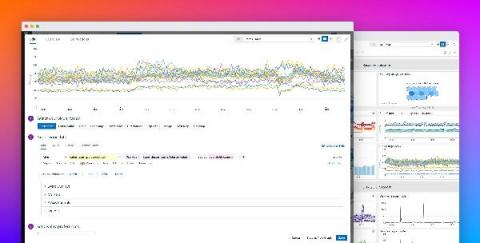
Template variables enable you to use tags to filter your Datadog dashboards to the hosts, containers, or services you need for faster troubleshooting. However, there are some cases where it may be difficult to use a standard set of template variables to aggregate all of the data you need without creating a complicated, difficult to manage set of variables. For example, you may use tag values that are a subset of another tag.
Auto-instrumenting Lambda Monitoring didn’t originate through a focus group or business plan. It started as a hackathon project in which our growth team used Cloudwatch to build a prototype that could instrument Lambda functions with Sentry. We did this by using Cloudformation’s stack to automatically create resources in a customer environment while streaming CloudWatch Logs to Sentry through the Kinesis Firehose.
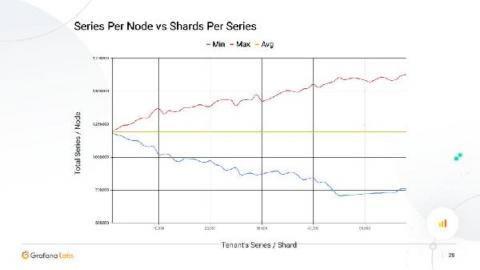
For many years, it has been possible to scale Cortex clusters to hundreds of replicas. The relatively simple Dynamo-style replication relies on quorum consistency for reads and writes. But as such, more than a single replica failure can lead to an outage for all tenants. Shuffle sharding solves that issue by automatically picking a random “replica set” for each tenant, allowing you to isolate tenants and reduce the chance of an outage.