Operations | Monitoring | ITSM | DevOps | Cloud

Kubernetes AI SRE Agent Finds a Crash Loop Nobody Asked About: AURA

You ask for a routine health check and expect a clean baseline. What came back was a pod that had restarted 788 times, unrelated to the question. AURA is connected to a Kubernetes cluster and to Prometheus through read-only MCP servers, running as one coordinator with two specialized workers. The prompt is one sentence: check the health of the cluster, and confirm whether all the pods are running. What comes back is not a baseline. AURA names the state as CrashLoopBackOff and attaches the restart count to it.

No Custom Adapter: AI SRE Agent AURA Debugs Product Catalog in Dash0

The platform shows you which service is failing and which paths it touches, and stops there. Point AURA at the same telemetry and the cause comes back too. Dash0 shows the product catalog service in a failed state across the selected window, with errors on the path from the frontend service.

KPI cards: build a reliability dashboard that doesn't force tradeoffs

This week's Feature Friday: Principal Product Manager Christine Byun walks through KPI cards, a new way to build custom dashboards in Engineering Intelligence. KPI cards pull key metrics, like change failure rate and rollback frequency, into compact tiles so they stay visible without taking up chart space. That means the metric you're actively working, incidents, in this demo, gets full-size room, without losing sight of the rest of your system.

Data Center: More or Less | SolarWinds TechPod

In this episode, Sean and Crystal explore the complex and rapidly evolving landscape of AI, data center impacts, regulation challenges, and societal implications. They discuss the urgency of establishing standards and the lessons from historical industrial revolutions to navigate AI's future responsibly.

Why is AI so expensive? The real cost drivers of AI

AI is expensive because the model bill is only part of the cost. Three components set the floor: model subscriptions, per-token API pricing, and infrastructure. Three more make it move: adapting models to your business, catching and fixing errors, and rising energy and datacenter costs. Efficiency doesn't fix it, because cheaper AI gets used more, not less. Businesses are willing to spend on AI. Research from Deloitte found that in 2025, 85% of organizations increased their AI investments.

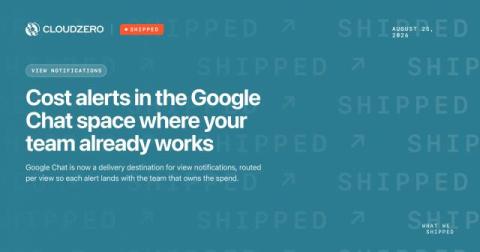
Shipped: Codex spend tied to the work behind it

People run Codex on their own laptops. When Codex is signed in with a ChatGPT subscription, OpenAI’s own admin console shows who used it and how much: messages and credits. What it doesn’t show is what any of that usage was for, or how it compares to what your team spent on other AI tools. The CloudZero desktop agent for macOS installs on a Mac, sees the traffic from AI coding tools, and prices what those tools use.

Your FY27 plan deserves a real AI number, not a hedge

Budget season is starting and most finance teams are finding the AI line is the most evasive line on the page. You lived through the year. AI spend came in higher than planned and moved in ways nobody could foresee or forecast. And when the board asked what it produced, the honest answer probably was “we’re working on it.”

Bringing Third-Party Apps into Harness AI Chat: Our MCP Gateway for Distributed Enterprise Systems | Harness Blog

TLDR: When you work in Harness AI Chat, your work doesn't stop at Harness. Your pipelines live here, but the change you actually need to make might be a YAML file in GitHub, a Jira ticket, or a Confluence doc. So we built an MCP Gateway inside Harness that lets AI Chat reach those third-party apps for you: safely, under Harness's own access controls and secrets, and without dropped sessions across our distributed fleet. This is the story of what we built and why.

Better context, smarter testing: How to give your AI coding agent direct access to k6 docs

As testing workflows become more AI-assisted, fast access to accurate documentation matters more than ever. Whether you're writing a new load test, troubleshooting an issue, or having an AI agent generate a script for you, you need reliable guidance that keeps pace with the way you work. But most documentation still lives in a browser. Every time you or your agent needs to verify an API or look up a best practice, you're forced to leave your terminal or editor and interrupt your workflow.

Monitoring Oracle ASM with Custom Metrics | The Tony and Tonie Show Ep 49

Even small Oracle ASM issues can become big database problems. Here's how to spot the warning signs early. Tony and Tonie discuss how Redgate Monitor custom metrics help teams close a common monitoring gap: surfacing Oracle ASM health and performance issues before storage pressure, rebalancing problems, or disk group failures become database incidents.