Operations | Monitoring | ITSM | DevOps | Cloud

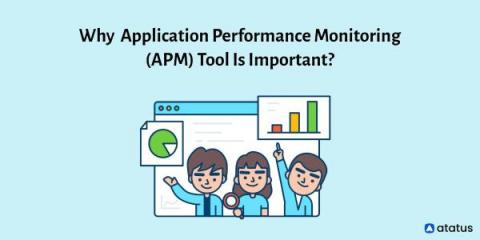
Why Application Performance Monitoring (APM) Tool Is Important?

Modern applications must deliver not only value but also round-the-clock availability, quick replies, and real-time problem-solving in today's digital economy. Since all businesses rely on software applications, their performance is one of their primary worries and frustrations, especially if their applications are the business itself. This is where Application Performance Monitoring Tool enters the scene.

Cilium - eBPF Powered Networking, Security & Observability

In this session by Raymond de Jong, Senior Solutions Architect at Isovalent, you'll discover how Cilium with eBPF increases networking performance while providing identity and application-aware security and visibility for your cloud-native workloads. We will also look at Hubble; Cilium's fully distributed networking and security observability platform, and how eBPF enables deep visibility into the communication and behavior of services and networking infrastructure in a completely transparent manner.

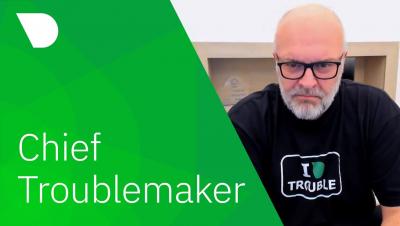
Learn how our Chief Troublemaker transformed infrastructure troubleshooting.

When no available tool could help Costa Tsaousis identify his own infrastructure problem, he invented one that could. Netdata’s founder, CEO, and Chief Troublemaker tells how his invention went viral, how the Netdata Way transforms monitoring and troubleshooting, and how he plans to keep Netdata free, forever.

3 trends driving mobile app adoption in the workplace

The widespread adoption of mobile apps is driving workforce productivity from almost anywhere across nearly every industry. Workers are relying on mobile technologies more than ever to get their work done every day—from short-staffed nurses who need to update information on the go to field service technicians who need to complete tasks and access critical information in real time to desk workers who need visibility into communications and company resources from anywhere.

Logging Best Practices - MDC, Ingestion and Scale

I don’t care about religious wars over “which logger is the best”. They all have their issues. Having said that, the worst logger is probably the one built “in-house”… So yes, they suck, but re-inventing the wheel is probably far worse. Let’s discuss making these loggers suck less with proper usage guidelines that range from the obvious to subtle. Hopefully, you can use this post as the basis of your company’s standard for logging best practices.

Application observability made easier for Compute Engine

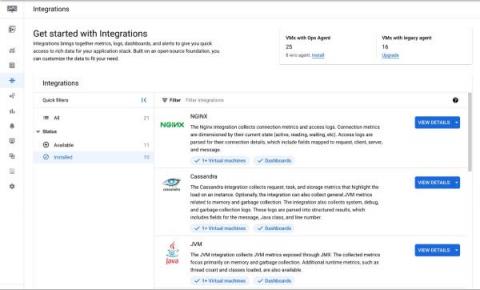
When IT operators and architects begin their journey with Google Cloud, Day 0 observability needs tend to focus on infrastructure and aim to address questions about resource needs, a plan for scaling, and similar considerations. During this phase, developers and DevOps engineers also make a plan for how to get deep observability into the performance of third-party and open-source applications running on their Compute Engine VMs.