Operations | Monitoring | ITSM | DevOps | Cloud

The latest News and Information on Monitoring for Websites, Applications, APIs, Infrastructure, and other technologies.

Getting Started with Change Tracking

Changes are both inevitable and necessary when you are running a business. As customer expectation and the market landscape keeps changing, you will have to take up the necessary measures to implement corresponding digital solutions and technology changes. But managing changes can be a tricky process. Some changes can be as simple as changing the folder organization in your data. But if you have not tracked it properly, you will soon run into confusing folder hierarchies and problems in data sharing.

Increasing limits for three key Cloud Monitoring features

Cloud Monitoring is one of the easiest ways you can gain visibility into the performance, availability, and health of your applications and infrastructure. Today, we’re excited to announce the lifting of three limits within Cloud Monitoring. First, the maximum number of projects that you can view together is now 375 (up from 100). Customers with 375 or fewer projects can view all their metrics at once, by putting all their projects within a single workspace.

How to Identify the Zoom Data Center Location on AWS Infrastructure

Zoom leverage AWS’s global infrastructure, storage, content distribution, and security to deliver its service and store information securely in AWS data centers around the world. This means that when you’re looking to monitor your Zoom performance, it’s important to know how to identify which AWS data center location your Zoom application is using. Keep reading to find out how.

Troubleshooting services on Google Kubernetes Engine by example

Applications fail. Containers crash. It’s a fact of life that SRE and DevOps teams know all too well. To help navigate life’s hiccups, we’ve previously shared how to debug applications running on Google Kubernetes Engine (GKE). We’ve also updated the GKE dashboard with new easier-to-use troubleshooting flows. Today, we go one step further and show you how you can use these flows to quickly find and resolve issues in your applications and infrastructure.

Migrating between WordPress hosts without downtime

Sometimes you'll want to migrate WordPress hosts - maybe it's time for renewal, and you found a better deal elsewhere, or your hosting provider isn't as reliable as they promised. Which is great for you, but your site's readers don't care that it's a better deal - they just want to see your content. So minimising downtime when transferring hosts is a pretty big deal. Let's learn how to avoid downtime.

Monitoring Node.js Application With AppOptics on DigitalOcean - Better Together

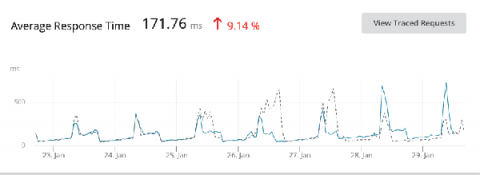
Many teams take advantage of the convenience of deploying their apps to the platform as a service (PaaS) providers such as DigitalOcean. Cloud solutions like this are an easy way for teams to deploy and scale their applications without worrying about the details. However, even in these managed environments, poorly written apps can cause issues. If your pages load too slowly, users will likely leave your site and look for another.

How To - Monitor Your Email Service with Catchpoint

Today, we’re going to continue diving into Catchpoint’s wealth of synthetic tests with a brief overview of network protocols and a look at some helpful use cases specifically around monitoring your email service. I’ll be sharing a hands-on demo, illustrating how this data shows up in Catchpoint – focusing on a pair of protocol tests we’ll be running against our email service.