The latest News and Information on Cloud monitoring, security and related technologies.
Amazon Web Services (AWS) products are countless, and at LogicMonitor, we are working tirelessly to bring monitoring support to as many of them as possible. With so many products and tools already on your plate, we want to make sure that monitoring is not a hassle, but rather a trusted companion. Here, we will focus on the analytics section of AWS and provide some tips on how to utilize the data collected from AWS Athena and Glue.
There are so many early serverless adopters and pioneers who many of us in the community know well: AWS heroes, in-demand speakers, and celebrated community organizers with thousands of followers, popular Twitch channels, and full speaking dockets. It’s a fantastic idea to follow these folks because they are known for a reason.We cover them regularly at Stackery!
There’s a lot out there about Amazon CloudWatch already, but since Amazon’s default EC2 monitoring service pushes regular updates, most of what you’ll find will be dated (last updated: 9/26/2018). Let us know what you think about our take on CloudWatch 101. The plan is to get you up to speed in a hurry.
Cost-efficiency is one of the main pillars of the Serverless Well-Architected framework. Read-intensive applications can save money and improve efficiency by using cache systems. AWS Lambda’s internal memory could be used as a caching mechanism. A Lambda container remains alive after an invocation is served, even if it stays idle for some time. Whatever was loaded in the container’s memory will remain there for the next invocations.
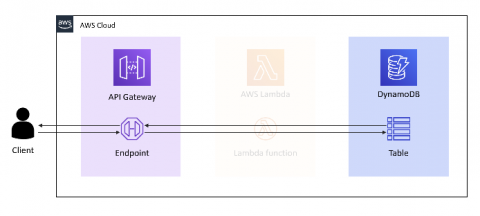
The most common integration type for AWS API Gateway is with Lambda functions. The API service can integrate with virtually any other service that accepts HTTP requests, though. This opens up possibilities to use the API Gateway as a proxy to database queries, without any compute layer such as a Lambda function. The direct integration between API and database is perfect when Lambda serves only as an intermediator.
So, you are considering moving to the cloud. Or, likely, have already transitioned your services. If you are wondering what the next steps are, you have many options on how to move towards cloud infrastructure. This blog will cover what to consider when using public clouds. Specifically, we will focus on monitoring a hybrid cloud set up using the big 3 cloud providers, Amazon Web Services (AWS), Microsoft Azure, and Google Cloud Platform (GCP).
“I want to look them in the eye.” It’s a common saying about the importance of body language. In the past, that “look” might take a day of travel and cost most of a day of productivity. Today, however, modern enterprises are turning to real-time unified communication solutions to get meeting participants engaged—and cloud technology is the key.
We’re excited to announce that Lumigo achieved the coveted AWS Lambda Ready designation as a serverless-first observability platform. Over the years we’ve put a lot of effort into building a product that would help the mainstream adoption of serverless technology by providing developers with the tools they need and it’s truly an honor to have AWS recognize those efforts.