Operations | Monitoring | ITSM | DevOps | Cloud

Network Topology Explained: Types, Diagrams & Best Practices

Network topology determines how devices connect and communicate in your infrastructure. Learn the types, when to use each, and how to optimize for performance and reliability. What's covered: Network topology types: star, mesh, hybrid, ring, bus Comparison table with pros, cons, and use cases How to choose the right topology for your enterprise Common challenges and solutions Best network topology tools in 2026.

InvGate Asset Management's Smart Tags: A Guide to Customizing Your ITAM Automations

Keeping an IT inventory organized is harder than it sounds. As environments grow, assets quickly multiply across locations, owners, statuses, and lifecycles. Manually grouping devices becomes time-consuming and error-prone, often leading to outdated inventories and teams spending valuable time building lists instead of taking action. That’s where InvGate Asset Management’s Smart Tags come in.

Advancing Your Device Management Practice to Autonomous Endpoint Management

Real customer experiences. Real automation best practices. Real outcomes. Manual IT processes can’t keep up with evolving threats, hybrid work and rising expectations for seamless digital experiences. Join this session to discover how your organization can dramatically reduce support tickets and strengthen security posture with Ivanti’s autonomous endpoint management (AEM) solutions. What you’ll hear about.

Transform ticket hell into smooth operations #ITSM #AI

Infraon ITSM uses advanced "ai" capabilities to manage operational noise, significantly boosting "business efficiency". It features a robust "ticketing system" and "sla" management for prompt resolutions, alongside self-service portals and a comprehensive "knowledge base" to enhance the "service desk" experience.

When IT instability becomes a patient safety risk in healthcare

Inside hospitals and health systems, the performance of clinical technology underpins nearly every care workflow and directly influences the timeliness and quality of patient care. Electronic health records sit at the center of admissions, discharge, imaging, lab coordination, and prescribing, so even minor technology friction can become a patient safety and operational risk. At scale, reliability becomes a prerequisite for consistent care.

Solving the Ticket Noise Problem: What We Learned from Our ServiceNow Webinar

On March 18th, we hosted a session focused on a challenge that continues to undermine even the most mature IT operations teams: ticket noise. It’s easy to dismiss noise as just “too many alerts”. But as we explored in the webinar, the real issue runs deeper. Ticket noise is a symptom of something more fundamental — a lack of correlation, context, and shared visibility across the stack.
Sponsored Post

AlmaIQ brings unparalleled level of efficiency and effectiveness for IT teams using Collective IQ

AlmaIQ, the intelligent self-service agent for employees just received an incredible boost that expands its role to uniquely help IT teams. Interacting with users through Microsoft Teams, AlmaIQ answers questions about devices and internal processes in natural language. Whereas that intelligence simplified employees lives on the job, it now enables IT teams to interact with Collective IQ at the level of departments, groups, and collections of devices to spot patterns and trends. The overall result: vastly more productive operations and satisfied employees.

Stop The Real Costs of Paper Documentation

Proof of condition — it’s been around for decades and serves to verify the integrity of everything from material goods to heavy equipment and myriad assets in between. A paper process from the beginning, it has been accompanied by photographs, rubber stamps, and signatures along the way. Still, hard to believe that a quarter way through the 21st century, with ubiquitous mobile device options, so many of these processes continue to reside on clipboards.

Network Topology: Types, Diagrams, Tools & Enterprise Best Practices

Network topology describes how devices, connections, and data flows are arranged in a network. It is the blueprint of your network infrastructure. Both matter because they affect performance, scalability, and security. A well-designed topology ensures data reaches its destination quickly and reliably. A poor design creates bottlenecks, security gaps, and troubleshooting nightmares.

ROI of AI: How CIOs Measure Real Business Impact

Since the advent of Artificial Intelligence (AI), it has become the buzzword for modern day businesses. It has tremendous benefits which has lured enterprises invest hefty money with a view of getting ahead of their competitors. Yet, many CIOs are still figuring out ways to get the best ROI of AI that resonates with their businesses. While there are many initial programs and proof of concepts that show promise, in the long run they fail to deliver their promise.

AI, Anxiety & 400 Open Windows: GEOFF WRIGHT RETURNS

Geoff Wright returns to unpack the messy reality of work in the AI era. From having 400 windows open and feeling less productive, to explaining why AI should fuel curiosity rather than replace human judgment, Geoff brings his usual mix of optimism, humor, and hard-earned perspective. The conversation explores prompt engineering, digital overwhelm, enterprise adoption, and why “being human first” matters more than ever. It is a wide-ranging, thoughtful discussion on anxiety, complexity, and the promise of AI, with a surprisingly funny detour into why the robots might eventually just leave Earth for Pluto.

ITSM vs ITOM: What's the Difference and Why You Need Both

ITSM manages service delivery to users. ITOM keeps infrastructure running. Modern IT teams need both to work together, powered by GenAI, for complete operational success. What's covered: ITSM vs ITOM: key differences explained ITSM vs ITOM vs AIops: how GenAI changes the game Why ITSM and ITOM work better together Which one to implement first Common myths debunked.

How to Communicate the Value of DEX Across Your Organization

For many EUC and Digital Workplace leaders, the challenge with digital employee experience (DEX) isn’t the technology, it’s building alignment. You can see the data. You know where friction exists. You can quantify disruption, productivity loss, and inefficiencies. But you struggle to achieve your targets, because you need buy in from other teams, and right now, they don’t want to hear anything about DEX. Security has different priorities. Application owners are focused on releases.

No-Code Workflow Builder: Automate Processes Across Your Business!

Workflows are a powerful tool for businesses of all sizes – if they are intuitive enough to be used by tech and non-tech-savvy people alike. InvGate's Workflows module reduces the learning curve and technical knowledge required, making it easier than ever for users to understand and effectively build workflows quickly. Plus, it comes with multiple perks: Get ready to automate your whole organization's processes on InvGate Service Management!

Webinar Recording: The Future of IT Asset Management in 2026 [Bahasa Indonesia]

As businesses move toward hybrid work models and complex cloud ecosystems, traditional IT Asset Management (ITAM) is no longer enough. In this webinar, hosted by PT Sinergi Wahana Gemilang and featuring experts from Infraon (Everest EMS Technologies), we dive deep into how organizations can transition from manual tracking to automated, AI-driven asset management. We explore the full asset lifecycle from procurement and real-time tracking to maintenance and secure disposal, and discuss how to mitigate security risks and optimize IT spending in 2026.

Almaden at Arklok Kickoff: CEO Leandro Silva Highlights ITAM and DEX for HaaS

Almaden strengthened its leadership in the HaaS ecosystem by participating in the Arklok Technology Kickoff on March 11 and 12, 2026. CEO Leandro Silva shared strategic insights on ITAM and DEX, essential for providers to scale services efficiently.

Best Enterprise Asset Management Software 2026

Best enterprise asset management software is becoming essential for organizations that manage large-scale operations, multiple facilities, and diverse asset categories. Enterprises today rely on advanced systems to monitor physical assets, digital assets, infrastructure, and operational equipment across departments and locations.

Intro to AIOps with Infraon. (Webinar recording)

Missed our live session? We’ve got you covered. Yesterday, we hosted our very first AIOps webinar, and the energy was incredible! Introduction to AIOps with Infraon brought together IT professionals for a deep dive into practical AI applications. Led by Dinesh Doraiswamy V, this wasn't just a presentation—it was a live, interactive session tackling real-world scenarios and honest truths about where AI fits in modern IT operations today.

Flow State in an AI Workplace - Digital Friction 1:1 with Mike Lovewell

Tom welcomes Mike Lovewell to explore how digital friction continues to shape the modern workplace. From early days of low awareness to today’s complex, AI-influenced environments, Mike shares how friction has evolved in scale rather than cause. They discuss the growing importance of flow state, the measurable business impact of small disruptions, and why adoption—not just technology—is the key to success. AI emerges as both a solution and a new source of friction, depending on trust and usability.

VMware Asset Discovery With InvGate Asset Management

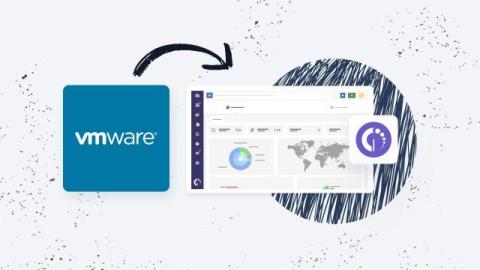
The InvGate Asset Management and VMware integration helps IT teams bring virtual infrastructure into a centralized asset inventory. That matters because a complete, up-to-date IT inventory should include not only hardware and software, but also virtual assets such as ESXi hosts, vCenter instances, and virtual machines. Without that connection, teams often end up working with fragmented visibility, incomplete operational context, and multiple tools to monitor and manage different parts of the environment.

QR codes for Asset Management: How to Tag And Track IT Hardware

If you’re part of an IT team, you know losing track of an IT asset can quickly turn into a nightmare. It’s not just about the cost or the lost productivity, it’s also about the security stress that comes with it, and the potential risk of data exposure. That’s why effective asset tracking is a key part of IT Asset Management (ITAM).

Digital Adoption + AI: The Secret Route to Zero Tickets

Generative AI has the potential to transform workplace productivity – but do organizations know how to deliver on that promise? New research shows that employees who use generative AI tools engage with them up to ten times per day, spending over three hours per week interacting with AI at work. And yet within the same organizations, large groups of employees have never meaningfully engaged with these tools at all.

4 Key DEXOps Process Improvements

Most IT organizations want to improve the digital employee experience. But good intentions alone rarely move the needle. The real shift happens when organizations evolve how IT operates. Traditional IT operations are built around reacting to incidents. But ticket-based operations, or operations based on poor data, lack the ability to create truly predictive ways of working.

Best RFID Asset Tracking Software to Track and Manage Assets in 2026

RFID asset tracking software is rapidly becoming a key technology for organizations that manage large volumes of equipment, tools, and operational assets. Businesses across industries such as manufacturing, healthcare, logistics, and education rely on RFID technology to maintain accurate asset records and improve operational visibility.

IT Operations Best Practices: 12 Tips for 2026 Success

Building reliable, high-performing IT operations requires more than good intentions. Learn the 12 best practices that separate reactive teams from proactive ones. What's covered: Common IT operations challenges in growing organizations 12 IT operations best practices you should adopt IT operations maturity model: starter to scaled Key metrics that matter (MTTR, uptime, incident volume) How tools enable best practices at scale.

6 Key Roles Every DEX Team Needs

Digital employee experience doesn’t fail because of technology. It fails because of operating models. Many digital workplace leaders invest in visibility tools, dashboards, automation capabilities, and sentiment platforms. And yet, months later, they’re still stuck in reactive mode. Tickets are down slightly. Reporting is better. But the organization hasn’t fundamentally shifted.

Shadow AI and the Coming Workplace Reckoning (w/ Kay Firth-Butterfield)

In this episode of The DEX Show, we’re joined by Kay Firth-Butterfield, the world’s first Chief AI Ethics Officer and former Head of AI at the World Economic Forum. From human rights law and human trafficking to Davos and large language models, Kay traces her remarkable journey into AI governance. We explore shadow AI, workplace “hallucinations,” AI companions, and the hidden risks leaders are underestimating. Kay shares why organizations need cross-functional AI governance, stronger guardrails, and far better training — and why the future of work may depend as much on the humanities as technology.

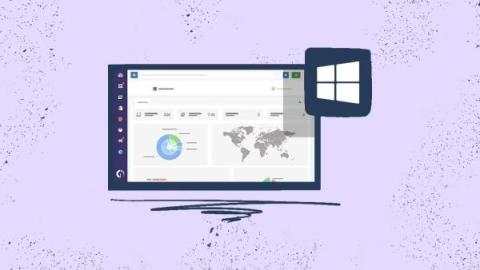
Agentless Discovery For Windows Devices: How to Set up WMI in InvGate Asset Management

Agentless discovery for Windows devices plays an important role in maintaining visibility across modern IT environments. Why? Because according to data from StatCounter, Windows accounts for about 67% of desktop operating systems worldwide, and its presence is typically even higher in corporate environments. This is where agentless discovery becomes especially valuable.

Introducing Knowledge Discovery in InvGate Service Management

AI in Service Management promises faster resolutions and fewer repetitive tickets. In reality, its performance depends on something far less glamorous: a reliable knowledge layer. Many service desks already have the answers; they’re just buried inside resolved tickets instead of organized in a way AI can use.Turning those resolutions into structured documentation takes time that rarely fits into daily operations.

ITIL-based IT Operations Management: Complete 2026 Guide

Running IT operations at enterprise scale requires tracking the right KPIs: MTTD, MTTR, change success rate, SLA compliance, and incident trends. Inside the guide: ITOM definition and ITIL 4 service value chain Core ITIL practices for IT operations Modern integration: cloud, DevOps, AIOps Implementation roadmap with gap analysis Case study: MTTD reduced from 15 min to 3 min.

EAM: What's an Enterprise Asset Management Software

In the realm of modern business operations, efficient asset performance management stands as a cornerstone for success. Enterprises, regardless of their scale or sector, rely heavily on the effective oversight of their assets to optimize processes, minimize downtime, and bolster profitability. This is where Enterprise Asset Management (EAM) software emerges as a game-changer, offering comprehensive solutions tailored to streamline operations and enhance decision-making processes.

How to Integrate InvGate Asset Management with Microsoft Intune

If you want to bring Microsoft-managed devices into a centralized IT Asset Management workflow, integrating InvGate Asset Management with Microsoft Intune is a practical way to do it. This Intune integration for ITAM allows you to add Microsoft Intune as a discovery source in InvGate Asset Management. As a result, you can synchronize device data, improve visibility across managed endpoints, and work from a more complete inventory inside a single platform.
Who Owns Endpoint Management? Defining Security and IT Governance

Endpoint management is one of the most critical — and most contested — areas of enterprise governance. Every organization depends on endpoints, yet many still struggle to answer a fundamental question: who actually owns these devices? In many environments, IT and security teams are both confident they’re doing the right thing, yet still talk past each other. Security looks at a scanner and sees 10,000 critical vulnerabilities; IT looks at a patch report and sees everything deployed.

Autonomous Endpoint Management

Autonomous Endpoint Management or AEM is an intelligent endpoint management that leverages AI-driven automation, predictive analytics and proactive protection. Automation built on trust. Intelligence designed to empower. Protection delivered. AI‑driven, autonomous management in a unified platform Intelligent, self-healing endpoints ensure consistent uptime and dependable performance. Streamline IT operations through unified automation and consolidation, empowering IT teams to shift from routine tasks to strategic priorities.

The Spark Avengers Unite: Dispatches on the FUTURE of IT (w/ Matt, Moe & Denis)

Tom assembles the “Spark Avengers” for a deep dive into the most talked-about innovation in IT: Nexthink Spark, the personal AI agent for every employee. Joined by Moe Haidar, Denis Schertenleib and Matt Rose, the team unpacks how Spark evolved from early LLM experiments into an enterprise-ready, autonomous IT agent already delivering 70%+ first contact resolution. From printers and frozen cameras to complex root-cause analysis, Spark is transforming support from reactive to proactive.

ManageEngine powers up Prezent's IT-watch the transformation now!

Sundareswaran Easudass, IT manager at Prezent, outlines the IT management challenges the firm faced before adopting ManageEngine solutions into its infrastructure and explains how our products helped overcome them. He emphasizes that ManageEngine was his only choice, offering enterprise-grade features without the complexity.

Best IT Asset Tracking Software in 2026 for Smarter IT Asset Management

IT asset tracking software is becoming a critical operational tool for organizations in 2026. Businesses now manage large inventories of physical IT equipment including laptops, desktops, monitors, networking hardware, and peripherals across multiple departments and locations. Implementing reliable IT asset tracking software allows companies to maintain accurate equipment records, reduce asset loss, strengthen accountability, and improve overall it asset management efficiency.