Operations | Monitoring | ITSM | DevOps | Cloud

The latest News and Information on Monitoring for Websites, Applications, APIs, Infrastructure, and other technologies.

WiFi Monitoring 101: What It Is and Why Remote Teams Need It

For years, IT teams had a fairly contained job: keep the office network running. Every device, router, and switch that mattered was inside a building they controlled. That job doesn't exist anymore. Remote and hybrid work moved the "network" into hundreds of living rooms, home offices, and coffee shops, none of which IT can see, configure, or troubleshoot directly. So when a help desk ticket comes in saying "the app is slow" or "my calls keep dropping," IT is left guessing. Is it the company's network?

Scheduled Autonomous AI SRE Agent as a Kubernetes Guardian: AURA

Some agent work should pause for a person. This is the other case: a health check every two minutes, one bounded action, and a result nobody approved. Each scheduled run starts the normal AURA image in one-shot mode: check one workload, act if something is wrong, write the result to the job log, and exit. Overlapping runs are forbidden.

Instrument serverless apps with agentic onboarding

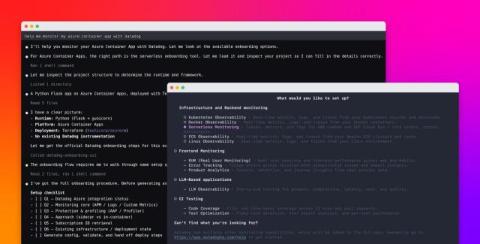
Serverless platforms like AWS Lambda, Google Cloud Run, and Azure Container Apps let teams run applications without managing infrastructure. However, getting full visibility into those workloads has traditionally required a lot of manual setup. A single team may deploy serverless applications across multiple clouds by using tools such as Terraform, AWS SAM, AWS CDK, and the Serverless Framework. Each of these platforms, runtimes, and deployment tools requires its own instrumentation steps.

AI Model Drift: How to Keep Models Reliable

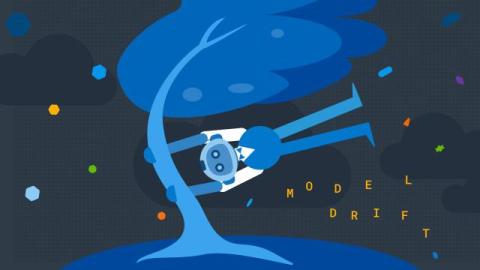
AI model drift is when an AI system's performance and accuracy degrades over time because the data, user behavior, or business environment has changed since the model was trained or evaluated. Even if latency, uptime, and infrastructure metrics remain healthy, model quality can quietly decline, leading to less accurate predictions, inconsistent responses, and reduced user trust.

What is Network Intelligence? A Guide for IT Teams

"This is the third slowdown at the regional offices this quarter. What is actually causing it, and what will it cost us to stop?" Questions phrased like that come from a business head rather than an engineer, and a dashboard screenshot will not answer them. Most network operations groups can produce evidence that something happened. Producing an explanation of why it happened, in language a finance director will accept, takes hours of manual correlation across separate consoles.

What Is Cybersecurity Compliance? Frameworks and Requirements

Most IT teams are asked to meet more than one security framework at once. Almost nobody gets more budget or more people to do it. That is the real shape of cybersecurity compliance. A sales deal needs SOC 2, a hospital contract drags in HIPAA, and card payments put PCI DSS on top of both. Each one arrives with its own auditor, its own vocabulary, and a deadline somebody set without asking you. So the same controls get built three times over.

The Factory Floor's Digital Blind Spot: Hidden IT Risk in Manufacturing

Manufacturing organizations have spent years strengthening the systems, processes, and supply chains that keep production moving. Yet some of the disruption affecting operations begins in places that are much harder to see. A slow engineering workstation, inconsistent access to a production application, a login delay at shift change, or a device that needs repeated intervention may not look like a plant-wide outage, but each one can add friction to work that is already tightly sequenced.

How to Reduce Data Costs with OpenTelemetry and Bindplane

Originally written by Paul Stefanski, updated by Dylan Myers. Data costs fill a large column in many organizations' accounting sheets. Data pipeline setup and management is a significant time sink for DevOps, IT, and SRE. Setting up telemetry pipelines to reduce unwanted data often takes even more time, which could better be spent creating value rather than reducing costs. This post will show you how to quickly set up your data pipeline to filter unnecessary telemetry data.

Google SecOps (Chronicle) Pricing in 2026: Full Cost Breakdown and How to Cut It

Google SecOps, formerly Chronicle, is sold in three packages priced on ingestion volume, and Google publishes no list prices for any of them. Every quote is built around your data volume, retention needs, and package tier, which makes budgeting hard without a sales conversation. This guide breaks down how the pricing model actually works, what ends up on a real bill. It also covers how to reduce that bill before data reaches the platform. Prefer to jump straight to the numbers?