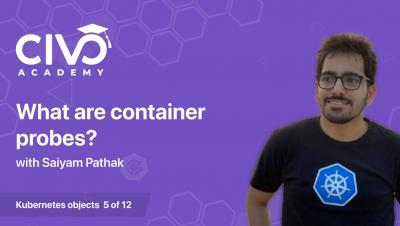
Introduction to Kubernetes Container Probes - Civo Academy
Begin to understand the different container probes within Kubernetes including readiness probe, liveness probe, and startup probe.


The latest News and Information on DevOps, CI/CD, Automation and related technologies.
Cloud services were born at the beginning of 2000 with companies such as Salesforce and Amazon paving the way. Simple Queuing Service (SQS) was the first service to be launched by Amazon Web Services in November 2004. It was offered as a distributed queuing service and it is still one of the most popular services in AWS. By 2006 more and more services were added to the offering list.
Your team has worked hard on a software product for months, and it’s finally ready to release to your users! But then the worst-case scenario happens: a wide release soon indicates that the software is plagued with bugs and performance issues, resulting in poor reviews and widespread user dissatisfaction.
In this article, I’ll provide a guide to Git for non-developers. So, if you are reading this as a full experienced Git user, you may disagree with some of my statements. Don’t bother reading on; we recognize you as the expert! If, on the other hand, you’re new to Git, this piece is for you.
Interrupts are often seen as a problem that eats away at your team’s productivity, and gets in the way of shipping important things for your customers. It’s often consciously accrued from the tech debt we accept to ship features sooner. However when a team doesn’t have a good strategy for dealing with the consequences of those decisions, the pain is felt much more acutely and much sooner.
Organizations across a wide range of industries share a common goal: deploy stable applications that support their customers’ needs. Many of these organizations rely on the Datadog platform to get complete visibility into the health and performance of their applications, and we understand how important it is that our services are reliable. That’s why we leverage our own products to ensure that the platform works as expected.