Transitioning back to the office is becoming more of a possibility with each coming day. But managing the transition can leave you feeling overwhelmed. Where do you start? How will work be different after a year of working remotely? And how will you balance management of a remote and in-person workforce? The ServiceNow on-demand Back to Work webinar series can help you prepare for changes in the workplace post-COVID-19 in four key ways.
Is it important to your customer to understand the distinction between IT Operations Management (ITOM) and IT Service Management (ITSM)? Most likely not. Your customers are only concerned with how quickly you solve their problems. It makes no difference to them which application or infrastructure you use. So why should you, as an organization, be concerned about the meaning of these concepts, how they align, how they differ, and why they matter?
It’s been more than half a year since I joined Exoprise. When Covid-19 struck last year, it became clear that companies would expand their hiring requirements beyond local regions and find suitable candidates (just like me!). Remote work and the requirement for on-boarding remote workers no longer became a luxury. This is reflected in job portals and HR sites such as Indeed and Glassdoor where they began to insert a new tag “Remote WFH Option Available”.
The power of technology can transform organizations. Technology can create new workplaces and new ways of working—and bring new services and exciting opportunities to businesses and consumers alike. Delivering a major technology program is always a complex journey, full of challenges and, inevitably, a mix of triumphs and setbacks.
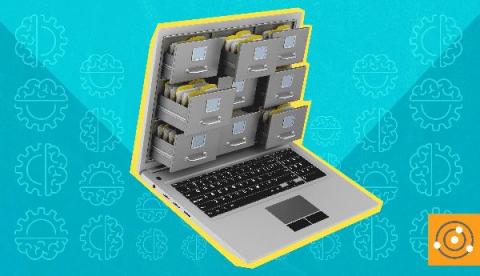
The check engine light on a vehicle warns the driver when something under the hood needs attention. Wouldn’t it be nice if every organization had a similar flashing indicator to let them know when their Transport Layer Security (TLS) certificate is about to expire? Unfortunately, reality isn’t that simple. We tend to deal with the day-to-day maintenance of our vehicle in different ways.

Businesses of today are faced with an extensive list of technical solutions, both on-prem and in the cloud, with which to manage their business services and systems. As the complexity of IT infrastructures increases so does a business’s ability to maintain service levels. If new systems and processes are not aligned and synchronized across a business, it can result in a lack of visibility, which can negatively impact critical services.

In the blink of an eye, you can miss a new business disrupting security incident. We all recognize that cybersecurity breaches are increasing in volume and sophistication. How we respond to them is critical. Security vulnerabilities force organizations to go outside of their daily activities to execute out-of-band responses. We face numerous challenges in managing security risk.
It's easy for businesses to drop into reactive survival mode during a crisis like COVID-19. Navigating rapidly changing conditions can make it difficult to think beyond immediate challenges. And yet, even – or perhaps especially – in a crisis, it’s imperative that companies execute strategies that will make them stronger in the long term. In the case of COVID-19, those strategies should support clients as they transition to new working conditions.
First impressions matter. The first day of a new job can be daunting, especially in a post-2020 world. Back in 2019, you might have asked yourself questions like: is this office going to be open-concept or a bunch of cubicles? Will I get to sit near a window with some natural light or are they going to stick me next to the bathroom? Now new hires ponder questions like: what will my digital work environment look like? Will IT send me a new laptop, camera, and speakers?
Have you ever seen one of those old war movies where some grizzled veteran is whispered to have the fabled ‘1,000-yard stare’? Well, you need to keep an eye for it among IT teams too. IT Support Fatigue was already a very real problem before the pandemic, and has only become more severe in the months since. It’s an issue we explored in the Nexthink Pulse Report.
Positive employee and customer experiences are critical to business growth and digital transformation success. But, such experiences require revamping how organizations structure, deliver, and measure IT services. That’s why human-centered IT service management is growing in popularity for companies that want to innovate IT and gain a competitive advantage. Here are some insights for IT leaders who may be hesitant to take the leap into human-centered ITSM.
Modern organizations need to move fast. Toggling between legacy and modern systems is frustrating. Often there are disconnects between legacy and modern platforms, requiring manual work to bridge the gap. Many of the ServiceNow customers I speak with every day tell me they’re trying to drive automation across a mix of legacy and modern applications.
IT teams across the digital world are currently facing their biggest test yet. Ensuring that things are running smoothly when employees are working from home. And they’re doing a very good job at it. But, there’s always room for improvement right? If you’ve ever been a part of an IT team, you know the pain of jumping between multiple software tools, the effects of a broken down collaboration system and the struggle for visibility amongst team members.
We are very excited to announce the official release of Ivanti Desktop and Server Manager Remote Control - A new Remote Control solution based on Ivanti technology! Ivanti continues to provide useful tools to support our customers in the Everywhere Workplace – especially in times where remote work is more often the norm rather than the exception.
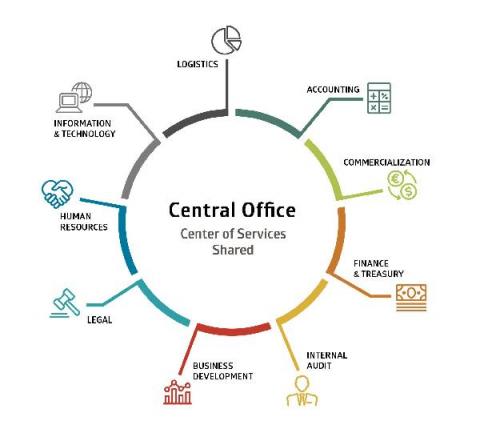
The shared services model can transform business processes and smooth out the rough edges in your operational model. Have you been looking for ways to centralize your operations? We recommend that you consider the shared services model. Through the use of standardized technology, various units in an organization can access the same services. In this article, we are going to be providing everything you need to know about the shared services model.
The past 12 months have seen significant changes and upheaval in the way we live our lives and also in terms of our work environment. Many organizations moved to remote working almost overnight, leaving IT with significant challenges in terms of ensuring users continue to remain productive and secure. Organizations have been increasingly looking to cloud technologies to provide solutions to these challenges.
Customer operations refer to customer-centric business functions like sales and service which extend support to the customer. These were earlier perceived to be a cost center, but that notion has changed over the past decade. Customer operations are now regarded as the Swiss army knife of business operations. This is largely due to the fact that it supports several core business functions such as Sales, Marketing, Branding, and Product Development.
Optimizing SAP Extended Warehouse Management (EWM) with Better User Experience (UX) on the Edge While technology plays a large part in the efficiency of warehouse operations, employees are the foundation. Prioritizing User Experience (UX) on employees’ mobile data entry devices, from handheld devices to fork truck-mounted barcode scanners, is crucial to maximizing productivity.
The pandemic has accelerated innovation as more companies scramble to be future-ready, flexible, and adaptable. Having quickly responded to a crisis and executed a planned digital transformation at UK telecommunications giant BT, I want to share lessons we learned to help other companies transition smoothly to a more digital future. Customers at the core The telecom industry has been changing rapidly over the past few years. The lines between work and play are becoming increasingly blurred.
Returning to the workplace post-COVID-19 will require a careful balance of coordination, sensitivity, and logistics. You may be grappling with questions such as: Our Back to Work webinar series can help you think through these questions and more to ensure proper COVID management once you’re back in the workplace.
Since the start of the COVID-19 pandemic, identity management has taken center stage as the key enterprise security practice for enabling remote workforces while protecting company data and IT services.
COVID-19 vaccine manufacturers have collectively agreed to release 12 billion vaccine doses globally in 2021, according to McKinsey & Company research, provided they all pass clinical trials. However, turning those vaccines into vaccinations is a colossal undertaking that requires significant coordination. In January, we announced our Vaccine Administration Management (VAM) solution to simplify that effort.
Last year, businesses started focusing more on accelerating digital transformation initiatives to meet growing customer expectations and deliver consistent digital experiences from anywhere—no matter the product, service, or industry. PagerDuty partners with thousands of organizations to help reimagine digital operations and deliver real-time, digital experiences to their customers when it matters most.
More and more organizations are embracing digital evolution to improve processes and increase productivity. The Environment Protection Authority (EPA) Victoria, a state government agency in Australia, is one such organization. EPA Victoria embarked on a large-scale digital transformation journey three years ago to reinvent its operations, its interactions with the public, and its approach to environmental protection in the state of Victoria.
Government IT organizations must demonstrate and maintain compliance with a large and growing number of regulations and standards around network access control (NAC), ensuring that all connected devices to their environment are not vulnerable is a key requirement. Comply to connect (C2C) simplifies this by enforcing that patches and hardened configurations are applied to devices before they connect and updated continually.
What are shared services? How does a shared service business model work? In this article, we will be breaking down everything you need to know about shared services. Are you trying to build a request-centric operations model that places an emphasis on simplified customer experience? We will be exploring the key benefits of adopting a shared services model. There has never been a better time to start exploring the consolidation of business operations.
ITSM is a hot topic for people who manage IT infrastructure. And due to the immense changes, we have experienced this past year, there are new developments that show where the industry is headed. ‘Automation’ has been all the craze for the past few years, but it is now more relevant than ever. Then there is ‘digital transformation’, the buzzword of 2021, which is a result of the rapid levels of digitization that all organizations are experiencing.
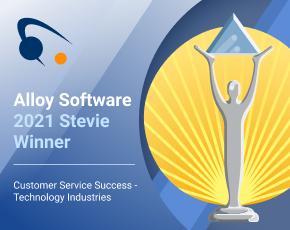
BLOOMFIELD, N.J., March 11, 2021 (Newswire.com) – Alloy Software, Inc., a leading IT Service Management and IT Asset Management solution provider, announced today that it had been named a Silver Award winner in the 15th annual Stevie Awards for Sales & Customer Service. This award, which the company has received for the second consecutive year, is an undeniable proof of its focus on customer success and uncompromising commitment to the highest customer service standards.
What’s New in Ivanti Device & Application Control 5.3 Nearly every company in the world incorporates a Mac endpoint into the organization. Without a device control solution to manage these stations we see a real possibility for data leakage risk. This loss happens mainly because of insider threats. Ivanti Device and Application Control has historically performed well protecting our customers against these types of threats, but the Mac endpoints can still represent a risk.
The world of work looks vastly different than it did one year ago. Where we work and how we work have been decoupled and many of these changes are here to stay. Creating a great employee experience has become a key competitive differentiator and extends beyond HR into legal, workplace services, and more.
This week marks one year since ServiceNow sent employees home to shelter in place. During that year, the world changed and the demands and expectations of our customers forever changed with it. I’m proud that ServiceNow was there to help our customers survive and thrive.
The COVID-19 pandemic accelerated digital transformation, forcing companies to adjust how and where they work. With today’s introduction of the Now Platform Quebec release, ServiceNow is delivering new innovations to help businesses power through the pandemic and thrive in the new era of distributed work.
Do you know who interacts with whom, when, and for how long and how frequently in your network? Network administrators must have clear visibility of bandwidth utilization using a robust bandwidth monitoring tool, to find out slow loading yet crucial connections, to plan out the capacity of network properly or to control the Quality of Service.
Enterprise IT administrators and technicians worldwide who are looking to take third-party patch management to the cloud or even expand their endpoint management capabilities can now rejoice, as Patch Connect Plus has introduced Intune Update Management to its patch management toolbox!
We are excited to announce the availability of the new MobileIron UEM Cloud R76 and UEM Core 11.1, our on-premises offering. As with past releases of MobileIron UEM, our product team continues to focus their efforts on use cases that help our customers to enhance security, improve the admin/user experience and support new use cases driven by OS updates.
Connecting Microsoft SCOM and ServiceNow is a no-brainer! If you want to synchronize your alerts with your incidents, view issues in real-time, and generally make your life easier then why wouldn’t you! But, we know not everyone is tech-savvy enough to develop these solutions themselves, so we’ve written this blog to give you a helping hand. So, if you want to give it a go and build your own integration tool, then here’s how to get started.
Sales engineering is becoming increasingly more important for service-based businesses. It’s time to start paying attention to the role of technical sales in your business. The truth is, without technical sales, you cannot sell. If you want to deliver solutions that meet your target market’s needs, you must bridge the gap between internal teams and customers.
Picture the scene – you’re a mobile mechanic helping a customer and you can’t log into your tablet. You’re on the side of the road at 11pm, and you just want to reset your password so you can finish up and send them home in the car you just fixed. The service desk is closed, so you go for the chatbot option.
Sales engineers play a significant role in bridging the gap between internal teams and customers. This shared services team has product experts who possess a sound technical background and a deep understanding of customer expectations. With that, they support several business functions like Sales, Customer Service, Research and Development, and so on. Sales engineering professionals can wear many hats because of their in-depth understanding of the products and the business itself.
Sweating IT assets, ever heard of them? It might seem nonsensical to imagine an IT asset perspiring from being overworked, but it’s actually not a far-off analogy. When a business delays the purchasing of new technology as long as possible, it’s called ‘sweating assets.” Companies have their reasons for this strategy, but it usually comes down to one thing: an attempt at cost-savings. Do sweating assets actually help to achieve this and where do they miss the mark?
As COVID vaccines begin to roll out, get ready to return to the workplace with ServiceNow and learn about how to bring employees back to your workplace. How to create an employee centered game plan for the safe return to workplace Workplaces are reopening.
Did you know there are currently 4.20B social media users globally? That’s 53% of the total global population! From the most popular social media platforms like Facebook and YouTube, to the hottest up and coming platforms like TikTok and Clubhouse, there is one thing they all have in common: privacy regulations and considerations should be and need to be top priority. Ivanti’s Sr.
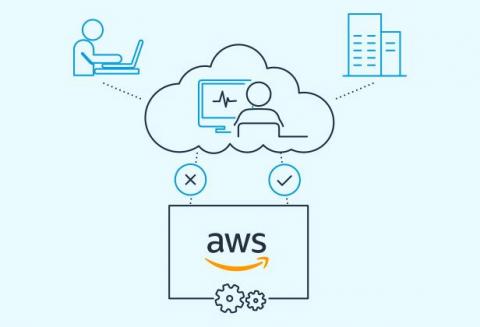
Amazon Web Services is a comprehensive, well-supported cloud service that is continuously growing and evolving. As cloud technology continues to boom, enterprises all across the globe are increasingly depending on cloud service providers to manage their workloads, data, and applications.
Imagine a world of passwordless authentication, where users anywhere on any device can become automatically validated before access is granted. Or what if I told you the phrase ‘enabling secure access effortlessly’ is what we do here at Ivanti? You might ask how.