The latest News and Information on Log Management, Log Analytics and related technologies.
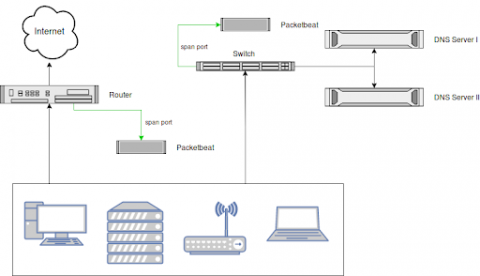
Monitoring all DNS requests in your network, including those that were blocked by (e.g., by a firewall) is a great way to increase visibility, enforce compliance and detect threats. A common problem with collecting DNS logs is that DNS server logs are notoriously hard to parse. Also, parsing only the logs of your DNS servers leaves a blind spot when it comes to usage of, or the attempt to use, an external DNS server like Google's 8.8.8.8.
If you're reading this, you're probably wondering how to get data from various Microsoft Azure services into Splunk. With the growing list of Azure services and various data access methods, it can be a little cloudy (pun intended) on what data is available and how to get all that data into Splunk. In this blog post, I'm going go over how Microsoft makes Azure data available, how to access the data, and out-of-the-box Splunk Add-Ons that can consume this data. So let's dive right in.
Monitoring began by using software agents to capture data from infrastructure, operating systems, and applications. These agents would collect metrics and events from these systems to understand the health of the underlying system and the applications. This is what infrastructure monitoring is today.
In sync with the upcoming release of Splunk’s Machine Learning Toolkit 5.2, we have launched a new release of the Deep Learning Toolkit for Splunk (DLTK) along with a brand new “golden” container image. This includes a few new and exciting algorithm examples which I will cover in part 2 of this blog post series.
In part 1 of this release blog series we introduced the latest version of the Deep Learning Toolkit 3.1 which enables you to connect to Kubernetes and OpenShift. On top of that a brand new “golden image” is available on docker hub to support even more interesting algorithms from the world of machine learning and deep learning! Over the past few months, our customers’ data scientists have asked for various new algorithms and use cases they wanted to tackle with DLTK.