Operations | Monitoring | ITSM | DevOps | Cloud

Cloud Cost Optimization Metrics Every CFO Should Track

Cloud services have become an indispensable resource for businesses seeking agility, scalability, and innovation. However, with this increased reliance on the cloud comes the challenge of managing and optimizing costs effectively. For Chief Financial Officers (CFOs), understanding and tracking cloud cost metrics is crucial to maintaining financial health and ensuring strategic investments yield the desired returns.

IT Infrastructure Optimization: Improved Performance and Cost Savings

IT infrastructure optimization should be a top priority. It is not just about upgrading hardware or software but about ensuring that all components work together seamlessly to support business needs. Your IT infrastructure supports all your daily operations and some of your long-term strategic goals. In this article, we'll explore the key aspects of IT infrastructure optimization, discuss practical steps to improve performance, and offer tips for managing costs.

Guide To Calculating TCO On AWS And Tools To Help

Organizations often assume that switching to Amazon Web Services (AWS) will automatically reduce their on-premises spending. Certainly, cloud-based services like AWS’ Infrastructure-as-a-Service (IaaS) can offer significant cost savings. Yet overspending on AWS is quite common. How can you tell if moving to AWS is the right decision? What figures would you use to quantify and justify that choice to decision-makers? Enter Total Cost of Ownership (TCO) on AWS.

How we used Datadog to save $17.5 million annually

Like most organizations, we are always trying to be as efficient as possible in our usage of our cloud resources. To help accomplish this, we encourage individual engineering teams at Datadog to look for opportunities to optimize. They can share their performance wins, big or small, in an internal Slack channel along with visualizations and, often, calculations of the resulting annual cost savings.

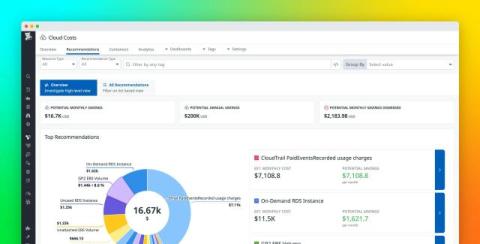
Optimize your AWS costs with Cloud Cost Recommendations

Managing your AWS costs is both crucial and complex, and as your AWS environment grows, it becomes harder to know where you can optimize and how to execute the necessary changes. Datadog Cloud Cost Management provides invaluable visibility into your cloud spend that enables you to explore costs and investigate trends that impact your cloud bill.

Unlocking cloud visibility with CloudSpend's Cost Category report

CloudSpend Cost Category Reports Cloud costs can quickly spiral out of control without a proper understanding of where the money is being spent. AWS offers a tool called Cost Categories that allows you to group and categorize costs across various dimensions, including accounts, services, tags, charge types, and usage types. When paired with a cloud cost management tool like CloudSpend, this categorization becomes even more insightful.

The Secret To Creating A Foolproof Customer Renewal Pricing Strategy

Your customer renewal pricing strategy can make or break your business. You can create the best product in the world, market it masterfully, and provide exceptional customer service, but if your prices aren’t where they need to be, either your customers will churn or you’ll wind up spending way too much money to support a proportionally small revenue stream. Either way, your company will struggle to make ends meet.

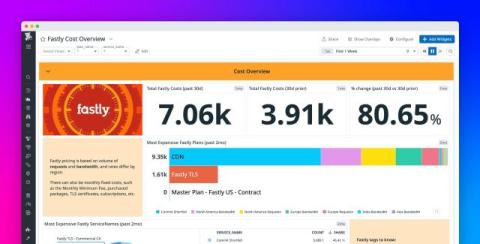
Get insights into service-level Fastly costs with Datadog Cloud Cost Management

As your organization scales its applications across many different cloud and SaaS providers, it becomes more challenging to understand your costs. You likely receive your bill at the end of the month, meaning you don’t have real-time visibility into who’s spending what and which services or applications your teams are spending the most on. Changing service costs also makes it difficult to break down your costs and identify what is driving spend, leaving you unable to take action.

25+ AWS Tools For DevOps And FinOps Teams To Use In 2024

Amazon Web Services (AWS) is a great platform for DevOps and FinOps teams for several reasons. It provides a wide range of services, supports extensive automation, and includes strong collaboration tools. Despite this, AWS can be a complex ecosystem that makes cloud management challenging. The good news is that AWS also offers a suite of tools to help you apply DevOps best practices and cloud cost optimization.

Best Amazon EC2 Alternatives For Scalable Cloud Infrastructure

Organizations need highly scalable compute capacity in the cloud to handle fluctuating workloads. This ensures they can meet peak demand without over-provisioning resources or incurring unnecessary costs during low activity periods. Amazon EC2 offers one of the most flexible, on-demand infrastructures that can be scaled to meet business needs. Yet, it isn’t suitable for everyone. In this guide, we’ll explore why that is and share the best EC2 alternatives to consider. But first, a quick recap.

Azure Machine Learning Pricing - 2024 Guide to ML Costs

Undoubtedly, AI is our future—which means it’s past time to integrate machine learning models into your FinOps multi-cloud tech stack. AI turns simple tasks into something that can be executed at the click of a button. With well-trained models, FinOps, MSPs, and Enterprises can automate cost detection, forecasting, and anomaly identification, streamlining complex financial operations without increasing their workforce. The good news?

Expense Categories You're Overlooking: How Better Tracking Saves You Money

Tracking expenses is important for any business. Many people focus on big costs like salaries and rent. But there are many smaller expenses that can add up. In fact, studies show that businesses can waste up to 30% of their budget on overlooked costs. By keeping a close eye on these areas, you can find ways to save money. Better tracking helps you understand where your money goes and identify areas to cut back.

AWS NAT Gateway Pricing: Simple Strategies To Limit Costs

We are often asked about areas where customers overspend on Amazon Web Services (AWS). NAT gateway costs are high due to misplaced data transfers and are definitely near the top of our list. This article will walk you through five steps you can take to find out which data transfers you’re overspending on and how you can eliminate those excess charges.

Role-based access controls for granular data access in Cost Optimization Cloud Billing

SHARE For Managed Service Providers (MSPs), handling multiple clients’ IT environments means handling vast amounts of sensitive data, critical systems, and privileged access. Role-based access control (RBAC) is essential for data security and customer confidence to ensure that only the right people can gain access to sensitive information.

Tech Carbon Footprint: How Much Does Online Activity Contribute To Emissions?

In today’s digital age, social media and online communication have become an integral part of our daily lives. From scrolling through TikTok and Instagram to sending countless texts and emails, we’re constantly connected. Each minute spent scrolling or sending a quick message may seem harmless, but these small actions add up to a significant carbon footprint. The tech industry accounts for 7% of global emissions and is predicted to rise with the growth of data centers.

AWS S3 Alternatives: Best Choices For Object Storage Solutions

Approximatly 94% of organizations worldwide have adopted cloud computing, with 50% relying on Amazon Web Services (AWS) for their needs. This is mainly due to AWS’s global accessibility, scalability, and reliability. Among AWS services, Amazon S3 stands out as one of the most widely used. Modern businesses demand robust storage solutions, and S3 delivers with 99.99% durability. However, the service does have some limitations, leading some users to explore Amazon S3 alternatives.

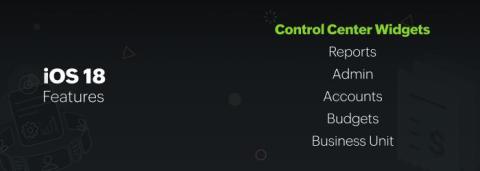
Control center widgets: iOS 18 updates to simplify cloud cost management with CloudSpend mobile app

Cloud cost management has become increasingly complex as businesses adopt multi-cloud strategies, using services like AWS, Azure, and GCP. Tracking expenses across these platforms can be challenging for businesses. With the latest updates in iOS 18, Control Center Widgets have been enhanced for a better user experience. You can streamline the process and monitor your cloud usage and spending directly from your device’s home screen.

The 35 Best Cloud Monitoring Tools Based On Use Case

The purpose of cloud monitoring is to identify, observe, track, and manage cloud infrastructure components and services. Cloud monitoring helps organizations ensure their services meet customer expectations of performance, availability, and security. Companies also use cloud monitoring to learn how users interact with their business websites, applications, and other digital touchpoints.

Introducing Ingest Guard - A Game-Changer for Observability Cost Control

It’s day 1 of SigNoz Launch Week 2.0, and we’re releasing Ingest Guard, a feature that will help platform and finops teams have granular control over data ingestion and observability costs. At SigNoz, we are constantly evolving to meet the needs of modern engineering teams, and this launch week, we're excited to introduce a highly anticipated feature—Ingest Guard.

AWS Instance Types Compared: Choosing The Right Option

You might wonder how companies using Amazon Web Services waste more than $10 billion annually. It’s easy to ask, “why don’t they just reduce their spending?” Well, it’s because there’s more to it than that. AWS offers many options — over 200 different services, for example. Amazon Elastic Compute Cloud (EC2) provides over 300 AWS instance types spread over five unique instance families.

Top 25+ AWS Cost Optimization Tools And Best Practices

While AWS offers significant benefits compared to traditional on-premise infrastructure, its inherent elasticity and scalability tend to create uncontrolled costs. AWS costs can be opaque and difficult to analyze, and without a system for identifying the source of costs and managing them, they can quickly undermine profit margins. However, several tools have emerged to help organizations manage and optimize their costs over the past few years.

Azure Cost Assessment

FinOps-certified practitioner Michael Stephenson introduces the cost assessment survey. He walks through the survey, explaining its importance and the types of questions it includes. The survey covers topics such as the frequency of cloud cost reviews, who is responsible for cost monitoring, methods for tracking spending, and much more! He also emphasizes the need for proactive cost management and highlights common practices like shutting down unused resources and right-sizing. The goal is to help organizations manage and optimize their cloud costs more effectively.

15 Application Monitoring Tools To Consider In 2024

Also known as application performance monitoring (APM), application monitoring tools track and analyze application performance. They monitor application metrics such as CPU usage, response times, error rates, and uptime. The tools also offer real-time insights to identify issues, improve user experiences, and optimize resources. But are APM tools really necessary?

5 Automated GCP Optimizations That Make Cloud Cost Savings Simple

As both the State Of FinOps 2024 and the State Of Cloud Costs In 2024 indicate, reducing cloud waste remains a top priority for cloud-driven organizations. Cloud spenders care more than ever about cost efficiency — and CloudZero is working tirelessly to make cloud savings simpler. To this end, we’re proud to announce that we’ve added a suite of automated GCP optimizations to our Insights feature.

Key learnings from the State of Cloud Costs study

We recently released our initial State of Cloud Costs report, which identified factors shaping the costs of hundreds of organizations that use Datadog Cloud Cost Management to monitor their AWS spend. The report reveals several widely applicable themes, including the ways in which resource utilization, adoption of emerging technologies, and participation in commitment-based discount programs all shape cloud environments and costs.

15+ GCP Cost Optimization Tools In 2024

Cost management in Google Cloud Platform (GCP) can be complex. It’s a lot like costs in Azure or AWS. Often, companies don’t know where to begin when they receive 20-page invoices. GCP billing tools can be unfamiliar, especially to users from a different cloud provider. However, the platform continues to simplify its cost monitoring and billing tools.

Product Release Notes August 2024

Creating a positive user experience is always one of the most important goals our teams focus on. Whether it’s administrators working behind the scenes on the platform, or users looking to uncover cost savings opportunities in Explorer, or engineers working with our APIs, we always strive to provide a frictionless experience making sure each person has the right information to achieve their goals in our platform.

The 4 Types Of Cloud Computing: Choosing The Best Model

There are four main cloud delivery models (cloud computing services) and four major cloud deployment models (types of cloud computing). Each model is unique, and that affects how it impacts cloud management, data security, and cost management, among other considerations. Here’s exactly what each cloud computing model provides and how to choose the best option for your needs.

How to save costs on non-production AWS environments

Non-prod environments don’t require the same levels of performance, availability or uptime that production environments do. Yet many are run like production environments, at a great cost. This problem will only grow as more legacy apps migrate to the cloud. So today, we’re looking at 6 tactics to drive down non-production costs (and carbon) for AWS users.