Operations | Monitoring | ITSM | DevOps | Cloud

The latest News and Information on Incident Management, On-Call, Incident Response and related technologies.

Status Pages 101: How to Create a Status Page You and Your Customers Will Actually Want to Use

This blog post is adapted from my talk at SRECon EMEA 2023 - original slides are available here! Status pages are a simple yet underutilized element of incident communication. Done well, they’re a low-lift way to keep your customers and stakeholders informed when incidents impact them. But without a solid approach, updating status pages can easily become a tedious and often neglected task during incidents. In this post, we’ll cover some tips to get your status page right.


PagerDuty and Jeli Together Will Transform Incident Management

Today is an important day for us at PagerDuty, and for the larger ecosystem of incident management. We’ve signed a definitive agreement to acquire Jeli, a standout player in the incident management space. This deal represents a strategic alignment of visions, technologies and goals that will have a lasting impact on the industry and our customers.

Basics of Incident Management

Life is full of unexpected incidents. From the coffee spill that disrupts your morning routine to the sudden traffic jam that transforms a 20-minute commute into an hour-long ordeal. Much like these challenges, most of our systems and infrastructure also constantly face these tiny glitches. If ignored, they can have a significant impact. Unlike minor inconveniences, these glitches we call Incidents have the potential to disrupt your business, frustrate customers, and eat into your revenue.

Set Responders Up for Success with New User Onboarding

Effective incident response plays a critical role in maintaining smooth operations at organizations of all sizes. When built up correctly, operational resilience–that ability to bounce back quickly after failure–can act as a shield that guards your customer experience, ensuring that even when incidents inevitably happen, you’re back online in no time.

xMatters Support - Dynamic Groups

Dynamic groups are teams of users based on selected criteria. A dynamic group's members change depending on who matches the selected criteria at the time of an alert. For example, you can create a dynamic group that includes all users who have specific training (such as first aid or fire safety) in a particular physical location within your organization. You could base this on a custom user property that indicates the level of training each user has. As each user gains a certification, the group is updated to reflect that change.

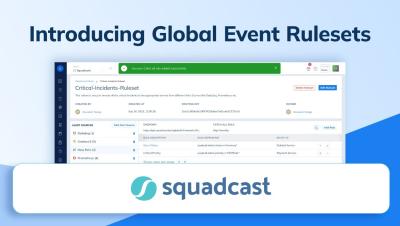
Introducing Squadcast's Global Event Rulesets | Incident Management | Squadcast

With video will give you a walkthrough of Squadcast's new feature 'Global Event Rulesets' that helps you simplify alert Routing and boost efficiency Global Event Rulesets enable you to manage alert routing across services and automate actions based on predefined global event rulesets.

StatusCast vs Status.io: Status Page Comparison

In the modern day IT landscape, service reliability is of the utmost importance. Status pages serve as crucial interfaces, communicating any interruptions or issues to stakeholders. While several options are available, two notable status page providers stand out: StatusCast and Status.Io. Here we take a dive into the various aspects of status pages and incident management for each status page service.

Create a dedicated Microsoft Teams channel for an existing alert

With the ilert Microsoft Teams integration, you can create a separate MS Teams channel for a specific alert, allowing quick collaboration. You can bring together your team members in a shared chat to discuss the issue, share findings, and coordinate your response. This feature is also helpful for reviewing incidents and creating postmortems.

PagerDuty Operations Cloud Fall Launch 2023

Across the business landscape, 2023 has been called the “year of efficiency.” Organizations have had to deliver more growth and innovation, but with tighter budgets and headcount than in prior years. CIOs have needed to build strategies to mitigate the risk of operational failure and protect their brand’s customer experience.