Operations | Monitoring | ITSM | DevOps | Cloud

Live Debugging for Critical Systems: MTBF, MTTR & MTTA

A critical system has to stay reliable without new failures or added downtime, and live debugging, confirming the root cause without stopping the system, is often the only way to do that. In practice, this means having runtime context: on-demand evidence generated at the point of failure rather than logging configured months earlier, which is what keeps MTBF up, MTTR, and MTTA down.

DHCP tells you what was leased. It does not tell you what is answering.

Your DHCP server knows which addresses it assigned. It does not know which of those addresses are answering on the wire right now. That gap shows up in every hybrid network where static devices, reservations, and stale leases sit beside active workloads. Leased and live are different questions. DHCP scopes answer the first. Subnet ping-sweep answers the second. Together they give IPAM fresher last-seen context without handing an NMS credentials across the network.

Can we live dangerously? Sandboxing Claude, and the Claude foreman that runs the rest

While logging into one’s LinkedIn will spew out endless talk of AI possibilities from “thought leaders” and the semi-disconnected alike, another pocket of the world spent the last few weeks watching the Shai-Hulud worm chew through npm. A self-propagating credential stealer that hit 400-plus packages and, delightfully, planted Claude Code and VS Code hooks so just opening the repo could run its payload.

Prompts, skills, and the AGENTS.md nobody wants to write (and how Anthropic writes theirs)

You’ve watched Claude Code compact a conversation. The context bar fills, it pauses, a summary appears, and it carries on like nothing happened. You probably assumed a housekeeping script trimmed the transcript in the background. It didn’t. The model compacted itself. When the window fills, Claude Code sends a long, specific prompt telling the model how to summarize its own conversation. Then it does, same model, same turn. The thing managing your context window is just another instruction.

Why Growing B2B and DTC Brands Are Rethinking Their Ecommerce Infrastructure in 2026

A growing number of B2B and DTC brands are running the same calculation this year: what their ecommerce stack actually costs once every app subscription, integration fix, and developer hour gets added to the platform fee. The answer is pushing a broader look at ecommerce infrastructure itself, not just which platform sits underneath it.

Headless vs. Traditional Web Architecture: What DevOps Teams Need to Consider

DevOps teams face a critical architectural decision when building modern web applications: should they stick with traditional, monolithic systems or embrace headless architecture? This choice affects everything from deployment workflows to team collaboration, performance optimization, and long-term maintenance costs. Understanding the technical and operational implications of each approach helps teams make informed decisions that align with their specific requirements.

Building AI Systems That Survive an Audit: Evidence Trails, Traceability and Compliance by Design

A model returns an answer with a confidence score of 0.94. The team ships it. Six months later someone asks why the system produced that specific answer, and nobody can reconstruct it. For years accuracy was the only number that mattered in machine learning. Get the error rate down, ship the model, move on. In regulated domains that is no longer enough. The harder question is whether you can defend a single decision after it has been made. Most systems were never built to answer that, and by the time someone asks, the information needed is already gone.
Sponsored Post

Raygun APM Agent 3.0.14: faster, simpler, and ready for ARM64

Today we are releasing Raygun APM Agent 3.0.14 for Windows, Linux, and Azure App Service. This release is the result of a substantial modernization of the Agent, profiler, installers, and release pipeline. It makes Raygun APM easier to deploy, reduces overhead in several critical paths, adds native Linux ARM64 support, and lets developers investigate APM data through Raygun API v3 and the Raygun MCP server. If you are upgrading from version 2.3.0, there is much more here than a version-number change.

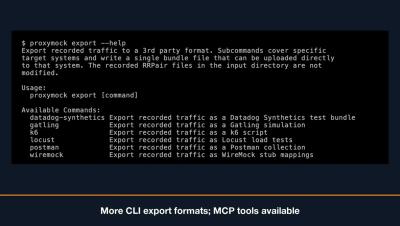
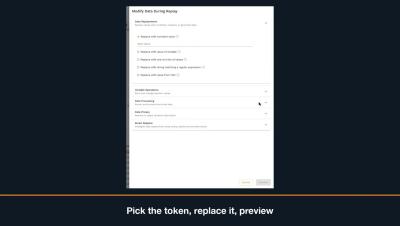
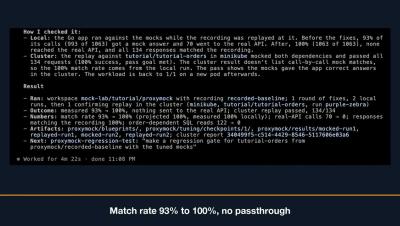
From Handwritten Mocks to proxymock: The Complete Loop

Handwritten mocks are cheap one at a time. This series built enough of them to show how quickly that stops being true. Nine posts took one package notifier from a function returning "delayed" to a captured response from a real carrier. Along the way, we hand-authored canned successes, failure cases, a spy, a stateful fake, an HTTP server, response fixtures, and contract-drift tests in four languages.