Operations | Monitoring | ITSM | DevOps | Cloud

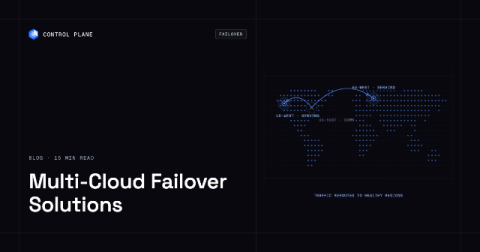
Best Multi-Cloud and Multi-Region Failover Solutions (2026)

The best failover solution keeps your application serving users from another location without a manual cutover. The strongest approach is active-active across two or more locations, where every location already serves live traffic, rather than restoring from backups after an outage.

The hidden cost of environment drift

Two teams, same company, same platform, same quarter. Team A ships to production three times a day. Their environments are defined in code, provisioned the same way every time, and a new engineer can get a working setup before lunch. Team B ships once every two weeks, if the release window holds. Their staging environment has diverged from production in ways nobody fully remembers approving. Getting a new engineer set up takes a week of Slack messages to whoever still remembers how it was done last time.

Our Limits Are Not Our Imagination

Yesterday, my partner told me about his new automated pipeline from a conversation recording to publication of a whole podcast, with social media blurbs and graphics and everything. It did more than he'd predicted the agent could do. "We are limited by what we can imagine," he said. Cheesy, but it kinda gave me goosebumps because it's (almost) true. Most of the experienced developers I know are concerned.

ObservabilityCON 2026: A guide to all the announcements from Grafana Labs

Today at ObservabilityCON 2026 in San Francisco, we unveiled a range of new Grafana Cloud capabilities designed to reshape cloud economics, bring richer context and deeper visibility across your systems and end-user experiences, and help teams move toward autonomous operations. Check out the keynote to learn more about the latest updates to the open agentic observability cloud, and read on for a quick recap of all the news from ObservabilityCON 2026.

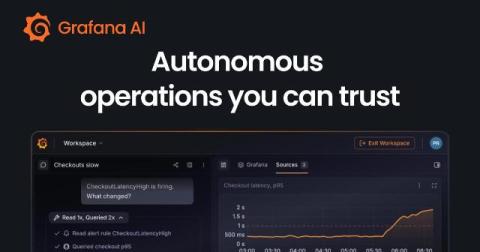
From production problem to proposed fix: Implement autonomous operations with Grafana AI

You've just finished a deployment, and though your service is up, you start to notice some requests are getting slower. To address the lag, someone—or, more likely, some group of people on your team—needs to watch the dashboards, decide whether the change matters, investigate what happened, and turn the findings into a fix. At each step you're gathering context—and often explaining that context again to the next person or tool.

What Happens When You Outgrow a No-Code AI Agent Builder?

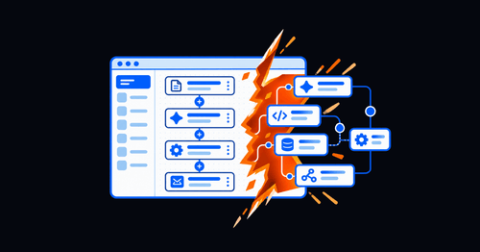
A no-code AI agent builder can get a defined agent into production quickly. The risk appears when added branches, exceptions, integrations, and controls exceed the visual canvas. Organizations should look for a platform that lets teams extend individual steps with reusable code without rebuilding the agent or abandoning its governance.

Build better SLOs with RUM and synthetic SLIs

Well-designed service level objectives (SLOs) help you track the benchmarks your app needs to meet to deliver a successful user experience (UX). To track performance against these SLOs, many SRE teams are turning to real user monitoring (RUM) and synthetic monitoring for their service level indicators (SLIs), as these forms of data provide more direct measurements of UX than backend performance metrics.