Operations | Monitoring | ITSM | DevOps | Cloud

5 takeaways from the State of Software Delivery Q3 Pulse report

Software teams are taking on more work than ever. Developers are juggling more branches, coding agents are keeping CI busy through the weekend, and builds are passing more often and finishing faster. But is all that extra activity helping teams ship faster? Today we released the 2026 State of Software Delivery Q3 Pulse report, the latest in our quarterly series tracking how software teams are adapting to AI-driven development.
Building a resource optimization agent with Kubex: Patterns

The rise of large-language models (LLMs) that can understand and create text, and reason about problems has opened the door for software agents that use the reasoning power of LLMs to interact with the wider world and solve problems. At Kubex, our bread and butter is compute and GPU resource optimization, so it’s natural for us to ask how agents could help our customers more effectively optimize their resources.

PHP2Shell: How to Find Vulnerable PHP Versions on Your Devices

Last updated: October 21, 2026. We'll update this article as PHP and Linux distributions publish new information. PHP2Shell is the nickname of two critical vulnerabilities in PHP that let an attacker run code on a web server without logging in. PHP released the fixes on October 21, 2026, and IT and security teams now need to know which of their servers and computers run a vulnerable PHP version, so they can patch those first.

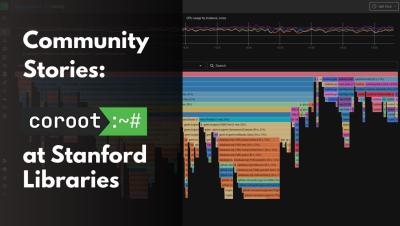
Community Stories: Coroot at the Stanford University Libraries

Coroot was designed to solve the problem of time-consuming root cause analysis. It handles the full observability journey - from collecting telemetry automatically with zero code setup (thanks, eBPF!) to simplifying the role of SREs and DevOps everywhere with instant root cause analysis powered by AI. We also strongly believe that simple observability should be an innovation everyone can afford to benefit from: which is why our software is open source!

Shipped: Break down AI spend by your projects and teams, within minutes

Your company talks about AI spend in its own terms, like projects, teams, and products. Now AI Signals can show AI spend in those terms, too. Write a CostFormation rule in CloudZero that groups AI spend by categories you care about, and the new breakdown appears in AI Signals the same day you decide to track it. There’s no waiting for a full processing cycle.

Shipped: Views now save your full Explorer state

Many CloudZero users ask the same few questions. What did my team spend this month? How is our AI spend trending over the last 30 days? What does one MCP tool call cost? Now you can save the exact Explorer setup behind each answer as a View and get back to it instantly. It’s not just filters and grouping anymore, but the full picture. You can share a link with a teammate or finance and they see the same View, filtered to the spend their role allows.

We just gave a million dollars to Open Source maintainers

The title is not a joke. For those of you who know Sentry, you know we’ve been giving back to Open Source maintainers since our early days in whatever ways we could. But around five years ago we really started to give in a more meaningful way. This year we increased our budget from $750,000 to $1,000,000.

AppSignal MCP Is Now a Claude Connector

AppSignal MCP went generally available last month. Until now, adding it to the Claude app meant pasting our endpoint URL into a custom connector form. Now you search for it like any other connector. Open Settings, go to Connectors, select the Discover tab, and search for AppSignal. That's the whole setup. For more detail on each step, follow the Claude app section of the setup guide. It works the same way in Claude on the web and in the desktop app..

Playing GIFs in the Icinga DB Web Service Grid: What It Taught Me About Icinga 2, Icinga DB and Redis

What happens when you treat the service grid like a screen. Every now and then a side project starts as one thing and quietly turns into something much sillier. Mine started as a way to get more comfortable with the Icinga 2 configuration. It ended with a question nobody asked: can the service grid in Icinga Web play GIFs? Spoiler: kind of. And on the way, I learned a lot about how Icinga 2, Icinga DB and Icinga Web work together.

Dispatching Ansible playbooks with CFEngine

In large organizations and infrastructures, it’s fairly common to use multiple configuration management tools. There are many reasons for this. Different teams may have different preferences, some tools suit certain use cases better than others, and existing systems can come with their own limitations. Whatever the reason, the tools don’t have to work in isolation. In this post, we’ll show how to run Ansible playbooks on CFEngine-managed hosts using Mission Portal.