Operations | Monitoring | ITSM | DevOps | Cloud

Governance is the platform problem worth solving

Based on the LeadDev panel discussion "Governance Is the Platform Problem Worth Solving," hosted in partnership with Harness, August 5, 2026. AI agents are no longer waiting for a human to approve their next move. They open pull requests, adjust configurations, and act on behalf of the people who deployed them — often faster than any review cycle can keep up.

Platform engineering in the age of AI

94% of engineering leaders say their AI metrics are missing. Here's how platform engineering is changing to close that gap. Based on the InfoQ webinar "Platform Engineering in the Age of AI," featuring panelists from Harness, DKB, and Shine, August 18, 2026. 94% of engineering leaders say the AI metrics that matter most to them are missing.

SAP Observability Tools Compared

Comparisons of SAP observability tools often evaluate which platforms can see inside SAP.Today, that’s nearly all of them. Dynatrace, Datadog, New Relic and Splunk can all get SAP telemetry. None of them are likely the best choice for an SAP-centric application, and we will document why. The questions teams evaluating SAP observability solutions should consider: That last one is where most of these platforms stop, and it is the difference between observability and operations.

It takes a hacker 48 hours to exploit a vulnerability. Why does it take 43 days to patch it?

It is not always possible to patch vulnerabilities as quickly as hackers exploit them, but recent figures show just how much this gap has widened. FortiGuard Labs estimates that the time between the disclosure of a critical vulnerability and its active exploitation has dropped sharply to between 24 and 48 hours. By contrast, Verizon’s 2026 Data Breach Investigations Report shows that organizations take a median of 43 days to complete vulnerability remediation.

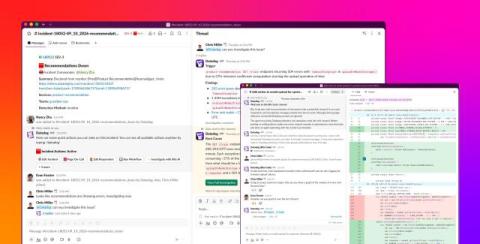
From alert to resolution: Manage incidents with Bits Chat in Slack

When an issue in production triggers an alert, the people responding to it are often working in Slack while the evidence they need is elsewhere. Responders need to move between conversations, telemetry data, source code, and incident tooling as they form hypotheses, coordinate actions, and keep stakeholders informed. That context switching can slow down a time-sensitive investigation and make updates harder to follow.

Anomaly Detection Is Now Generally Available

You set a threshold alert on a checkout endpoint at 500ms. It pages you every Monday at 9am, when traffic doubles and nothing is actually wrong. You raise the threshold to 800ms to make the noise stop. Three weeks later a real regression creeps in at 650ms, and nobody gets paged, because you tuned the alert to survive Mondays instead of to catch problems.

How to automate Docker Registry creation with Harness Pipelines and Terraform

Provision a fresh Docker Registry with Terraform, build your container image into it, and deploy to Kubernetes in one One pipeline. One click. It provisions a fresh Docker Registry with Terraform, builds your container image into it, and deploys that image to Kubernetes. Every run creates a uniquely named registry, so you never hit naming conflicts. Creating Docker registries by hand every time you spin up a new service or environment gets tedious fast.

Announcing the Flyway Docker provisioner, now in Preview in Flyway Enterprise

"Why do I need to give Flyway this extra database?" That's one of the most common blockers we hear from users setting up a Flyway project. Flyway has long had a concept of a build database or shadow database that is a dedicated sandbox database for Flyway to do background work in. It's required for Flyway to be able to simulate what running a set of migrations will do to a database.

Day 2 Operations for AI-Generated Code: What Changes When You Didn't Write It

We have all watched AI speed up the way we write software. With tools like Copilot and ChatGPT, developers can spin up boilerplate, write complex functions, or draft entire micro services in minutes instead of days. It feels like magic. But there is a silent catch that we do not talk about enough: writing the code is only Day 1. The real challenge is Day 2 operations, which is everything that happens after that code is deployed.