How NaaS and SDCI Can Lower Your Cloud Spend
Cloud costs can pile up quickly, and often behind the scenes. We explain how software-defined cloud interconnect (SDCI) can help your business rein in a swelling budget.


The latest News and Information on IT Networks and related technologies.
Cloud costs can pile up quickly, and often behind the scenes. We explain how software-defined cloud interconnect (SDCI) can help your business rein in a swelling budget.
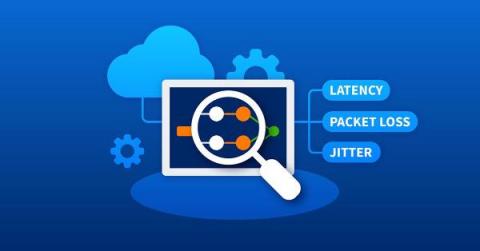
Part two of a three-part guide to assuring performance and availability of critical cloud services across public and hybrid clouds and the internet Monitoring your user traffic is critical for knowing the quality of the digital experience you are delivering, but what about the performance of new cloud or container deployments, expected new users in a new region, or new web pages or applications that don’t have established traffic? This is where synthetic testing can be invaluable.
The final post of a three-part guide to assuring performance and availability of critical cloud services across public and hybrid clouds and the internet Kentik Synthetics adds integrated, autonomous, pervasive performance test telemetry to our market-leading network traffic analytics and observability platform, the Kentik Network Observability Platform. For modern clouds, proactive synthetic monitoring can no longer be delivered as a standalone tool.
A three-part guide to assuring performance and availability of critical cloud services across public and hybrid clouds and the internet.
SolarWinds is a network and application monitoring solution, but primarily a network monitoring solution. Founded in 1999, the company has built an online community of 150,000 registered users. However, monitoring has come a long way since the early 2000s. How does SolarWinds stack up against MetricFire in terms of features and pricing? In this article, we break down the comparison into easily digestible, unbiased information to help you make an informed decision.
If you’re an engineer trying to fix real problems with your apps, looking at just one small part of the picture isn’t going to cut it. This is why Kentik is so focused on helping you understand what’s going on beyond single k8s instances, and it’s a big part of what network observability is all about. This was Kentik’s message at Kubecon 2022, which was a memorable event for us.