Operations | Monitoring | ITSM | DevOps | Cloud

The Best Cloud Providers for Data Sovereignty and Residency in 2026

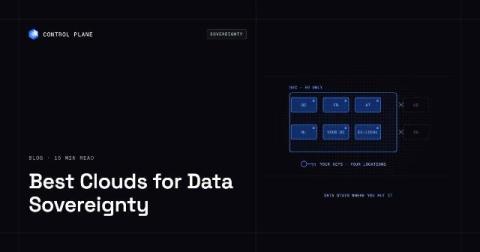
Data residency is about where data is stored and processed. Data sovereignty is about whose laws and operators can reach it. The strongest setups put regulated data in in-country regions or with sovereign providers, hold their own encryption keys, enforce placement with policy, and keep the ability to move. No single provider covers every country, so most teams combine two or three. Disclosure: Control Plane publishes this guide and is one of the options listed. This guide is not legal advice.

How to Stop Secrets Leaking From Your Deployment Platform, and How Qovery Stores Yours

Railway's disclosure of leaked customer environment variables is a reminder that deployment platforms hold the keys to everything. Here is how secrets leak from platforms, the practices that prevent it or limit the damage, and exactly how Qovery stores secrets across its control plane and your data plane, with AWS Secrets Manager, Parameter Store, GCP Secret Manager, Doppler and Infisical. Romaric founded Qovery to make Kubernetes accessible to every engineering team.

Sandbox Environments for AI Agents: A Full, Isolated Stack for Every Task

A code sandbox like Daytona or E2B isolates a process. A sandbox environment isolates a whole stack: services, databases, queues and configuration, cloned for one agent task and destroyed when it is done. Here is how sandbox environments work, what they are good for, and how to run them on Qovery. Romaric founded Qovery to make Kubernetes accessible to every engineering team. He writes about platform strategy, developer experience, and the future of cloud infrastructure.

The Upsun Performance Agent: a diagnosis instead of a call graph

The data to explain a slow endpoint is usually already sitting in your project. Blackfire has the profile. Continuous profiling has the flame graph. The traffic numbers show which route matters. The code is in git. What takes the afternoon is putting those four things next to each other and working out which function is responsible. That afternoon is what the Upsun Performance Agent is for.

How Upsun handled PHP2Shell: protection in place 22 hours before the patch

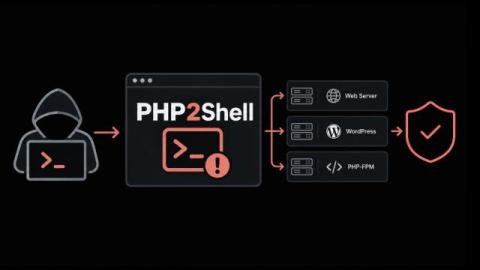
On 21 October 2026, the team behind PHP released an emergency fix for two critical security flaws. PHP is the programming language behind a large share of the web, including WordPress, Drupal and many online stores. Researchers at Wiz named the flaws PHP2Shell. An attacker could use them to take control of a website without ever logging in. Updating a website, its CMS, or its plugins doesn't help. The only real fix is (and was) a new version of PHP itself.

What Four Leadership Circles Revealed About Operationalizing DEX

Earlier this year, I spent time with technology leaders across four major cities – San Diego, Boston, London and Dallas, as part of four Leadership Circles. Taken together, the conversations reinforced how far digital employee experience has matured for many organizations. The focus has shifted from understanding why DEX matters to exploring what it takes to operationalize its success. San Diego focused on the changing role of IT and the strategic case for DEXOps.

How to Patch PHP2Shell Across Every Server and Prove Each Fix to Auditors

When a critical flaw surfaces in the language behind a large share of your web applications, how quickly can your organization name every server that runs it? PHP2Shell puts that question in front of every IT leader who runs PHP. The answer decides how long the business stays exposed. Here's the short version. PHP2Shell covers two flaws in the PHP engine, and either one lets an attacker run code on a web server with no login at all.

VMware Monitoring: Why Opslogix continues to be the right choice for you

In December 2021 we wrote VMware Monitoring: Why Opslogix is the right choice for you. At the time, vSphere 7 was new, Kubernetes was coming to vSphere, and the Log4j vulnerability was in the news. A lot has changed since then. vSphere 9 and SCOM 2025 are here, ransomware gangs now target ESXi hosts directly, and many organizations are reconsidering how they monitor their VMware estate.