Operations | Monitoring | ITSM | DevOps | Cloud

The latest News and Information on IT Service Management, Service Desk and related technologies.

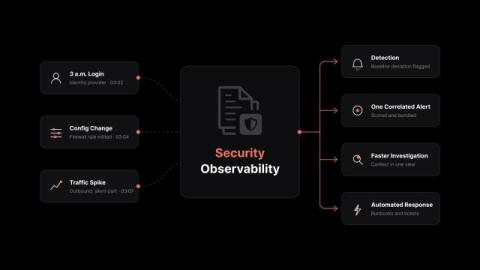
Security Observability: Pillars, Use Cases, and How It Works

When an alert lands, does your team already see the full story, or does the work start with pulling scattered data together from one tool after another? For many organizations it's the second one, where the incident itself takes a backseat while analysts hunt across dashboards. The evidence is right there, scattered across platforms that don't share context. Security observability exists to close that gap.

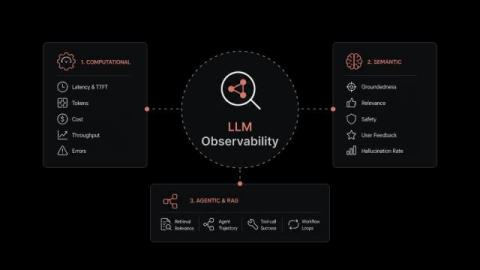
What Is LLM Observability? A Complete Guide

If you run LLM features in production, your most dangerous failures are the ones your monitoring never flags. Your LLM feature passed every test, and the demo went great. Three weeks after launch, a support ticket lands: the chatbot quoted a refund policy that does not exist. The dashboards are all green, and the same prompt answers correctly when you retry it. This is the blind spot LLM observability exists to close. Your existing tools saw the request come back fast with a clean status code.

What's New with Mobility (MDM, EPMM) 2026.3

Our July 2026 release incorporates the latest mobile device management features to secure the user, device, security and network so that enterprise data is protected, personal privacy is respected, and users have the access they need to be productive. What you’ll learn: The Modern Threat Landscape: Understand the latest mobile-specific threats, from sophisticated phishing attacks to malicious apps.

What's new with Ivanti Autonomous Patch Management with Predictive Remediation and Endpoint Security

Ivanti is continuing to advance endpoint security, patch management and is introducing Predictive Remediation for Q3 2026 — with releases that improve visibility, reduce manual work, expand platform support and help teams move faster from risk identification to action. Here’s what’s new: Ivanti Device and Application Control: Enhanced logging controls help reduce unnecessary disk usage by letting administrators enable, disable or delete sdcevent.json generation based on operational needs.

What's New with Autonomous Endpoint Management UEM, DEX, Platform, UWM, EPM 2026.3

Ivanti Autonomous Endpoint Management does exactly that — and we just made it smarter. Here are the latest innovations coming in July 2026, from new AI capabilities that ground decisions in real-time data to platform milestones that deliver full endpoint control across physical and virtual environments. Here's what's new: → Connected AI-Assisted Workflows: Device Query Builder, PowerShell Stages and AI Insights — unified into one execution layer.

Enterprise AI Governance Made Simple with Nexthink's AI Activation Hub

Over the past year, organizations have embraced AI at an extraordinary pace, and Nexthink AI Activation Hub powered by AI Drive has helped customers make sense of that transformation by helping organizations discover the growing wave of AI tools entering the workplace, rapidly triage and govern them, accelerate adoption of approved AI solutions, and measure the impact of AI across the enterprise.

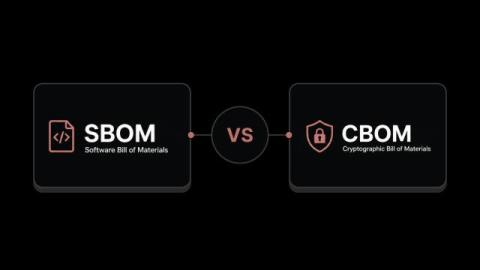
SBOM vs CBOM: Software and Cryptographic Bills of Materials Explained

How confident are you that you know every component inside your software, and every algorithm guarding it? In practice, the answer is usually scattered across build tools, ticketing systems, and spreadsheets that stopped being accurate months ago. A modern application draws on hundreds of open-source parts, and the encryption underneath them is harder still to trace. That visibility gap is what keeps the "SBOM vs CBOM" question alive in security and compliance reviews.

What Is CIS Compliance? A Complete Guide

Most security breaches begin with something small and avoidable. Think of a password still set to its default, a server port left open to the internet, or configuration drift that slowly undoes last year's careful setup. Gaps like these go unnoticed because nobody is assigned to look for them, and they can be very costly. According to IBM's 2025 Cost of a Data Breach report, the average data breach incident costs companies 4.44 million dollars.