Operations | Monitoring | ITSM | DevOps | Cloud

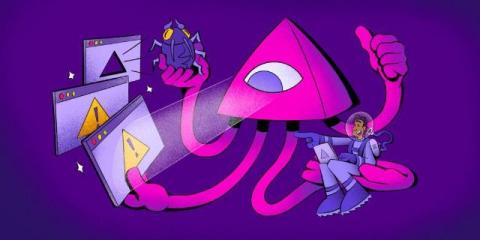
A Guide to DDoS Protection in Your Network

Learn how DDoS attacks work, how threats are evolving, and how modern network-integrated protection can help defend your infrastructure. Network connectivity is the frontline of revenue generation and customer trust for almost every modern enterprise. But as digital footprints expand across hybrid and multicloud environments, Distributed Denial of Service (DDoS) attacks continue to grow in volume, frequency, and sophistication.

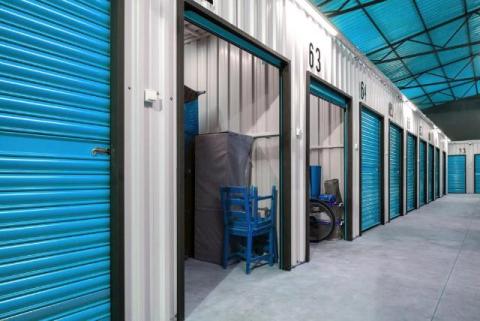
Private cloud disaster recovery: How to design for business continuity without public cloud dependency

Disaster recovery (DR) is one area where organizations often assume public cloud has the answer already. Multi-region deployments, managed backup services, automated failover - the hyperscaler catalog is full of DR-flavored offerings, and the marketing suggests that resilience is a solved problem once you're on cloud infrastructure. For many workloads, this is roughly true.

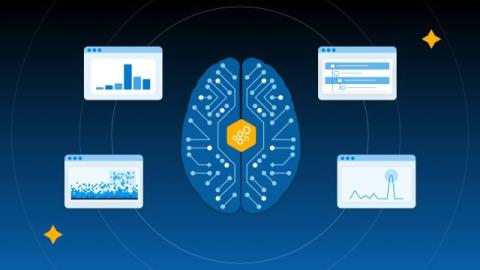
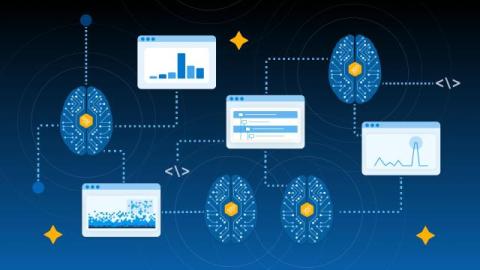
Observability's Sixth Sense: Grounding Anomaly Detection in Reality

Summary: Machine learning-based anomaly detection improves observability by learning normal system behavior instead of relying only on static thresholds. This article explains how vmanomaly, its MCP server, purpose-built skills, and an LLM-powered UI copilot help engineers explore telemetry, investigate anomalies, build MetricsQL queries, select suitable models, apply business constraints, and validate configurations through natural language.

Monitors now support the HTTP QUERY method.

If your API answers on QUERY, you can now point a monitor straight at it. QUERY joins HEAD, GET, POST, PUT, PATCH, DELETE, and OPTIONS in the HTTP method list for HTTP, keyword, and API monitors. You can find it under the “Advanced settings” when editing or adding your monitor. QUERY became a standard in June 2026 as RFC 10008. It’s safe, idempotent, and it carries a request body.

Peak Cloud: Decentralising for resilience

For more than a decade, the prevailing wisdom in enterprise IT was simple: move everything to the public cloud. Hyperscale platforms promised unlimited scalability, lower costs, agility and freedom from the burdens of managing infrastructure. Cloud-first has been rapidly gaining momentum as the de facto path to a modern digital footprint. Until now.

JFrog Artifactory Now Integrates Natively with Artifact Registry in Google Cloud

Teams running containerized workloads on Google Cloud have long relied on JFrog as their single source of truth for container images. The missing piece has been getting Google Cloud’s own runtime services — like Cloud Run and Google Kubernetes Engine (GKE) — to pull directly from JFrog for every container image pull. I’m happy to say that the gap is now closed. Artifact Registry in Google Cloud has introduced a new repository mode called Connector that addresses this requirement.

How to right-size your existing Claude skills

You shipped a skill. It worked. You closed the tab. That’s the whole problem. Model choice is a decision you make once, at the moment you’re least equipped to make it: before the skill is even authored. Then you never revisit it, because the skill stopped being interesting the day you got it working. So go back and check. Here’s how.

How to build the business case for AI

A strong AI business case ties a specific goal to a measured outcome and a fully-loaded cost. Most fail because they skip one of the three: no clear mandate, an over-broad "AI fixes everything" scope, or a cost estimate that ignores adaptation and error-correction. Build it in six steps: define goals, identify uses, break work into tasks, evaluate models, assess total cost, then launch and refine. Most companies are now spending on AI. Far fewer can show what they got back.