Operations | Monitoring | ITSM | DevOps | Cloud

We used our own product to cut our AI tooling bill without cutting AI usage

The problem: our AI spend was growing faster than our understanding of its ROI. Like most engineering organizations, Harness went from "a few people are trying out AI coding tools" to "AI tooling is a line item in the monthly finance review" in a matter of months. The cost itself wasn't really the problem.

Harness Launches VegaLoad: Open-Source Load Testing for Agentic Developers

VegaLoad is a free, open-source load testing tool for agentic developers. Your agent writes the test, runs it, and gives you a report. VegaLoad is a free, open-source load testing tool. You ask your agent for a test. It writes the file, runs it, and gives you a report.

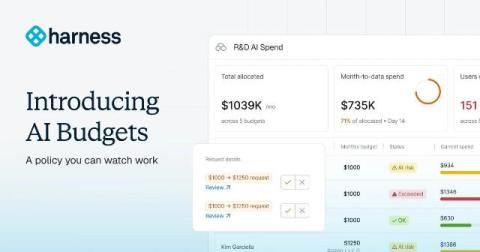
Introducing AI Budgets: A Policy You Can Watch Work

AI Budgets turns an AI cost policy into a limit customers can watch hold in real time, so overspend gets caught within days instead of surfacing on next month's invoice. With AI Budgets, the Cost Management Agent turns your AI cost policy from a document everyone signed once and forgot into a limit you can see working. ‍ In our last post, we showed why 73% of organizations have an AI cost policy, but only 13% can tell whether it's working.

Telemetry Cost Management: Routing, Tiering, and Governance Without Blind Spots

TL;DR Cutting telemetry volume is only half of cost management. The other half is sending each signal to the right destination and storage tier, adjusting policies as traffic and incidents change, and rolling out every change in phases that teams can measure and reverse.

Certificate Lifecycle Management: How to Track, Monitor And Renew Digital Certificates

Certificate Lifecycle Management (CLM) is the process of tracking every digital certificate an organization uses, from the moment it is requested to the day it is retired. IT, infrastructure and security teams look into Certificate Lifecycle Management when they need to stop certificates from expiring unnoticed, keep up with shorter certificate lifetimes and know who answers for each one.

Automate Slack Support with Datadog Workflow Automation + Bits AI

Automate Slack support questions with Datadog Workflow Automation and Bits AI Agent Builder. Datadog Workflow Automation can now trigger directly from messages posted in Slack. In this quick demo, Yuta Yoshida, Product Manager at Datadog, shows how to build an automated support workflow that: → Detects new support questions in a Slack channel→ Sends questions to a custom agent built with Bits AI Agent Builder→ Replies directly in the Slack thread with an answer and relevant documentation.

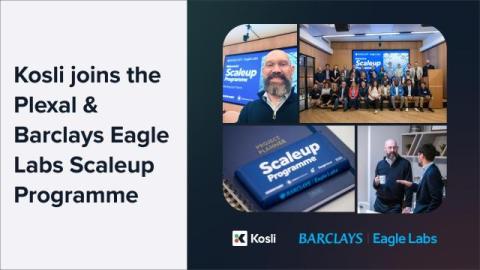
Kosli joins the Plexal & Barclays Eagle Labs Scaleup Programme

Kosli has been selected for the fourth edition of the Scaleup Programme run by Plexal and Barclays Eagle Labs. Following a competitive application process, we’re one of 25 high-growth UK technology companies chosen to take part. The programme is built for companies where growth for scaleups starts to present new challenges, with particular focus on scaling commercial performance, customer expansion, funding, and capital planning.

Enterprise AI ROI: proving returns at scale

Enterprise AI ROI is the return on AI investment measured across a portfolio: dozens of initiatives, multiple business units, shared platforms, and one board asking for the total. It fails differently than single-project ROI, usually because baselines and unit costs were never established, and it's proven with per-initiative denominators rolled into portfolio-level reporting.

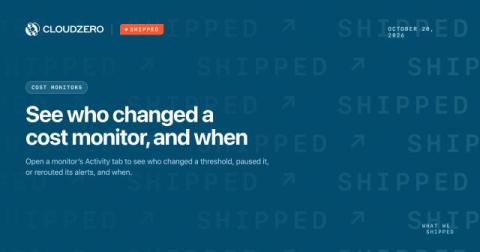
Shipped: See who changed a cost monitor, and when

A cost monitor is only useful if people trust its settings. When a threshold moves or a monitor goes quiet, the team needs to know who made the change and when. Every monitor in CloudZero keeps that record. You can check it yourself in a few seconds, confirm a change was intended, and put a setting back if it wasn’t.

ChatGPT Enterprise pricing in 2026: seat costs, minimums, and the new token rate card

ChatGPT Enterprise has no public list price. Reported 2026 contracts average about $60 per user per month within a $45 to $75 range, with 150-seat minimums and annual prepayment, putting the floor near $108,000 a year. Newer eligible agreements add usage-based billing under OpenAI's published token rate card.