Operations | Monitoring | ITSM | DevOps | Cloud

The latest News and Information on Containers, Kubernetes, Docker and related technologies.

Introduction to instrumenting applications with Prometheus

As a developer, getting metrics from your application onto a Prometheus graph can seem daunting. We’ll look at analyzing your service to find the most useful places to add metrics, how to add that instrumentation, getting it exposed and scraped, and then basic queries to use those metrics on graphs. Check out another article of mine for general reference on instrumenting, this one on Prometheus metrics, or this comparison on instrumentation alternatives.
Announcing the Tigera - Nutanix Partnership

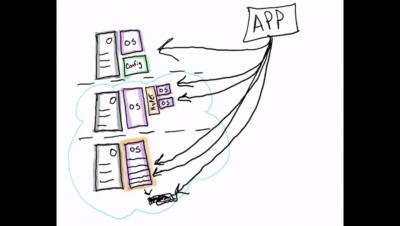
Today we are pleased to announce our partnership with Nutanix, creators of the industry’s most popular hyper-converged infrastructure (HCI) technology. HCI combines datacenter hardware using locally-attached storage resources with intelligent software to create flexible building blocks that replace legacy infrastructure consisting of separate servers, storage networks, and storage arrays.

Containers, Microservices, and Kubernetes

Faster application development requires more agile application infrastructure. Containers started the transformation of modern application architectures which now are dominated by microservices running on Kubernetes. In this episode of Dissecting DevOps find out how cloud infrastructure has changed, how the modern architectures make application development easier, and the unique challenges introduced by microservices and Kubernetes.

Loki tutorial: How to send logs from EKS with Promtail to get full visibility in Grafana

Amazon Elastic Kubernetes Service (Amazon EKS) is the fully managed Kubernetes service on AWS. If you’re using it and wondering how to query all your logs in one place, Loki is the answer. With this tutorial, you’ll learn how to set up Promtail on EKS to get full visibility into your cluster logs while using Grafana. We’ll start by forwarding pods logs then nodes services and finally Kubernetes events.

12 Container image scanning best practices to adopt in production

Don’t miss out on these 12 image scanning best practices, whether you are starting to run containers and Kubernetes in production, or want to embed more security into your current DevOps workflow. One of the main challenges your teams face is how to manage security risk without slowing down application delivery. A way to address this early is by adopting a Secure DevOps workflow.

Up and running with Calico Host Micro-segmentation on AWS

In this online training, we will explain how to install and configure Calico on AWS VMs to apply network policy to resources outside your K8s cluster. The talk will be primarily a walkthrough and demo and you will receive all manifests and instructions to do the demo on your own after the session.

Automate k3OS Cluster Registration to Rancher with Argo Workflows and Scripting Magic

As the Kubernetes ecosystem grows, new technologies are being developed that enable a wider range of applications and use cases. The growth of edge computing has driven a need for some of these technologies to enable the deployment of Kubernetes to low-resource infrastructure to the network edge. In this blog post, we are going to introduce you to one method of deploying k3OS to the edge. You can use this method to automatically register your edge machine to a Rancher instance as a control plane.

What can you do with MicroK8s?

MicroK8s was first released in late 2018 and has seen significant adoption rates from developers and enterprises alike ever since. Taking increasing demand and curiosity around the topic, we have already given an introduction to MicroK8s as well as covered how to deploy MicroK8s locally in previous blog posts. This time, we’ll take a look at MicroK8s’ applied value, by examining common MicroK8s use cases. Among others, this includes AI/ML workflows.