Operations | Monitoring | ITSM | DevOps | Cloud

5 Reasons to Switch from PagerDuty to a More Effective Alternative

When it comes to Incident Management, having the right tool can make all the difference between a swift resolution and prolonged downtime. While PagerDuty has long been a staple in the industry, many teams are finding more effective alternatives that better align with their needs and offer significant advantages. Here, we explore five compelling reasons to consider switching from PagerDuty to more efficient alternatives.

The Best SRE Tools To Improve Reliability and Streamline Operations

For better or worse, most companies—including their execs and developers—see SREs as superheroes who’ll save them from the evils of downtime and service degradation with their boundless superpowers. SREs are expected to constantly perform dangerous stunts like production debugging or communicating highly technical issues to angry VPs. They must also be able to manage infrastructure, networks, databases, pipelines, operating systems and much more.
Optimizing Incident Management: Effective Stakeholder Communication with Squadcast

When a critical system goes down, every minute counts. Amid the chaos, it's easy to overlook a crucial aspect of Incident Management: keeping stakeholders informed. However, neglecting stakeholder communication can have disastrous consequences, including misinformation, delayed decisions, and frustration. Effective stakeholder communication is essential for ensuring a coordinated, efficient, and transparent response to incidents.

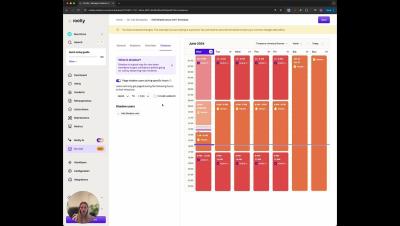
Rootly On-Call: On-Call Shadowing Feature

Shadowing experienced responders is one of the most effective ways for folks who are new to on-call to gain the confidence and knowledge to handle incidents independently. Traditionally, shadow rotations are cumbersome to set up, involving duplicating and editing an existing schedule. For Rootly On-Call users, setting up shadow rotations couldn’t be easier with our new native Shadowing feature. Here are a few highlights.

Beyond MTTR: 7 incident metrics that matter and 3 that don't

Pets.com was an online pet supply retailer founded in 1998, during the dot-com craze. In February 2000, it raised $83 million to go public based mainly on metrics like user acquisition, website traffic, and brand recognition. However, the profit margins were minimal and the marketing costs exorbitant, which led Pets.com to file for bankruptcy nine months after its IPO. The industry now recognizes these metrics as vanity metrics.

Enhancing Incident Collaboration: Jira Notes Now Integrated with Squadcast

We're excited to share a significant improvement to our Jira integration aimed at enhancing your incident management workflow. With our latest update, you can now seamlessly sync notes between Jira tickets and Squadcast incidents. This bidirectional sync ensures that any comment added in one platform automatically appears in the other.

Monitoring Third Party Vendors as an Ops Engineer/SRE

Why should you monitor your third-party Cloud and SaaS vendors if you are in SRE/Ops? As part of an SRE team, your primary responsibility is ensuring the reliability of your applications. What makes you responsible for monitoring services that you don't even manage? Third-party services are just like yours - with SLAs. And outages happen, affecting you as well as many others who depend on them.

Convert OpenTelemetry Traces to Metrics using SpanMetrics Connector

What if your have already implemented tracing but lacks robust metrics capabilities? Enter SpanConnector: a tool that bridges this gap by converting trace data into actionable metrics. This post details the workings of SpanConnector, providing a guide on its configuration and implementation.

Automating SLO Management: Boost Efficiency, Accuracy, and Reliability

82% of organizations plan to increase their use of Service Level Objectives (SLOs), with 95% reporting that SLO adoption drives better business decisions, according to the Nobl9 2023 State of SLOs report. The traditional manual management of SLOs often results in inefficiencies and human errors, hindering productivity. Automating SLO management transforms these processes, enhancing accuracy and operational efficiency.

Decoding Severity: A Guide to Differentiating Major vs Critical Incidents

Recognizing the difference between major and critical incidents is essential for IT operations, as downtime can result in significant financial losses for businesses. Gartner highlights that effective incident management can cut downtime by as much as 40% . Major incidents disrupt business operations but are typically confined to specific systems or processes.

Round Robin escalation policies: do's and don'ts

The concept of Round Robin comes from sports. And it has nothing to do with anyone called Robin, but the french word ruban (ribbon). In a Round Robin tournament, all participants face each other by taking turns. When applied to on-call schedules, a Round Robin escalation policy means that responders assigned to a level will take turns responding to alerts. When is this strategy useful and when isn’t?

Live Call Routing with Squadcast: Helping Teams Achieve Faster Resolutions

This is a recording of our webinar on how Squadcast's Live Call Routing is revolutionizing incident response for teams. In this informative session, you'll learn: The hidden costs of traditional incident reporting methods How a dedicated phone line streamlines incident communication Squadcast's easy-to-use, no-code setup for Live Call Routing Real-world case studies: See how companies have drastically improved their MTTR About Squadcast.

How Meta and Google use AI to improve incident response

The world population in 2024 is approximately 8.12 billion people. Of these, 4.3 billion people use Google regularly, while 3.74 billion are active users on Meta's platforms. Any disturbance involving these tech giants will surely make headlines, as seen in the recent Google’s Unisuper incident. The scale of these tech companies brings fascinating challenges in every aspect of their operations, including incident response.