Operations | Monitoring | ITSM | DevOps | Cloud

The latest News and Information on Containers, Kubernetes, Docker and related technologies.

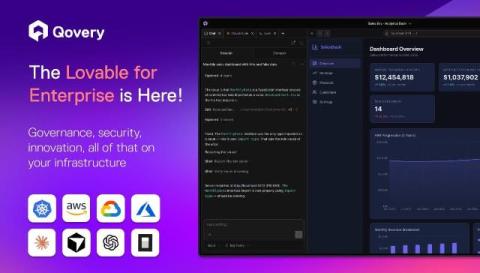
The Lovable Experience. Enterprise Governance. Your Infrastructure. We Built It.

Introducing the AI Builder Portal - the governed alternative to Lovable and Bolt.new for enterprise. Same one-click builder experience, running on your Kubernetes cluster, under your governance. Romaric founded Qovery to make Kubernetes accessible to every engineering team. He writes about platform strategy, developer experience, and the future of cloud infrastructure.
Konstruct product updates: Global resources, MCP support, and smarter permissions

May has been one of our busiest months yet for Konstruct. Across three releases, 0.5, 0.5.1, and 0.5.2, we've shipped some of the most requested platform-level changes since we launched: a unified model for sharing resources across organizations, native support for AI-driven workflows via MCP, a completely redesigned API keys experience, and a cleanup to how permissions actually work in multi-org environments. Let's walk through what shipped and why it matters.

Keep ArgoCD. Get Qovery. ArgoCD Integration Is Here.

Moving to a new platform shouldn't mean weeks of migration work before you see any value. Qovery now lets you connect your ArgoCD server and manage your existing applications directly alongside your Terraform modules, lifecycle jobs, and Qovery-native services, from a single control plane. Alessandro leads product at Qovery. He drives the changelog, roadmap, and product strategy - turning customer feedback into platform capabilities.

Monitor LLM routing with the Kubernetes Inference Extension

If you serve LLMs on Kubernetes without inference-aware routing, your load balancer is likely wasting inference capacity. Generic HTTP traffic management blindly routes requests, assuming the backends in your cluster are interchangeable. But your model-serving backends are stateful and unevenly prepared to handle any given request. As a result, requests are often routed to the backend that’s not the one best suited to respond.

Deploy Datadog Kubernetes Autoscaling at scale

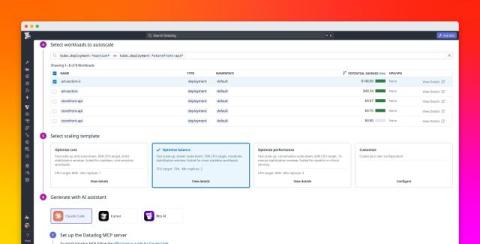
Every Kubernetes environment accumulates waste over time. Teams overprovision CPU and memory requests to avoid performance risk, run idle replicas to preserve headroom, and leave Horizontal Pod Autoscalers (HPAs) untouched long after workload behavior has changed. Some of this waste can be addressed at the node level, where Datadog Cluster Autoscaling helps teams rightsize capacity.

Secure execution: Agents in sandboxes with relaxAI

The hard part of deploying AI agents isn't the agent. It's the environment around it. As organisations move from AI experimentation into production, the question isn't just what agents can do; it's whether you can trust the environment they run in. Sandboxed execution gives you both the autonomy and the guardrails, keeping agents isolated, auditable, and under your control.

Digital sovereignty: Who's in control?

Digital sovereignty isn't a marketing buzzword. It's about jurisdiction, accountability, and operational certainty and it starts with where your data is hosted and how it's processed. Civo's UK sovereign cloud delivers public cloud, private cloud, and AI services, all hosted and operated exclusively within the United Kingdom under UK legal authority with no exposure to foreign control.

The Kubeshark Workflow That Doesn't Stop at the Dashboard

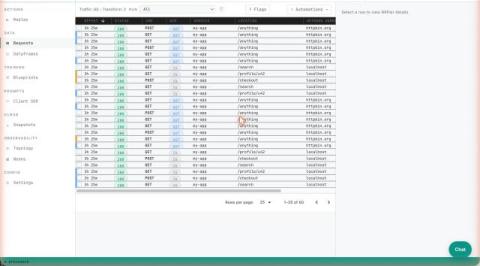
The Observability Gap shows up the moment you try to reproduce a production bug locally. Your traces tell you a request was slow. Your logs tell you which line printed. Neither tells you what was actually on the wire: the headers, the JSON body, the surprise field your client started sending last Tuesday. Until now, closing that gap meant SSHing to a node, attaching a debugger, or shipping a sidecar through change review.