The latest News and Information on Cloud monitoring, security and related technologies.
When you look at an X-Ray trace for a Lambda cold start, you will see an Initialization subsegment. This subsegment represents “the function’s initialization code that is run before the handler”. This is where the runtime would resolve any dependencies, or initialize global variables. These are executed only once, so they don’t have to run on every invocation. The more dependencies you have, the longer this initialization step takes.
Digital Enterprise Journal’s (DEJ) research shows that organizations view cloud strategies as key areas for using technology to create business value. Organizations are seeing the importance of cloud deployments in each of the following areas of digital transformation - agility (71%), innovation (65%) and cost optimization (61%). The majority of cloud deployments are being conducted in a hybrid model where parts of IT services are being managed on-premises and in private and public cloud(s).
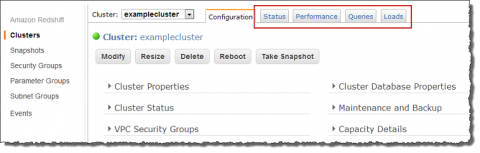
In the first post of our three-part Amazon Redshift series, we covered what Redshift is and how it works. For the second installment, we’ll discuss how Amazon Redshift queries are analyzed and monitored. Before we go deep into gauging query performance on Redshift, let’s take a quick refresher on what Amazon Redshift is and what it does.
In new and quickly-expanding fields like serverless, long-standing experts are few and far between. I am excited to welcome Tim Wagner, the original leader of the serverless movement, to the Stackery Board of Directors. Tim spent six years at Amazon Web Services as the General Manager of AWS Lambda, where he oversaw the team that built the success of serverless as a platform. In many ways, we have them to thank for creating the environment that supports Stackery and the serverless ecosystem.
Here at Lumigo, we are big fans of serverless. And a big part of working with AWS Lambda involves using many other AWS services. For example, services such as SNS and SQS are often used to chain Lambda functions together. They are essential ingredients of an event-driven architecture, where systems are loosely coupled through events. However, they also pose a challenge to how we test our systems and how to get fast feedback on what’s happening in the system.
JFrog Artifactory Cloud on AWS is a hosted solution for developers and DevOps engineers that provides complete control, insight and binary management throughout the software development lifecycle. DevOps teams have transparency and control of their entire build and release process, all with the power of cloud-based development. We are excited to announce a set of three AWS Quick Starts to easily deploy Artifactory Enterprise in a highly available (HA) configuration into AWS.
Today, I’m happy to announce a significant new feature to Skeddly: Managed Backups. Once you have created your plan and added resources, Skeddly will create the necessary actions to create and delete those backups according to your desired schedules.